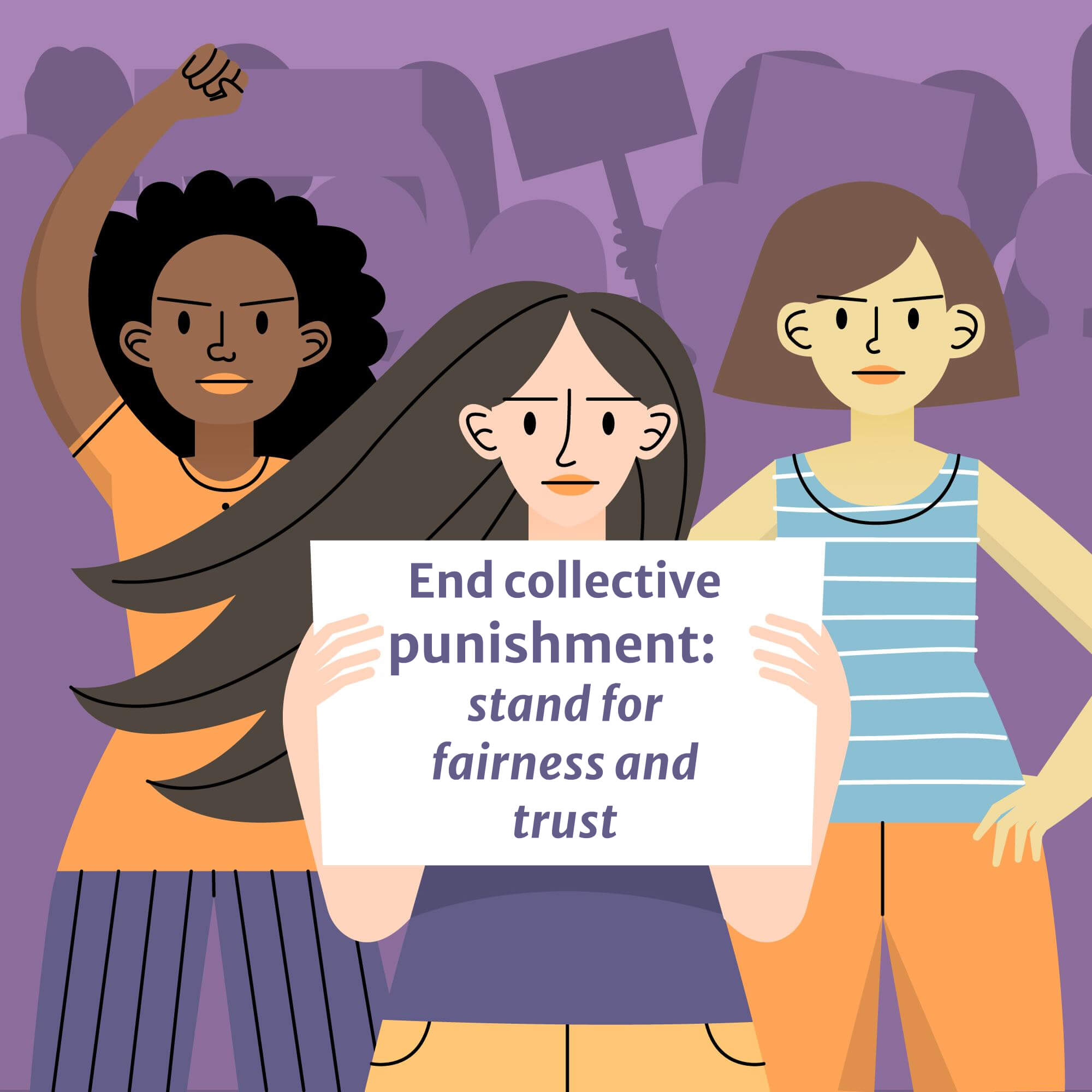
When teachers punish entire classrooms for the actions of one student—when recess disappears because someone talked, when rewards vanish because someone forgot homework, when privileges evaporate because one child disrupted the lesson—students recognise the injustice immediately, and they name it with precision that educators often lack.
Across TikTok, Instagram, and Reddit, students, parents, and teachers document what collective punishment actually does: it destroys trust, punishes effort, teaches resentment instead of accountability, and creates classroom cultures saturated with unfairness.
Teachers themselves admit the practice feels wrong, parents watch their children’s motivation collapse, and the research confirms what everyone already knows: punishing the whole class for one person’s behaviour does not work, has never worked, and causes harm that ripples outward long after the punishment ends.This post gathers what the internet has been saying—what students, parents, and reflective teachers already understand—about why collective punishment fails, why it persists despite that failure, and what happens to children forced to endure a disciplinary system that treats fairness as negotiable.
How teachers feel when they implement a collective punishment
The meme format tells a particular story: teachers depicted as unbothered, self-satisfied, sleeping soundly after punishing thirty children for one student’s behaviour—dancing carelessly, slicking back hair with exaggerated confidence, performing indifference with theatrical precision. The aesthetic suggests teachers deploy collective punishment without conscience, without second thought, without the emotional weight that should accompany punishing children who did nothing wrong. Students create these videos because the practice feels callous, because taking away recess from an entire class requires a hardness that disturbs them, because they cannot reconcile the caring teacher archetype with someone who would enact that kind of blanket harm. The meme captures their experience of the aftermath: teachers who seem unmoved, who offer no apology, who treat the punishment as routine rather than rupture, who signal through their composure that the fairness violation simply does not matter to them.
The reality beneath the meme likely differs from its surface—teachers who use collective punishment probably do not sleep well, probably do carry discomfort about the practice, probably recognise somewhere beneath their professional defences that punishing innocent children violates principles they claim to uphold.
But the meme does not care about teacher interiority; it cares about what students experience, and what they experience is adults who appear unbothered by unfairness, who enforce group consequences without visible remorse, and who move through their days as though nothing significant occurred when they took something from children who earned nothing except proximity to someone else’s mistake. Whether teachers actually feel conflicted becomes irrelevant when their actions communicate indifference, when their classroom management prioritises control over care, and when students receive no acknowledgment that something wrong just happened to them. The performance of not caring—whether genuine or a professional mask worn to maintain authority—teaches students that adults will harm them casually, that fairness ranks below convenience in the institutional hierarchy, and that their protests against injustice will be met with the kind of smooth, unbothered confidence the memes capture so perfectly.
@h4atocore lol#xzybcaシ #enjoy #pourtoi #blowthisup #fypシ゚viral #xzybcaシ #blowthisup #fypシ゚viral #fyp #foryou #teachers ♬ ….. –
@phonkmaster42 They always do this EVERY SCHOOL YEAR BRO 💔💔🤦#fyp #viral #teacher #school #juggtok ♬ Brainrot Giga Drill – devvMeme
@sakuraxea Real 😒😒 #relatable #noflop #foryou ♬ Jet2 Advert – ✈️A7-BBH | MAN 🇬🇧
Individual behaviour requires individualised support
Students consistently articulate what research confirms: misbehaviour stems from unmet needs, skill deficits, environmental triggers, disability-related challenges, trauma responses, or developmental differences—and none of these factors can be addressed by punishing uninvolved classmates. When teachers punish entire groups for one student’s actions, they avoid the harder work of identifying why that student struggles, what support might help, and how the classroom environment itself might be contributing to the behaviour they want to eliminate.
Collective punishment functions as a shortcut that substitutes accountability with coercion, that replaces teaching with punishment, and that abandons the students who need help most while simultaneously penalising students who need nothing except to be left alone. Educators who resist whole-class consequences describe investing time in relationship-building, in functional behaviour assessments, in collaboration with counsellors and families, and in creating environments where students feel safe enough to ask for help—interventions that require skill, patience, and institutional support rather than blanket punishment.
The students who post about collective punishment online often ask the same question teachers seem unwilling to answer: if the behaviour belongs to one person, why does the consequence belong to everyone? The answer, when educators offer one, reveals the mechanism clearly—they punish the group because they want compliant students to regulate their disruptive peers, because they believe social pressure will force conformity, and because they have been taught that control matters more than care.
@hellomrswalker ✨ Dear first year teachers, stop punishing the entire class. I see this a lot with middle school, especially elementary school. It’s unfair to the students who are doing the right thing, it weakens trust, it doesn’t teach the real rule breakers accountability, it causes tension between classmates, and it rarely changes behavior long term. Trust me. I’ve been teaching over ten years. Address issues individually, your classroom culture will thank you. Your students will love you! Be fair! #firstyearteacher #teachertips #classroommanagement #dontdothis #avoidthis ♬ original sound – Mrs Walker
If we’re a team when one person fails, why don’t we get good stuff when one person succeeds?
Students recognise hypocrisy with brutal clarity, and they document it relentlessly: teachers who invoke collective responsibility when someone misbehaves rarely invoke it when someone excels, rarely celebrate entire classes because one student aced a test, and rarely distribute rewards because one child helped a peer or demonstrated kindness.
The asymmetry reveals what collective punishment actually teaches—that children bear collective consequences for failure but receive no collective benefits from success, that punishment binds groups together while achievement remains individualised, and that fairness operates selectively depending on whether adults want compliance or competition.
This double standard saturates school discipline systems, where students lose recess together but earn rewards alone, where one student’s disruption cancels privileges for thirty others but one student’s brilliance generates no corresponding gain, and where the language of teamwork appears only when teachers want to justify punishing children who did nothing wrong. The viral posts documenting this contradiction ask questions that merit answers: why does collective responsibility flow only downward, why does team logic apply only to punishment, and why should students trust systems that define fairness according to adult convenience? Teachers who claim collective punishment builds accountability rarely explain why that accountability never includes them—why students lose privileges when one peer misbehaves but teachers face no consequences when systems fail entire classrooms, when accommodations go unmet, or when children suffer harm under institutional care.
@malc_waters Teachers punished the entire class because of one kid but they didn’t celebrate the whole class because of one kid. Taking away recess because of one kid was wild #schoollife #teachersbelike #fyp ♬ original sound – Aura
-
25 signs that your IEP team is disabling your child
In the space where families gather with school teams to shape a child’s Individual Education Plan, the language often carries more weight than paper can bear, for each phrase can open a door toward inclusion or quietly plant the seeds of exclusion, and the difference lies in whether the plan nourishes capacity or erodes it. An IEP built on deficit-driven thinking can slip, almost imperceptibly, into proposals that do not strengthen the child’s footing but instead chip away at it, introducing goals or conditions that act as a slow dismantling of confidence, access, and joy in learning. These ideas often…
Collective punishments leads to loss of motiviation, trust, and negative sentiment
The students who post about collective punishment describe what happens to effort under conditions of systemic unfairness: motivation collapses when hard work guarantees nothing, when following rules offers no protection from punishment, and when adult decisions feel arbitrary, capricious, and unmoored from justice. Children who consistently meet expectations, who complete assignments, who regulate their own behaviour, and who contribute positively to classroom culture report feeling betrayed when they lose recess, rewards, or privileges because someone else acted out—and that betrayal does not dissipate with time; it accumulates, calcifies, and transforms into distrust that extends beyond individual teachers into institutions more broadly. Parents document watching their children’s enthusiasm for school drain away after repeated collective punishments, watching them stop trying because effort no longer correlates with outcome, watching them internalise learned helplessness that tells them they cannot control what happens to them no matter how well they behave. The educators who defend these practices claim they build resilience, that they prepare children for workplaces where teams share consequences—but workplaces where employees face punishment for colleagues’ mistakes are widely recognised as toxic, and the analogy reveals more than teachers intend: they are teaching children to tolerate injustice, to accept conditions they cannot change, and to suppress their own understanding of fairness in service of adult control.
The damage extends beyond individual students into classroom cultures that collective punishment systematically degrades. When teachers punish entire groups, they create conditions where students resent their peers instead of supporting them, where children learn to surveil and regulate one another rather than build solidarity, and where trust between students and adults fractures in ways that no apology can fully repair. The students who talk about collective punishment online do not describe classrooms characterised by safety, connection, or shared purpose—they describe environments defined by resentment, anxiety, and a pervasive sense that fairness does not matter, that adults will not protect them from harm, and that the rules governing their lives operate according to logics they can neither predict nor influence. This is what collective punishment teaches: that justice is conditional, that effort means nothing, and that the adults responsible for their care will sacrifice their wellbeing to maintain order.
@misshulls Punishing the whole class for the actions of a few? Unfair, ineffective, and damaging. Let’s focus on accountability, not resentment. #FairDiscipline #BetterClassrooms #TeacherLife #positivity #genzteacher #teachertok #positivevibes #controversial #opinion ♬ Swan Lake (Vocals) – Feels LikeÉ, Oliver Spencer
@hellomrswalker 🛑 Dear first year teachers, let me help you out. Whole class punishments are quietly damaging your classroom culture. Instead, get to the root of the behavior. Get your counselor or administrator when needed. The rest of your students deserve a safe, focused learning environment, not to be grouped in with someone else’s consequences. Follow for more tips to help you thrive as a teacher. #firstyeartips #teachertips #dontdothis #classroommanagement #redflags ♬ original sound – Mrs Walker
@hannnahh_bananaa Paisley is SO sad and it breaks my heart! I’ve reached out to her teacher to see if there’s anything that can be done. This style of punishment really only effects the wrong kids. #fyp #kindergarten #trending #school #dojo ♬ Very Sad – Enchan
What collective punishment actually teaches
The internet has spoken with unusual clarity: collective punishment does not teach responsibility, does not build classroom community, does not address the behaviour it purports to correct, and does not prepare children for anything except tolerating institutional injustice. What it does teach arrives with brutal efficiency—that fairness is conditional, that effort offers no protection, that adults will sacrifice your wellbeing for convenience, and that the systems meant to support your learning will harm you without hesitation when control becomes the priority. Students documenting these experiences online are not confused about what happened to them; they name the practice accurately, describe its effects precisely, and articulate the betrayal with language that should unsettle every educator who has ever punished a classroom for one student’s actions.
The persistence of collective punishment in schools despite overwhelming evidence of its failures reveals something essential about how institutions choose to see children. When teachers defend the practice by invoking team-building metaphors, when administrators permit it despite clear policy prohibitions, when education systems continue培training educators in strategies that rely on group coercion, they communicate that student wellbeing matters less than adult control, that justice matters less than compliance, and that the emotional and educational harm caused by unfair punishment constitutes acceptable collateral damage in the project of classroom management. The students posting these videos already understand what many educators refuse to acknowledge: collective punishment is not a behaviour management tool that occasionally misfires; it is a harm delivery system working exactly as designed, teaching children to accept conditions they cannot change and to suppress their knowledge of what fairness requires.
If you are a parent watching your child’s motivation collapse under repeated collective punishments, if you are a student trying to make sense of why your effort means nothing when someone else acts out, if you are a teacher beginning to recognise the damage this practice causes—the evidence is everywhere, the testimonies are mounting, and the internet has already reached the conclusion that research confirmed decades ago. Collective punishment does not work. It never worked. And continuing to use it requires educators to value something other than the children in their care.
-
What replaced the strap in Canadian schools?
They took the strap away—or at least, they removed the physical instrument, the leather loop of institutional discipline that had once been the sanctioned mechanism of control in classrooms across the country. Even if we never felt it on our own skin, we knew what it meant; we had heard the sound of it slapped swiftly against a desk, the sudden silence that followed, and we could summon, without instruction, the sting of it landing on flesh that could have been ours. They made a formal announcement, drafted new policy language about safety and well-being, and filed it under modernisation—a…