

Advocacy and resistance
Advocacy, organising and resistance names the work families and communities do to challenge school harm and build collective power. It includes parent-led advocacy, public pressure, evidence-gathering, storytelling, campaigns, coalition work, and the refusal to let institutional narratives define children’s suffering as normal, inevitable, or deserved.
-
When evidence changes nothing: what 2,842 families reveal about institutional refusal
The International Council of Multiple Birth Organisations published a study in 2020 examining school placement decisions for twins and higher-order multiples across eighteen countries, surveying 2,842 families whose children had attended school for at least one year. The findings confirm what families of multiples already know from lived experience: schools operate placement policies that prioritise…
-

A school advocacy vocabulary
What families experience in schools is often described as a series of unfortunate incidents: a meltdown here, a missed accommodation there, a relationship breakdown framed as “complex family dynamics.” But these events are not random, isolated, or accidental. They are patterned. They recur across schools, districts, and provinces. They follow recognisable logics, deploy familiar language,…
-

The good twin, the bad twin, and the system that needed both
Before school taught them roles, they played tea party—taking turns serving and being served. Seven years later, I can’t say with certainty whether one would fetch the fire extinguisher if the other caught flame.
-

Manitoba’s “positive behaviour agreements” and BC’s PBIS infrastructure
Jillian Enright identifies the central contradiction in Manitoba Education Minister Tracy Schmidt’s 2025 announcement of “positive, student-centred approaches” grounded in what the province calls positive behaviour agreements: these agreements present themselves as collaborative documents created between students and staff, yet the power imbalance renders genuine collaboration structurally impossible, leaving students to validate pre-determined behavioural expectations…
-
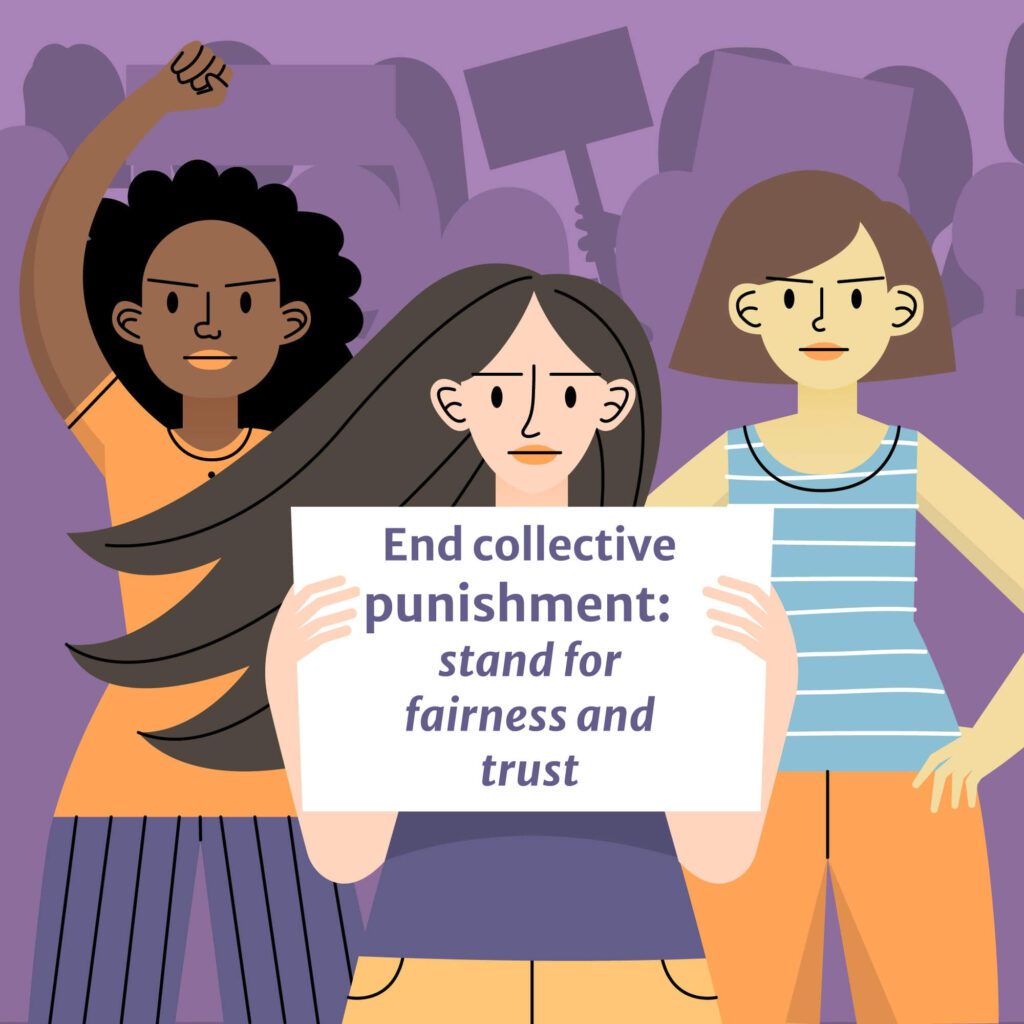
The internet has spoken: collective punishment in schools is wrong
When teachers punish entire classrooms for the actions of one student—when recess disappears because someone talked, when rewards vanish because someone forgot homework, when privileges evaporate because one child disrupted the lesson—students recognise the injustice immediately, and they name it with precision that educators often lack. Across TikTok, Instagram, and Reddit, students, parents, and teachers…
-

When children write the rules
The teacher’s letter arrives home with careful reassurances about fairness, dignity, and professional expertise, yet embedded within its polite paragraphs sits a fundamental contradiction: the rules governing this seventh-grade classroom emerged from the crowdsourced preferences of twelve-year-old children rather than from pedagogical research or developmental understanding. Ah yes, the wisdom of crowds—particularly effective when the…
-

When nothing has been decided yet at VSB
Public institutions deploy a phrase when they want parents kept at distance: nothing has been decided yet. The phrase offers a method for keeping scrutiny outside the room where options narrow and preferences harden without public witness. If nothing has been decided, there exists nothing to disclose, nothing requiring consultation, and no legitimate basis for…
-

When provincial bodies dismiss parental expertise: POPARD, sticker charts, and the refusal of heterogeneity
In the previous essay, I examined neuroimaging research demonstrating that autism and ADHD are not internally homogeneous diagnostic categories but rather contain multiple neurologically distinct subgroups, often with opposite patterns of brain structure alterations relative to controls. The Pecci-Terroba study reveals what categorical intervention logic refuses to accommodate: diagnosis alone cannot determine whether a specific…
-
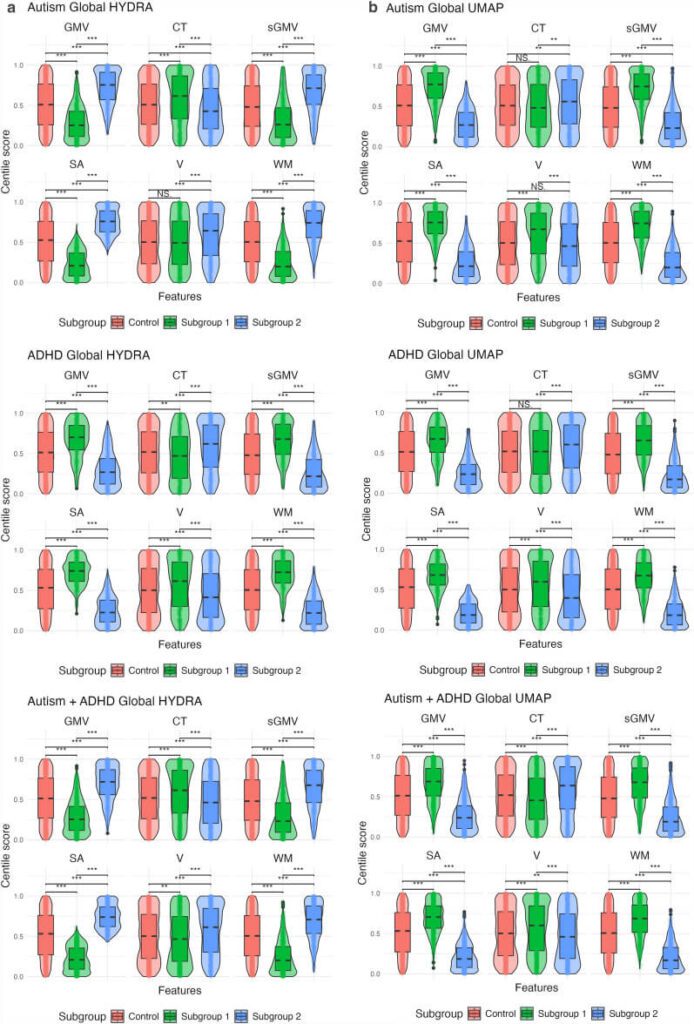
Subgrouping autism and ADHD based on structural MRI population modelling centiles
A June 2025 neuroimaging study examining brain structure patterns across individuals with autism, ADHD, and combined diagnoses, published in Molecular Autism by Pecci-Terroba and colleagues applies population modelling to cluster participants based on centile scores for cortical thickness, surface area, and grey matter volume, using HYDRA—a semi-supervised machine learning algorithm that identifies subgroups based on…
-

The material costs of educational harm
My son no longer attends school. He no longer wants anything the education system offers. He has taught himself programming, navigates Linux with expertise that exceeds my own knowledge, learns alone in his room because learning with others became too expensive to survive. The district asks affectionately how he is, suggests I login to their…
-

How collective punishment turns provincial funding failure into disabled children’s “behavioural failure”
Many years ago, my kindergarten child Robin went onto an ice field during recess. Robin was seeking sensory input—the visual shimmer, the cracking sound, the tactile feedback their nervous system required. The school had told students to avoid the ice for safety reasons. Robin’s support worker redirected them repeatedly; Robin kept returning. Eventually the principal…
-

Truth is never negative: on becoming the voice a system tried to silence
I have come to understand that my role in this landscape exists because every public system that touches disabled children in British Columbia carries a quiet, shared expectation: families will smooth the rough edges, soften the evidence, dilute the language, and narrate harm as misunderstanding or miscommunication rather than what it is—the predictable outcome of…
-

Why BC publishes data on Indigenous students but hides data on restraint and seclusion
Every fall the BC Ministry of Education and Child Care releases an annual Aboriginal Report – How Are We Doing? covering Indigenous (First Nations, Métis, Inuit) student outcomes in public schools. For example, the 2023/24 edition (dated November 2024) tracks graduation rates, test scores, course marks, special education designations, survey results, and related indicators for Indigenous and…
-
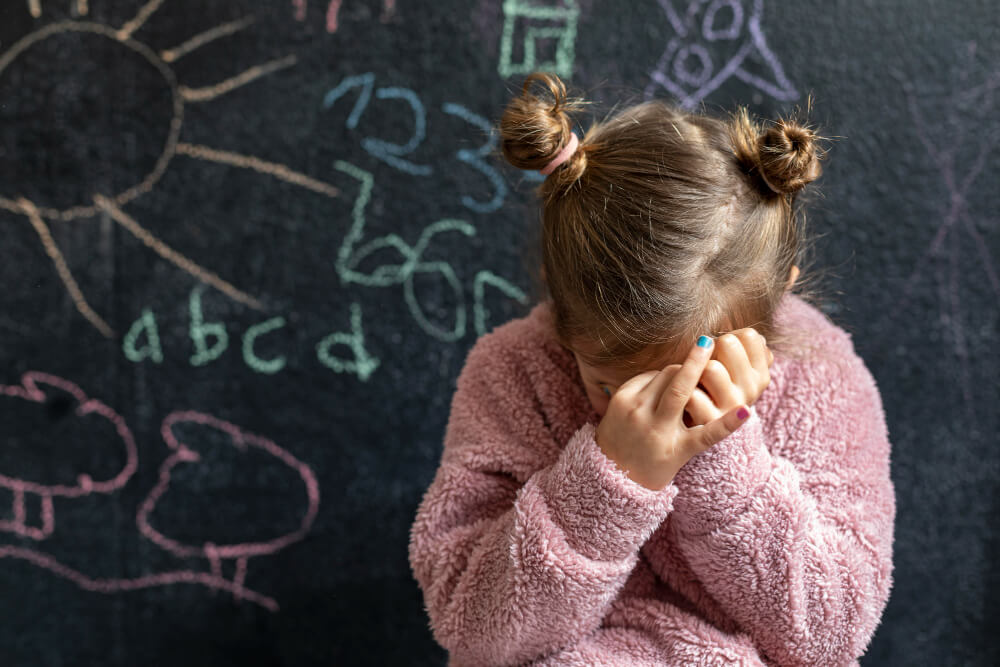
Kamloops mother speaks after district ignored daughter’s dyslexia for thirteen years
‘She was failed’: Mother speaks out after Kamloops student’s dyslexia ignored tell the story of Heather Morrison. She spent thirteen years asking teachers and principals to assess her daughter for learning disabilities, watching her child move through kindergarten to graduation while reading at an elementary level, her distress mounting with each deflection, each dismissal, each…
-

Alberta’s erasure of disability rights
In November 2025, the Alberta government released the final report of the Aggression and Complexity in Schools Action Team, offering seven recommendations to address what it calls “rising aggression and complexity in classrooms.” The package includes $300 million over three years to hire 1,500 educational assistants, the creation of a Class Size and Complexity Cabinet Committee,…
-

Surrey School District is self congratulatory while exclusions continues
Surrey Schools’ International Day of Persons with Disabilities announcement celebrates procedural progress at the very moment families continue pressing for basic transparency around exclusionary practices. On December 3, the district marked the day by releasing a progress report on its three-year accessibility plan. The report highlights achievements including animated videos defining accessibility terms, tools for…
-
The equilibrium of refusal: what a decade of legal spending reveals about BC schools
Between 2012 and 2022, British Columbia’s Schools Protection Program spent $4,420,252.58 responding to human rights claims filed against public schools, according to this FOI release. Of that total, $752,525.34 went to indemnity—settlements and compensation paid to claimants. The remaining $3,635,085.21 funded legal defence. The ratio is precise: for every dollar spent remedying harm, the system…
-

The return of functioning labels: How austerity turns advocacy into competition
A parent recently posted about profound autism, describing the experience of having her son’s reality erased when people say that “profound autism” doesn’t exist. Her frustration is legitimate—parents of children with intensive, lifelong support needs face profound institutional abandonment, and “profound autism” names a reality that deserves recognition and resources. But her post also illustrates…
-

Why I won’t stop in 2026
The principal used collective punishment against my child almost two years ago, and yet I remain unreconciled to what she did. People suggest moving on, starting fresh, forgiving. Schools are obsessed with ‘fresh starts,’ framing each September as reset opportunity, as though institutional harm dissolves at arbitrary calendar boundaries. My daughter carries what happened in…
-

The principal’s casualness reveals authorisation to harm
When a principal cancelled my daughter’s volleyball game with bureaucratic ease, her comfort while causing harm revealed systematic institutional authorisation.