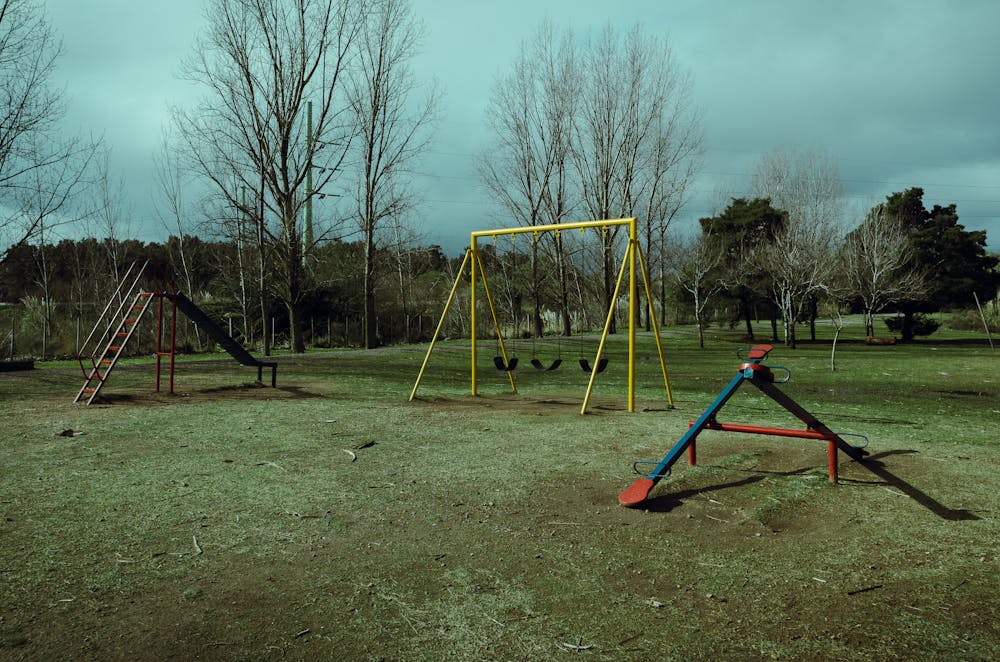
When institutional harm accumulates in childhood—in objects confiscated, spaces denied, bodies excluded—the evidence lives first in memory and affect. The saucer eyes of a humiliated or frightened child. The sting in the sobs of a child who just wants to be with her friends at the volleyball game. The physical weight of a garbage bag full of jackets. The sick calculus of ranking which violation cut deepest in so complex!
I have been analysing the objects and spaces where my children’s accommodations were refused, building a multi-lens framework to expose the mechanisms of denial. The fidgets locked away. The bathroom stall where harassment happened, boys laughing and principal giving no consequence. The lunchroom where starvation became policy. Each object tells a story of systemic refusal, but to move these narratives from testimony to structural argument or data visualisation, I face the hardest methodological task: I have to score the trauma.
This essay documents the emotional and intellectual labour of converting rich qualitative analysis into the quantitative data—the process of moving from trauma to topology. The difficulty of assigning numerical weight to institutional violence becomes itself a form of evidence, revealing how systems distribute harm according to their own comfort rather than children or family’s needs.
-

A multi-lens analysis of accommodation denial in BC Schools
When the school handed me a garbage bag filled with jackets at the end of the year, it was evidence of a failed executive function accommodation. When I was handed a box containing hundreds of dollars of fidgets, it was evidence of a regulation accommodation that had been denied. There’s a lot of reasons an […]

Establishing the baseline
Before quantifying refusal, I needed a control group—instances where accommodation happened immediately, without negotiation or shame. These come from my own childhood, proving the system possesses full capacity for individualised support, even 40 years ago, when need aligns with institutional legibility.
The glasses
The subjective landscape
Grade six. Miss Richards noticed my constant squinting, the furrow between my brows, the way I covered one eye to force the world into focus. The optometrist revealed a -3 prescription. Glasses arrived. The world sharpened.
No negotiation. No suggestion I try “seeing harder first.” No concern about fairness to children with 20/20 vision. The accommodation was offered unconditionally, integrated seamlessly, life-changing.
The institutional calculation
The need was medical, objectively measurable, and created no ongoing management burden. Glasses produce no noise, require no movement, pose no threat to classroom control. The accommodation supports the aesthetic of the compliant, still student.
Quantification rationale
- Fairness Logic: Score 1 (baseline)
- Control Threat: Score 1 (baseline)
- Scarcity Alibi: Score 1 (baseline)
“This accommodation proves the system can deliver immediate, individualised, transformative support. Every subsequent refusal is therefore a political choice, not a material limitation.”
– Just a Parent

The splint
The subjective landscape
Kickball in the gym. My hypermobile finger caught by the ball, bent backward at a grotesque angle. By the time I reached the office, the finger was visibly crooked, turning blue, undeniably wrong.
Response was immediate. Ice appeared. Splint applied. Parents called. Staff mobilised without hesitation, resourceful and certain.
The institutional calculation
The injury was acute, visible, and created immediate liability. Physical trauma demands institutional response because consequences are legally and administratively legible. Resources materialised instantly—the scarcity that prevents minor executive function supports evaporated when harm became undeniable.
Quantification rationale
- Scarcity Alibi: Score 1 (baseline—proves resources exist)
- Visibility of Need: Score 1 (immediate recognition)
- Hierarchy of Harm: Score 1 (physical injury prioritized)
The contrast is damning. When my daughter needed daily support to eat, staff cited insufficient supervision. When my finger bent backward, staff time appeared without question. The scarcity is ideological, not material.
Scoring systemic violence
Assigning numerical weight to my children’s trauma required confronting which violations cut deepest, which institutional choices felt most mercilessly wrong. The scoring process itself became a form of analysis, exposing how different mechanisms of denial create different textures of harm.
The lunchroom: The illogical paradox
The multi-perspective subjective landscape
My daughter’s experience: Daily sensory assault. Boys discovering they could weaponise her disgust response, shouting poop jokes across the table, watching her recoil, turning her predictable nervous system into their entertainment. Tummy ached unbearably. Weight dropping to the first percentile. She failed to thrive, not growing for long periods of time.
My experience as mother: Profound distress watching failure to thrive accepted as collateral damage. The visceral wrongness of a child starving while adults sit by. Schools exist to nourish children, yet this institution chose structural convenience over sustenance. The food I carefully packed, returned home, brown and bruised from the daily procession to and from school.
The institution’s calculation: Staffing limitations prevent supervising an alternate lunch space for one to three children. Eating at her desk appears “unfair” to other students. The approved alternative: raise her hand, verbally request permission, relocate to the stigmatised timeout area under single-teacher supervision.
The compounding mechanisms
- First denial: quiet alternate space refused (scarcity alibi—”no staff available”)
- Second denial: eating at desk refused (weaponised fairness—appears “special treatment”)
- Mandated alternative: public self-punishment in timeout fishbowl
The illogic compounds. The school deemed invisible, private, non-disruptive accommodation (desk) too unfair, but mandated visible, stigmatising isolation (timeout area) acceptable. One teacher cannot supervise a quiet room for three children, but can enforce compliance rules for twenty-six while one child performs her difference in the corner.
The emotional calculus
This scored highest on my internal hierarchy of wrongness. Not because the danger was acute—my son climbing forty feet created more immediate physical risk—but because the lunchroom represented slow-acting institutional torture. The tree triggered liability management; staff had to respond to visible crisis. The lunchroom enabled chronic harm the system could ignore, deflect, attribute to the child’s “choosiness,” “disinterest,” or mom just worrying to much.
Treating children as if they should acclimate to harassment and starvation violates something fundamental about institutional purpose.
Quantification rationale
- Weaponised Fairness: Score 5 (core mechanism—the stated justification)
- Scarcity Alibi: Score 5 (initial refusal predicated on staffing)
- Illogical Paradox: Score 5 (the compounding of incompatible rationales)
- Medical Gatekeeping: Score 4 (pediatrician’s letter dismissed)
The thickness of these connections in the final graph will make visible what words struggle to convey: the school chose to inflict shame and starvation to maintain administrative convenience and the aesthetic of fairness.

“They won’t leave me alone, no matter who I tell”
– Just a Child
The bathroom stall: violation of sanctuary
The multi-perspective subjective landscape
My daughter’s experience: The bathroom as essential refuge from sensory violence—social performance, relentless compliance demands, and boys talking invading her personal space. Retreat to the stall to breathe, reset, survive the day.
Boys gathering outside. Catcalls through the gap in the door. Jokes and taunts. The one safe space contaminated.
Later: a boy bumping deliberately, commenting constantly on her thin body, calling her stick, telling disgusting jokes. Threatening to rape her mother and laughing. Every reaction from her framed as not understanding to his disability, excusing the harassment while hers became the problem requiring management. Me telling the principal and her sighing exasperatedly, because she had already worked so hard on this issue and perhaps, she didn’t have more bandwidth for my moral indignation.
Request for the gender-neutral bathroom—single occupancy, real door with lock, protection from the male gase—denied. Forced back to stalls where doors remain open, where boys can see girls’ legs while they urinate or attempt to regulate.
My experience as mother: Indignation. Even a little fear from the boy, who was my weight, and made jokes to my daughter about raping me. The foundational failure to treat early-stage sexual harassment as harm. The feeling of no escape—my son once hid in the cloakroom in kindergarten until staff created a resource room (labeled “closet” on floor plans) where he could be when dysregulated. Schools make places for boys’ aggression but girls must collapse inward enduring assault or hide in bathrooms that offer no protection. Even if they call 911, the principal will tell them not to come.
The institution’s calculation: This wouldn’t happen, if the child would stay in class. She needs to learn and her insolence and insistence is relentless. But It is easier to redirect her back to class than to deal with the pack of boys. The locked gender-neutral bathroom must be used for diaper changes for another child, so is not a feasible solution. Control anxiety and exhaustion trumps safety, privacy, gender affirmation.
The compounding mechanisms
- Sexual harassment minimised (boys’ behaviour unaddressed)
- Victim blamed (told to return to class rather than be protected)
- Gender identity dismissed (access to affirming space denied)
- Physical privacy violated (door policy enables male gaze)
- Disability hierarchy enforced (his ADHD excuses harm; her autism requires management)
The emotional calculus
Profound violation. The bathroom represented my daughter’s last refuge, and the institution chose to police her use of that space rather than protect her within it. The gender dimension compounds the harm—she lived as trans previously, so gender is not clear cut, yet was denied the single safe space that would honour that reality and provide actual sanctuary.
The image of boys peeking through the door and calling, while staff maintain this is acceptable policy, exposes the depths of institutional indifference to girls’ bodily autonomy.
Quantification rationale
- Hierarchy of Needs: Score 5 (safety, privacy, gender affirmation all denied)
- Safety Theater: Score 5 (liability of intervention avoided)
- Control Anxiety: Score 5 (locked door represents surveillance loss)
- Gender Bias in Accommodation: Score 5 (boys get spaces for dysregulation; girls get policing)
The bag of jackets: Maternal judgment and moral injury
The multi-perspective subjective landscape
My children’s experience: Executive function gap means jackets genuinely feel unnecessary until bodies register cold. By then, too late. Demand resistance prevents the future-oriented thinking required to gather belongings. Jackets accumulate in the cloakroom, out of sight and therefore out of mind. The same cloakroom where my child hid for most of a year, hiding.
My experience as mother: The jacket as primal symbol of maternal protection. Wrapping a child in warmth on a cold day is foundational care. If I were tending them daily instead of sending them to an institution, I would carry their jackets, push their stroller until age three-and-a-half (then transition to wagon until seven), bring spare socks and shoes and pants because this is the baseline of neurodivergent parenting.
The teacher’s judgment: Your kids need the proper equipment to be successful at school. Framing my parenting as inadequate, as if I failed to provide basic necessities.
My tactical response: buying jackets at Value Village every time I saw one, sending jacket after jacket to school, knowing I would otherwise be read as neglectful, knowing my children’s disability would be interpreted as my failure.
The year-end return: garbage bag heavy with every jacket I sent. Physical evidence of institutional refusal. The bag felt like both benediction of my love—proof I kept trying, kept providing—and indictment of the system that chose to let jackets accumulate rather than offer two minutes of daily support. When they graduated from grade 7, I didn’t go back for the bag. I couldn’t bring myself to feel that scorching moral injury again.
The institution’s calculation: Children should manage their own belongings. This is “building responsibility” and “respect for their things.” The accommodation request threatens the independence dogma—the belief that struggle creates character, that doing things the hard way has moral value. That every child needs to learn to not need support and there is virtue in trying even if it’s painful and they are cold. If she didn’t keep sending jackets, her kids would remember. She is excessive.
The emotional calculus
The bags made me burst into tears. The moral injury of being judged incompetent for the institution’s failure cuts more like a personal indictment than many forms of harm because it attacks maternal identity, like lunches not eaten. My love is ferocious and knowledgeable and adaptive. That an institution could witness my constant accommodation, my tactical flooding of the system with jackets, and still frame me as remiss feels grotesquely unjust.
The two minutes required to help my children gather belongings represents negligible staff investment. The refusal was ideological—the preservation of a non-disabled standard of independence even when it creates obvious, predictable, repeated failure.
Quantification rationale
- Moral Injury/Parent Blame: Score 5 (core emotional mechanism)
- Independence Dogma: Score 5 (ideological justification)
- Scarcity Alibi (Ideological): Score 4 (two minutes framed as unavailable)
- Professional Hierarchy: Score 4 (teacher judgment overrides parental knowledge)
The box of fidgets: The war of attrition
The multi-perspective subjective landscape
My son’s experience: Fidgets as regulation tools, anchoring presence in the body, managing sensory assault of the classroom. The box meant to hold these tools, created as class activity, then moved to resource room and locked away when students accessed them without asking permission. Support transformed into contraband.
My experience as mother: This became a tactical battlefield. The war started with coats—institutional shaming for my failure to provide. When they began confiscating fidgets, I responded with volume. Send more. They remove them. Send more. By year’s end I had ordered three hundred dollars worth, flooding the system, forcing them to yield by returning a box so heavy with fidgets.
Unusual aspect: this denial felt less stressful than others. A rare instance where my capacity for intense focus and relentless accumulation could win against institutional rigidity. The neurodivergent brain that excels at piling on more stuff, more information, found a field where determination mattered more than persuasion.
The institution’s calculation: The universal accommodation initially seemed equitable—everyone gets a fidget box. When management became inconvenient (students accessing tools without asking), removal became necessary to restore teacher authority. Control anxiety: unauthorised self-regulation threatens the structure.
The emotional calculus
Lower subjective distress than other denials because I found agency within the battle. The year-end return felt like victory—physical proof I could outlast their refusal through sheer volume. Small pleasure in knowing they had to haul that ox, confront the material evidence of their own systematic removal of necessary supports.
Quantification rationale
- Universal Accommodation Trap: Score 4 (universalised then removed)
- Control Threat: Score 5 (unauthorised access to regulation tools)
- Subversion by Attrition: Score 3 (mother’s tactical victory mitigates institutional power)
Pizza day: Institutional abandonment
The multi-perspective subjective landscape
My son’s experience: Pizza day as number one best moment in the school hierarchy. The sensory comfort of cheese and bread and tomato sauce. The social ritual of participation, being part of the group. Multiple instances of uncertainty—will he get one?—creating the emotional equivalent of being forgotten by parents at school.
My experience as mother: Neither child brought home permission forms. Papers crumpled at the bottom of backpacks, weeks old, unreadable. The neurodivergent tax: setting Google calendar appointments to remember to contact school to check if it’s time to sign up for lunch, managing this alongside full-time work, neurodivergent parenting, and apparently full-time advocacy labour.
The institutional communication system requires executive function my children lack. I requested email accommodation. School sometimes complied, sometimes not. When we missed signup, staff awkwardness about whether to give him a slice—they didn’t want him to flip out—their uncertainty transforming a moment of joy into reminder of parental failure.
The institution’s calculation: The paper system is established procedure. Changing it for one family creates precedent. The integrity of the process matters more than the participation of disabled children.
The emotional calculus
Profound abandonment. The best representation of how institutional failure translates to real emotional consequence for children. Staff questioning whether a piece of pizza should be offered to a child is grotesque—the conversion of nourishment into a moment requiring judgment, hesitation, the weighing of whether this child’s mother did the proper paperwork.
Quantification rationale
- System Rigidity: Score 5 (preservation of rigid system over participation)
- Neurodivergent Tax: Score 5 (administrative burden offloaded to struggling parent)
- Institutional Abandonment: Score 5 (emotional consequence for child)
- Parent Blame: Score 4 (staff awkwardness predicated on maternal negligence)
“Writing these things down I can hear the chorus of comments I would receive, if I had comments enabled: ‘so what your kid didn’t get pizza’—people not understanding that it wasn’t pizza, it was belonging that he craved.”
– Just a Parent

The sticker chart: failure of knowledge
The multi-perspective subjective landscape
My son’s experience: Team-based chart where individual compliance affects collective score. His brain latching onto systems and rankings, the intense competitiveness colonising his internal world. Coming home talking negatively about children on his team, cataloguing their failures, language growing more negative until he wished harm on one, wished he would stop coming to school, wished he ill.
My experience as mother: Intellectual rage. The chart demonstrates fundamental lack of intelligence and training in public schools. When I escalated to POPARD—specialist consultation—and fully explained Pathological Demand Avoidance profile, they recommended a sticker chart also because they did not consider PDA real and deemed charts “better supported by science.”
Small-minded ignorance that institutions are supposed to overcome through leadership. Encountering sticker charts at every turn—daycare, school, after-school care—despite clear evidence of psychological harm.
The institution’s calculation: The chart is established best practice, endorsed even by specialists. Removing one child appears unfair and suggests their participation is punishment rather than inclusion. The system must be protected even when it damages the child.
The emotional calculus
This violation cuts at the level of intellectual integrity. Not only did the school enforce participation in a demonstrably harmful system, but the highest available authority (specialist consultation) reinforced the bad practice while dismissing scientifically complex understanding of neurodivergent profiles. The failure compounds—ignorance at every level, from classroom to district support.
Quantification rationale
- Knowledge Hierarchy Failure: Score 5 (specialist endorsed flawed intervention)
- Weaponised Fairness: Score 5 (forced participation framed as inclusion)
- Weaponised Harm: Score 5 (system actively induced hatred of peers)
- Control Anxiety: Score 4 (chart as external behavioural management tool)
The volleyball: Collective punishment
The multi-perspective subjective landscape
My daughter’s experience: Breaking into gym with a couple of friends to play at lunch, the boundless energy of children who feel alive together. Caught. Marched to principal’s office. Threatened with game cancellation unless apology letters written. Her refusal to apologise to teacher, driven by sentiment from a separate prior incident. Cancellation enacted. Peers asking repeatedly why the game was cancelled, disappointment circling back onto her.
My experience as mother: Indignation at the fundamental ethical violation. Collective punishment is illegal under Geneva Conventions for warfare, yet applied to neurodivergent children at school without hesitation. The deep cruelty of conscripting children into institutional logic, making them instruments of discipline, weaponising their disappointment to press guilt into the skin of the already-marked child.
The institution’s calculation: The school’s authority was challenged. The game cancellation becomes leverage to extract compliance. Collective consequence creates peer pressure that enforces institutional power more effectively than direct punishment. The punishment had to be swift.
The emotional calculus
Immediate recognition of the tactic’s illegitimacy. The positioning of my daughter as saboteur, as the one who took something from everyone else, creates the conditions for her to internalise that her existence costs others, that her place in the group is precarious and dangerous.
Quantification rationale
- Legal/Ethical Hierarchy Failure: Score 5 (application of internationally illegal tactic)
- Collective Punishment: Score 5 (core mechanism)
- Hierarchy of Needs: Score 5 (authority restoration over developmental need)
- Weaponised Fairness: Score 4 (peer group conscripted to police disabled child)
The yoga ball: colonisation of joy
The multi-perspective subjective landscape
My daughter’s experience: The ball as necessary regulation tool for ADHD. Movement creating the conditions for presence and focus. The ball removed when non-disabled children played with it inappropriately.
My experience as mother: Demonstration of the fairness ideology and the joy penalty. If something is critical for a neurodivergent child and brings them joy, it will eventually be disallowed. The underlying logic: accommodations should not bring joy.
Personal resonance: At that age, the school had taught her to be embarrassed to have accommodations that other children couldn’t access. Even if I could have argued to get the ball back just for her, which I tried, it would have been futile because their logic had already colonised her.
The institution’s calculation: When non-disabled children misuse the accommodation, the accommodation becomes problematic. The regulation tool looks like play. Movement and joy violate the aesthetic of the still, compliant classroom.
The emotional calculus
This represents the final, defining articulation of the joy penalty—the ideological requirement that legitimate accommodation must be devoid of ease, efficiency, or pleasure. The belief that struggle builds character means any tool that works easily becomes suspect.
Quantification rationale
- Joy Penalty: Score 5 (core ideological mechanism)
- Universal Accommodation Trap (Reverse): Score 5 (removed due to others’ misuse)
- Control Threat: Score 5 (movement and noise threaten classroom aesthetic)
- Legitimacy Hierarchy: Score 4 (necessary support coded as revocable toy)
The tree: trading liability for structural failure
The multi-perspective subjective landscape
My son’s experience: Climbing thirty to forty feet when completely dysregulated. Pattern: receive support during crisis, stabilise, support withdrawn, weeks of growing dysregulation, small trigger (pushed on playground), back in tree. Distance from it all. Staff and children gathering below, some concerned, some taunting, crisis becoming spectacle.
My experience as mother: Fear of fall. Daily prayer he does not die. Recognition that the crisis is manufactured—support withdrawal creates the conditions for dysregulation. The school frames this as “zero to sixty behaviour,” erasing the weeks of accumulating stress, the architectural abandonment on the ground.
The institution’s calculation: The height creates immediate, visible liability. Must respond with urgency. But the response targets the spectacular symptom (boy in tree) rather than the structural cause (support withdrawal). Managing crisis is more visible than preventing it.
The emotional calculus
High physical danger but lower subjective distress than lunchroom. The tree triggered institutional mobilisation because liability was legible and acute. The lunchroom enabled chronic harm the system could ignore because consequences unfolded slowly, diffusely, in ways that resist attribution to single decisions.
Institutional preference: manage visible crisis rather than address invisible structural failure.
Quantification rationale
- Safety/Liability: Score 4 (high-stakes physical danger)
- Developmental Coercion: Score 5 (premature support withdrawal)
- Control Anxiety: Score 4 (child literally beyond reach)
- Spectacle of Scapegoating: Score 4 (crisis performance shifts focus from ground)
The methodology of scoring: Converting grief to graphs
The quantification process required methodological decisions about how to translate subjective impact into numerical weight.
Categorical coding: Converting narrative outcomes into edge types
Before scoring intensity, I needed discrete categories describing the denial mechanism. For Fairness Logic alone:
- Universalisation Trap: denied because “everyone would want it”
- Weaponised Exclusion: denial designed to enforce stigma
- Weaponised Harm: forced participation in known damaging system
- Collective Punishment: entire group penalised to pressure individual
These codes become filters in the visualisation, allowing users to see all instances of a specific mechanism.
Numerical scoring: The salience scale
- Score 5 (Core Mechanism): Primary, essential reason for denial; stated justification; maximum institutional investment in refusal
- Score 4 (Major Factor): Heavily cited, highly influential; central but not sole driver
- Score 3 (Active Contributor): Present in decision-making but not primary
- Score 2 (Implicit Factor): Underlying logic not overtly stated
- Score 1 (Baseline/Contrast): Control group; proves capacity exists
The grotesque comparison
Scoring required ranking traumas against each other. Which violation cut deepest? The lunchroom (slow starvation through structural convenience) scored higher than the tree (acute physical danger) because chronic, enabled harm felt more fundamentally wrong than crisis the institution at least mobilised to address.
The bag of jackets scored maximum on Moral Injury not because physical consequences were severe but because the judgment of maternal competence struck at identity and love in ways other violations did not.
Multi-perspective integration
Each score reflects synthesis of:
- Child’s subjective experience (fear, humiliation, hunger, rage)
- Parent’s subjective experience (moral injury, protective failure, tactical possibility)
- Institution’s objective calculation (liability, control, administrative convenience)
- Systemic impact (does this create precedent? enable other harms? reveal structural truth?)
The power of topology: Making the invisible undeniable
The final network graph transforms subjective narrative into objective architecture. Thick lines connecting Lunchroom to Weaponised Fairness (score 5) make visible what words struggle to convey: this was not oversight but choice, not resource scarcity but ideological preference.
Comparing edge weights reveals systemic patterns:
- Highest scores cluster around Weaponised Fairness, Joy Penalty, Knowledge Hierarchy Failure
- Scarcity Alibi appears but rarely as sole mechanism—usually compounds with ideological refusals
- Control Anxiety underlies nearly every denial, proving institutional comfort drives policy
The control group (Glasses, Splint) with baseline scores proves capacity exists. Every thick line therefore represents political choice, not material limitation.
The visualisation allows exploration from multiple entry points:
- Object-first: Click “Bag of Jackets” to see mechanisms (Moral Injury, Independence Dogma, Parent Blame) converge
- Lens-first: Click “Joy Penalty” to see all objects (Ball, Fidgets) where pleasure became disqualifying
- Pattern recognition: Objects sharing mechanisms cluster together, revealing that denials are not isolated but structurally connected
Conclusion: The necessity of the grotesque
Assigning numerical weight to my children’s trauma was grotesque work. The tears that came with the jackets, the rage with the sticker chart, the profound distress with the lunchroom—these emotional responses are data points in their own right, revealing which institutional choices violated the most fundamental expectations of care.
But this grotesque quantification serves advocacy. The thickness of graph lines becomes irrefutable evidence that refusal mechanisms are systematic, not incidental. The clustering of high scores around Joy Penalty and Weaponized Fairness exposes ideology at work. The contrast with the control group proves capacity exists and denial is choice.
The map is complete. The topology reveals what testimony alone cannot: the precise architectural connections between institutional comfort and child harm, between ideological purity and material suffering, between the aesthetics of fairness and the reality of violence.
Now we use it to fight.
-
Designed for denial: the architecture of accommodation refusal
Designed for denial describes systems structured so that refusing accommodation is the path of least resistance, the default outcome, the architecturally embedded response to requests for support. These are systems where saying no requires little justification, documentation, oversight, or consequence, while saying yes requires the requester to overcome multiple barriers, satisfy gatekeepers who are not accountable […]