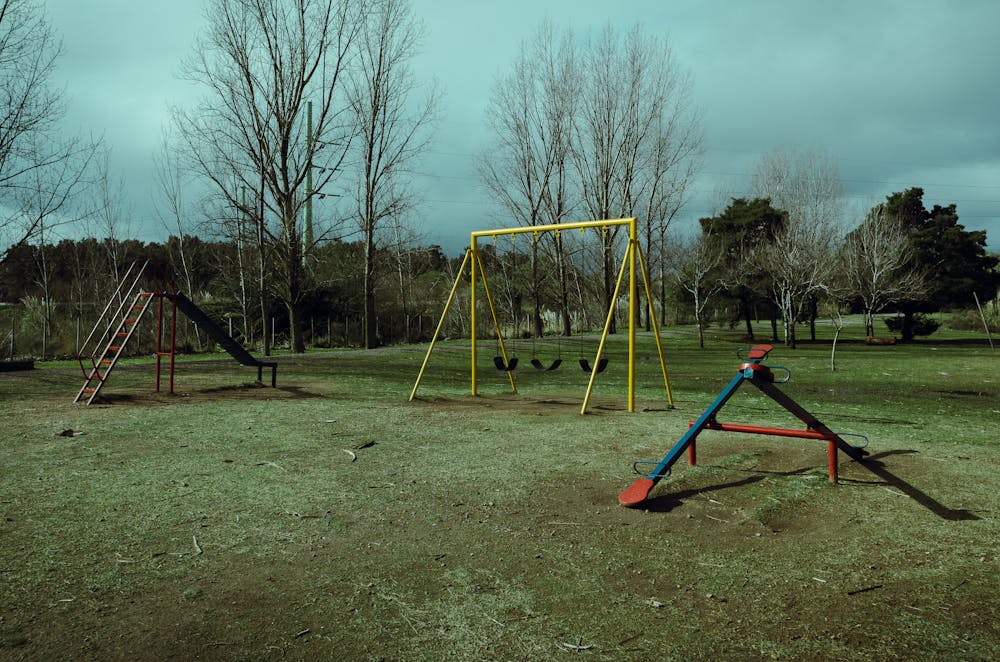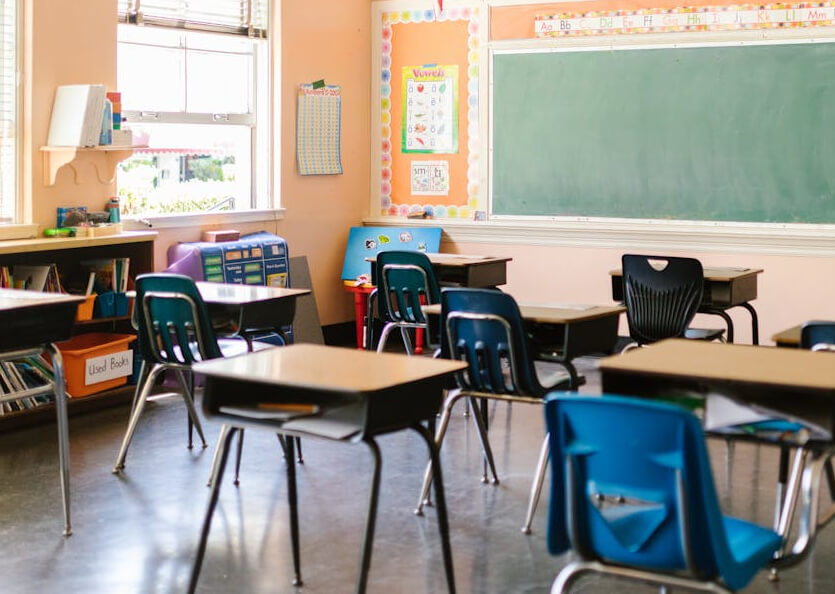
Room clears should be rare. In adequately resourced classrooms with sufficient staffing, with educational assistants trained in co-regulation, with adults who understand that compliance is not wellness and frozen silence is not calm, most crises could be prevented or held without architectural intervention.
But British Columbia schools operate under manufactured scarcity, austerity politics disguised as fiscal responsibility, districts that refuse to hire enough staff even as they accumulate budget surpluses, a system that engineers crisis through under-resourcing and then treats the room clear as routine classroom management rather than evidence of systemic failure.
Sara Ahmed teaches us that emotions do work—they align bodies with communities or against them, they create the surfaces and boundaries of collective life, they stick to some objects and slide off others, circulating through social space in ways that shape what becomes visible, legible, grievable. In her framework of affective economies, emotions do not reside inside individual subjects but move between bodies, accumulating value as they travel, attaching themselves to certain figures until those figures become saturated with feeling, transformed into objects that organise institutional response.
The room clear operates inside this economy, but the affects it manages are not manufactured from nothing—they arise from material conditions where teachers are set up to fail, where staffing levels make genuine relationship-building difficult, where the district’s refusal to provide adequate support guarantees that some children will reach crisis and some adults will get hurt.
The teacher alone with twenty-six children
Picture this: one teacher, twenty-six children, no educational assistant, no resource teacher, no extra help when a child begins to escalate. The teacher knows that three children in the classroom need consistent co-regulation support to stay within their window of tolerance, but she is also supposed to teach literacy and math and social studies, take attendance, respond to the child asking for help with math while another child is melting down in the coat room. She can feel her own nervous system beginning to fray as she tries to split her attention twenty-six ways, tries to notice who is struggling before the struggle becomes crisis, tries to maintain the calm presence that regulated children need while her pulse hammers and her shoulders tighten and she realises she has not eaten lunch or used the bathroom in four hours.
This teacher is not failing. The system is failing her. But when a child becomes dysregulated—genuinely distressed, perhaps moving toward aggression because their body has nothing left, because they have been holding it together all morning and the mask has finally cracked—she has to make an impossible calculation. She cannot safely leave the other twenty-five children to take one child to a quiet space. She cannot physically hold a child who is trying to hurt her or themselves or others. She has been bitten, scratched, hit, and she knows that other teachers in her building have gone on stress leave after similar incidents, that the union is arguing for better protections while the district insists current staffing is adequate. The room clear becomes the only tool available—not because it is good for the child, not because it resolves anything, but because it temporarily makes the situation survivable for everyone.
Teachers do not deserve to be hurt. Children do not deserve to be humiliated. These truths coexist, and the room clear sits in the impossible space between them—a mechanism that protects adult bodies while harming child psyches, that prevents immediate physical injury while inflicting developmental and relational trauma, that should be emergency-only but has become routine because the conditions generating emergency are constant and unaddressed. Removing room clears from under-resourced classrooms without adding support staff would simply mean more injured teachers and more traumatised children. The solution is not to eliminate the mechanism but to eliminate the conditions that make it feel necessary—to staff classrooms adequately, to provide specialised support, to train adults in actual de-escalation rather than crisis procedures, to recognise that compliance is not regulation and silence is not calm, to intervene before children reach the point where room clearing feels like the only option.
De-escalation is learnable. Parents who understand their children’s nervous systems, who recognise early signals of distress, who know which interventions help and which escalate, rarely experience violence even from children who were aggressive when younger. A child who bit frequently at two may never bite at seven if the adults around them learn to read dysregulation before it becomes a crisis, to offer co-regulation before the child’s system floods completely, to create environments where staying regulated is possible. Schools could develop this expertise—it requires training, relationship-building, enough staffing that adults can intervene early rather than only responding once behaviour has already escalated beyond what talk-down techniques can address. But districts do not invest in prevention training with the same commitment they invest in crisis procedure rehearsal, do not fund the relationship time that makes de-escalation possible, do not design environments that support nervous system regulation for children whose thresholds differ from institutional norms.
Schools describe room clears as interventions designed to protect the child in crisis, to offer them space to regulate away from the stimulation of peers, to prevent harm. This language positions the empty room as therapeutic architecture, a kind of spatial accommodation offered in the child’s best interest. But the affective reality is more complex and more brutal. The room clear manages a tangle of feelings that circulate through under-resourced classrooms—fear that the child’s distress will escalate into violence, yes, but also irritation that the math lesson cannot proceed, exhaustion from trying to hold too many needs simultaneously, empathy for the child mixed with mounting empathy for the other twenty-five students whose learning keeps getting disrupted, sometimes disgust when a child who can usually comply suddenly cannot and adults interpret breakdown as wilful refusal, frustration with the district that created these conditions, guilt about what this intervention costs the child, relief when the crisis temporarily resolves even though everyone knows the root problem remains unaddressed.
These affects circulate and accumulate around certain children long before crisis manifests, priming the institutional body to read particular behaviours as dangerous, particular students as inevitably volatile, particular moments as requiring immediate spatial reorganisation. A teacher’s patience erodes over weeks of disrupted lessons, colleagues absorb her stress in staffroom conversations, administrators hear complaints accumulating, parents of other students begin emailing concerns—and slowly the child becomes the object around which institutional affect congeals, the sticky figure who carries all this feeling whether or not their actual behaviour warrants the weight of dread and disgust and exhausted irritation now attached to them.
-

Protecting the ledger over the learner: operationalising scarcity in BC School Districts
British Columbia’s public schools are mandated to provide inclusive education for all students, but they do so in a context of chronic resource scarcity. Scarcity in education means there are not enough funds, staff, skills, or services to fully meet all student needs. School districts…

How fear makes the dangerous child
Ahmed argues that fear works by creating distance—it involves an anticipation of hurt, an expectation of injury that has already arrived in the imagination before anything occurs in material reality. Fear transforms the future into threat, collapsing possibility into predetermined outcome, making the feared object feel inevitable even when it remains hypothetical.
In schools, this process of anticipatory violence operates around children whose distress becomes visible through fight responses—hitting, kicking, throwing, destroying—behaviours that activate adult fear reflexes and generate immediate institutional response. But the affective economy operates differently around children whose distress remains hidden, who have learned that survival requires masking, who hold themselves together through fawn or freeze responses that adults misread as wellness.
These children—disproportionately girls, disproportionately those who have already learned that their needs will be punished if expressed—suffer invisibly. They experience school as war, constant vigilance draining every reserve they possess, but because they appear compliant, because they can sit still and follow instructions and produce work even while their nervous systems scream for relief, they receive no support. The system codes their exhausted compliance as positive, interprets their silence as calm, mistakes their freeze response for attentive engagement. Teachers are already overwhelmed with twenty-six students and no help naturally focuses attention on children whose distress disrupts the classroom, whose needs cannot be ignored because they manifest through behaviour that affects others. The quiet child unraveling alone receives nothing until the unraveling becomes catastrophic, until the mask finally cracks and the breakdown is so complete that it can no longer be hidden.
My children masked in different ways, both invisible to adults trained only to notice fight responses. My daughter became the perfect masker—compliant, quiet, producing work even while her nervous system screamed for relief. Her distress manifested somatically: anxiety tummy aches when she needed to tap out, mounting physical symptoms that eventually collapsed into chronic absenteeism as her body insisted on boundaries the school would not provide. She receives almost no support because she appears fine, because she freezes rather than fights, because her suffering registers nowhere on the institutional radar until her attendance record reveals damage already done.
My son could often comply at school but would come home and sleep. If his sleep was disrupted (insomnia) he wouldn’t have the stamina to mask. His reactions at school grew larger over time as his capacity depleted, until he finally could not hold it anymore—when the mask cracked and he went from appearing calm to complete dysregulation in what staff described as “zero to sixty.” They acted shocked, bewildered, as though his distress had materialised from nothing. They had no framework for understanding that he had been signalling distress all along through subtler channels they were never trained to notice, that his “fine” was a performance of survival purchased at enormous cost, that what they called unexpected was utterly predictable if anyone had been watching beneath the surface. Eventually he hit burnout so profound he took to bed for months, sleeping through spring and summer and into fall, his body shutting down completely because school had drained every reserve.
But their bewilderment quickly curdled into something harder. When a child can comply most of the time—when they successfully mask ninety percent of their hours at school, demonstrating that they possess the capacity to sit still, follow instructions, regulate their bodies—adults interpret breakdown as wilful choice rather than capacity depletion. Why couldn’t they hold it together THIS time when they managed yesterday and the day before? The child’s competence becomes evidence against them, proof that the dysregulation is voluntary, that they are choosing to make the teacher’s life difficult. This is where disgust enters the affective field—not the straightforward fear of a child who fights constantly, but something more contemptuous, more morally charged: You COULD control yourself but you’re refusing to.
The empathy that might have existed early in the year, when the teacher still viewed this child as struggling and deserving of support, shifts its object over time. She begins empathising instead with the other twenty-five children, the ones who have to witness these intense emotionally volatile episodes, who experience their learning disrupted repeatedly, who carry home stories about the scary classmate, who seem like innocent victims caught in someone else’s dysregulation. The struggling child becomes reframed as perpetrator in this moral economy—the one causing harm to others, the one whose needs are making school unsafe or unpleasant for everyone else. Once that binary solidifies—victim students versus perpetrator student—the room clear no longer feels like a failure of support but like necessary protection, removing the source of harm to preserve the wellbeing of the collective.
This disgust is particularly potent around gifted autistic children, twice-exceptional students whose intellectual capacity and periodic compliance make adults forget—or refuse to believe—that they are genuinely struggling. The child who can discuss complex topics, who produces brilliant work when interested, who sits quietly through most lessons, becomes illegible as disabled when they finally break. Staff begin to view the pattern not as mask-then-collapse but as manipulation, as a child who “saves” their worst behaviour for moments that maximise disruption, who “knows better” but chooses chaos anyway. The regulatory crisis becomes interpreted as power struggle, the child’s distress as strategic performance designed to control adults, and the disgust deepens because now the child is not just difficult but duplicitous, not just struggling but weaponising their struggle against the very people trying to help them.
The catch-22 is brutal: you cannot access support until you have a breakdown, but once you have the breakdown, you get coded as the dangerous child requiring containment rather than the struggling child requiring help. For children who fight when dysregulated—whose distress manifests through aggression—this coding happens early and often, their files accumulating documentation of “behaviours of concern” and “safety plans” that follow them through their educational trajectory. For children who freeze or fawn—whose distress manifests through withdrawal, shutdown, people-pleasing performed past the point of self-erasure—the coding happens later if at all, often only after they have reached burnout so profound they can no longer attend school. But for high-masking children whose competence makes their collapse look like choice, the coding is particularly damaging because it carries moral judgment alongside logistical exclusion—they are not just unable to be accommodated but undeserving of accommodation, not just dysregulated but deliberately disruptive, not just in crisis but causing crisis for others.
The peer humiliation machine
When a room clear happens, twenty-five children stand up, push in their chairs, and file out of the classroom in rehearsed formation while one child remains behind, their distress now maximally public, witnessed by every peer, transformed from private struggle into collective spectacle. The other students carry that image with them—the classmate melting down, the teacher’s tight voice, the sudden evacuation that interrupted whatever lesson or activity was underway. They process it in the hallway, in whispered conversations, in stories told to parents at home, and the narrative that crystallises is rarely one of compassion. The child who caused the room clear becomes the bad kid, the scary kid, the one you avoid at recess, the one whose name gets invoked as threat or insult, the one whose social standing has just been publicly demolished.
This is not accidental damage—it is structural violence built into the procedure itself. Room clears could theoretically remove the dysregulated child to a quiet space while other students continue their work, but the logistics of a lone teacher make that impossible. Instead, the architecture demands that everyone move, that the child’s distress become the reason twenty-five peers experience disruption, that peer resentment gets activated and directed at the struggling child rather than at the under-resourced system that made this necessary. The humiliation is compounded with each evacuation—the first time might generate curiosity or concern, but by the third or fifth or tenth room clear, classmates have learned to groan, to roll their eyes, to blame the child for yet another interrupted lesson, yet another trip to the hallway, yet another reminder that their classroom is the one with the kid who requires this level of management.
Peer relationships, already fragile for many neurodivergent children, become nearly impossible to sustain under these conditions. A child who was slowly building trust with classmates finds that trust evaporating after a room clear exposes their dysregulation to collective scrutiny. A child who had one good friend watches that friend withdraw after parents decide the classroom is too chaotic, too unsafe, that their child should not be exposed to whatever behaviours require such dramatic interventions. The social fabric that makes school tolerable—the tiny connections, the lunch table invitations, the partner for group work—tears apart, leaving the cleared child increasingly isolated, increasingly marked as other, increasingly aware that their distress does not just affect them but radiates outward, causing consequences they cannot control and cannot repair.
The tragedy is that many children reach room clear levels of dysregulation precisely because they are socially isolated, because peer rejection has compounded their sense that school is hostile territory, because they have no friends to anchor them when things get hard. The room clear then makes that isolation worse, creating a feedback loop where distress generates social consequences that generate more distress that generates more room clears that generate more social exile. Breaking this cycle requires early intervention—co-regulation support before crisis, relationship-building that includes rather than excludes struggling children, classroom cultures that teach compassion rather than blame—but those interventions require staffing and training and time that under-resourced schools cannot provide. So the cycle continues, and children learn that dysregulation is not just personally painful but socially catastrophic, a humiliation witnessed by everyone who matters in their small world.
Architecture as affective technology—and architectural failure
Room clears require infrastructure. Training that prepares staff to execute the procedure efficiently, documentation systems that record each incident as evidence of appropriate crisis response. This infrastructure is not neutral—it is the district’s answer to a question they refuse to ask properly. Instead of “how do we staff classrooms adequately so crises become rare?” they ask “how do we manage crises efficiently once they occur?” The architecture pre-organises response, channeling adult action into pathways that feel inevitable because they already exist in policy, in floor plans, in the muscle memory of educators who have rehearsed this sequence before, transforming the question “what does this child need right now” into the procedure “clear the room and wait for de-escalation.”
But schools simultaneously fail to build the environmental infrastructure that would prevent many crises from occurring. Classrooms with poor acoustics assault auditory systems, fluorescent lighting triggers migraines and sensory overwhelm, rigid furniture arrangements offer no flexibility for bodies that need to move, open-concept designs eliminate any possibility of retreat when stimulation becomes unbearable.
Districts could invest in noise dampening, in adjustable lighting, in quiet cubbies children can access without permission when they need to regulate, in sensory-friendly design that reduces the constant nervous system assault many children experience simply by being present in institutional space. These investments would prevent more crises than any room clear procedure could manage, but they cost money, require planning, demand that schools design for neurodivergent bodies rather than expecting those bodies to conform to environments built for a mythical standardised child.
The bathroom has become an inadvertent regulation space precisely because schools refuse to create intentional ones. Children recognise that bathrooms offer privacy, quiet, momentary escape from the relentless social and sensory demands of classroom life, so they retreat there to regulate—a reasonable adaptation to insufficient environmental support. But rather than recognising this pattern as evidence that students need more legitimate regulation spaces, schools punish the adaptation.
One high school locked a bathroom because girls were using it to “hang out together” during class time, to self-regulate in groups rather than alone, to access peer support and momentary respite. Now students who need that space must walk significantly farther across the building, missing more class, making their regulatory needs more visible and more disruptive, creating exactly the heightened visibility that often triggers adult frustration and disciplinary response. The locked bathroom reveals the administrative logic: rather than provide what children clearly need (accessible regulation spaces), punish them for meeting that need through improvised means, then act bewildered when dysregulation increases because the improvised solution has been eliminated.
This is architecture working backwards—removing the informal regulation spaces children create for themselves, investing in crisis management while refusing to invest in crisis prevention, treating children’s adaptive strategies as problems requiring correction rather than signals requiring response. Room clears are cheaper than capital projects and staff training, so here we are. The problem is not individual children’s deficits but institutional design failures. The solution is not better containment but better environments. We are engineering crises through hostile architecture and then blaming children for breaking under conditions we created.
British Columbia schools build these rooms into their spatial grammar, often retrofitting underutilised closets or small offices into what gets euphemistically called “sensory spaces” or “calming rooms” or “reset areas,” language that obscures the disciplinary function beneath a veneer of therapeutic accommodation. The lighting is dimmed, soft objects arranged to suggest comfort, but the room exists primarily because the district will not hire enough staff to prevent children from reaching this level of dysregulation in the first place. The empty room waiting is cheaper than an educational assistant, faster to implement than relationship-based intervention, more politically palatable than admitting that classrooms are under-resourced to the point of being unsafe for everyone—teachers who get hurt, children who get traumatised, classmates who witness chaos they cannot process.
Ahmed writes about how spaces become “affectively textured” through histories of use, how walls hold memory, how architecture itself can feel hostile or welcoming depending on what feelings have circulated there before. A room used repeatedly to contain children in crisis becomes saturated with that history, a repository for institutional fear disguised as intervention. But the deeper affective texture belongs to the choice to build containment rooms rather than hire support staff, to normalise room clears rather than address the scarcity that generates them, to prepare empty spaces for child breakdowns rather than preparing adults to notice distress before it becomes breakdown. That choice reveals what the system values: efficiency over relationship, cost savings over child wellbeing, crisis management over crisis prevention.
Why districts don’t count
Comprehensive data collection would expose patterns districts cannot afford to acknowledge: that room clears concentrate in schools where staffing ratios remain inadequate despite years of advocacy, that they increase in direct proportion to cuts in educational assistant hours, that the same children experience repeated evacuations without receiving the support that would prevent recurrence, that certain disability categories—particularly those involving communication differences or demand avoidance profiles—trigger clears at rates that would meet legal definitions of systemic discrimination. The data would reveal temporal patterns showing how children mask successfully until midday or mid-week when their capacity depletes, how clears cluster around transitions and unstructured time when adult attention thins further, how schools with proper sensory spaces and proactive regulation support use room clears at a fraction of the rate of schools that invested only in crisis protocols. Most dangerously for districts, transparent tracking would allow comparison across jurisdictions, making visible that some school boards manage complex student needs without normalising evacuation procedures, that adequate resourcing produces dramatically different outcomes, that the crisis is manufactured through policy choices rather than inevitable given student needs.
This visibility would activate legal mechanisms districts prefer to avoid. Room clear data aggregated by disability category provides prima facie evidence for human rights complaints, documentation that certain groups of children experience differential treatment based on protected characteristics. It would arm tribunal cases with the statistical patterns required to prove systemic discrimination rather than isolated incidents. It would provide Ministry investigators with quantifiable metrics for assessing whether districts actually provide the inclusive education they claim to offer or whether they manage inclusion’s appearance while practicing exclusion’s reality. Most fundamentally, transparency would shift the burden of proof—districts would have to explain why children require emergency evacuation procedures multiple times weekly in schools claiming to provide appropriate support, would have to account for how practice diverges so dramatically from policy, would have to justify resource allocation decisions when the data reveals they’re spending more on crisis management than prevention would cost.
-
Too afraid to see: why the BC government doesn’t track exclusion
Data is the scaffolding of democratic accountability. Without shared facts, policy becomes theatre and…
Circulation and displacement
Ahmed’s framework helps us see that room clears do not resolve the affective economy—they displace it. The tangle of feelings that built around the child does not dissipate when the other students leave; it circulates differently, finding new surfaces to adhere to, new bodies to move through. The cleared children carry stories with them into the hallway, into neighbouring classrooms, into conversations at home—narratives that often frame their classmate as “bad” or “scary” or “always causing trouble,” saturating the child with a negative affect that sticks and accumulates. Parents absorb these stories and sometimes begin lobbying for the struggling child’s removal, framing their advocacy as concern for their own children’s safety, circulating anxiety through emails to principals and trustees until it accumulates enough pressure to force administrative response. Teachers carry their exhaustion and frustration into staffroom conversations, into union meetings where they testify about feeling unsafe or unsupported, into disability accommodation forms where they document their own stress as evidence that the child cannot remain in their classroom without additional resources the district refuses to provide.
The child, meanwhile, becomes the site where all this circulating affect lands and sticks. They learn to recognise the subtle shifts in adult faces—the tightening jaw, the exhaled breath, the too-careful tone—that signal they have already been marked as a problem, already saturated with disgust or irritation or fear before they have done anything in this particular moment to warrant it. They learn to anticipate the room clear before it happens because they can feel the affective field reorganising around them, peers giving them wider berth, teacher voice becoming artificially calm in that way that precedes crisis protocols. Some children begin to refuse school entirely, their bodies insisting on a boundary the adults will not provide, choosing absence over the unbearable experience of being the object around which everyone’s negative feelings organise. Others internalise the role they have been assigned, performing the expected behaviour because it has become the only identity available to them, the only way to make sense of how adults respond to their presence. The room clear teaches them that their distress is intolerable, that they are the problem requiring spatial management, that the collective will sacrifice to preserve its own equilibrium.
Ahmed writes about how some bodies become “affective aliens,” figures who refuse to participate in the circulation of happiness that binds communities together, whose presence disrupts the atmosphere that others labour to maintain, who become marked as killjoys or troublemakers or threats simply by failing to absorb and redirect the emotions the collective needs them to carry. Disabled children in classrooms operate as affective aliens in precisely this sense—their distress introduces feelings that do not align with the institutional fantasy of smooth educational progress, their regulatory needs demand emotional labour that teachers already stretched too thin cannot provide, their difference generates anxiety in a system organised around standardisation and control. The room clear is the spatial technology that manages this alienation, that transforms the child’s affective foreignness into a problem of placement, of architecture, of which bodies belong in which rooms.
The room that waits
Rooms clears emerged alongside inclusive education policies beginning in the 1980s—as schools moved away from segregated special needs classrooms and toward keeping disabled students in regular classrooms, educators needed new strategies for handling severe distress within mainstream environments. Rather than isolating the child in crisis through traditional removal to the office or “time-out room,” the procedure reversed: remove everyone else instead, a strategy that aligned with “least restrictive intervention” principles and trauma-informed practice while avoiding physical restraint.
By the 2010s, “room clear” had entered emergency preparedness protocols in British Columbia school districts as a standard safety drill. The confluence of inclusive education mandates with chronic under-resourcing created conditions where room clears would become routine rather than rare. BC had moved away from segregated special education classes by the 1990s, aiming to include all students in neighbourhood schools, but the support necessary for genuine inclusion did not keep pace. A 2002 contract change removed caps on special needs class composition, and though some limits were restored after 2016, teachers and parents consistently report that supports remain inadequate. The result: teachers are often alone with classes containing multiple children with complex needs, no educational assistant to provide one-on-one intervention, no crisis team to call, no option but to evacuate twenty-five children when one reaches breaking point.
By the time a room clear occurs in earnest, the procedure has already been affectively organised through repetition, its violence softened by familiarity, its institutional function obscured by the therapeutic language that frames it as intervention. As Surrey Teachers’ Association representative Amrit Sanghe explained, “a room clear represents a system that has run out of options, not a child who has run out of chances”—but the procedural normalisation makes it difficult to hold that distinction, to remember that each evacuation signals systemic failure rather than individual pathology.
The stories accumulate. A Langley elementary teacher reported in January 2023 to the Langley Advance Times that several times a week she had to clear her classroom because one student would violently act out, throwing objects and hitting staff—each time, she ushered two dozen other pupils into the hallway for their safety, a dramatic upheaval that had become routine. She emphasised that neither the child nor the class was getting what they needed, noting there was “not enough support for the troubled student or for staff” to prevent these crises. Another family’s testimony to a 2019 BC legislative committee described how their nine-year-old daughter had been “kicking, hitting, biting her teacher” and “nearly daily clearing the classroom” until the school finally provided a one-on-one aide—with that support, the violent incidents subsided. Tellingly, when her behaviour improved, the extra support was pulled away, and the problems soon returned. The pattern reveals the logic clearly: districts provide crisis intervention only when behaviour becomes undeniable, withdraw support once the child appears to manage, then act shocked when crisis resurfaces, the whole cycle engineering the very instability it claims to address.
-
Counting crisis: data, distrust, and the false choice between safety and inclusion
Across British Columbia, the launch of Surrey DPAC’s Room Clear Tracker has ignited a…

What gets measured, what gets hidden
Room clears have long gone officially untracked by the BC Ministry of Education or most school districts, treated as anecdotal incidents rather than systemic patterns requiring documentation and response. They exist in the grey space of “invisible exclusions,” noted only in scattered incident reports or the memories of those involved, never aggregated into data that would reveal their true frequency or concentration. This invisibility has been strategic—without numbers, districts can claim room clears are rare emergency responses rather than routine occurrences, can avoid accountability for how often children experience this intervention, can deflect advocacy by arguing the scope of the problem remains unclear.
When documentation exists, it serves multiple functions in the institutional economy. It generates evidence that the school responded appropriately to dangerous behaviour, creating a paper trail that protects administrators if parents or advocates challenge the practice. It produces quantitative justification for denying placement, allowing districts to argue that a child who requires frequent clearing cannot be safely educated in a typical classroom, that they need a more restrictive environment where their distress will not disrupt others. It circulates through ministry reports and board meetings as proof that schools are managing challenging students effectively, that protocols are being followed, that the system is working—though what the documentation actually proves is that the system is failing so consistently that crisis management has become ordinary procedure.
But the data also obscures what it claims to reveal. The numbers say nothing about the teacher alone with twenty-six students who had no other option, the child who was masking until they collapsed, the inadequate staffing that made crisis inevitable, the ways that compliance gets coded as wellness so support is withheld until breakdown occurs. As Surrey DPAC president Anne Whitmore explained in 2025, the underlying problem is clear: “Too few supports for complex learners. Too many students with complex needs in one classroom, and too few education assistants. There are too many classrooms where teachers and staff are left to manage the unmanageable.” The documentation records the moment of rupture while erasing the history that made rupture predictable, framing the child as the source of danger while rendering systemic violence invisible. The COVID-19 pandemic may have exacerbated student mental health and behavioural challenges, making room clears even more frequent in recent years—but without official provincial or district tracking, the ministry can avoid confronting how dramatically things have deteriorated, how normalised containment has become. This absence of transparent, government-led data collection represents a profound failure of accountability, leaving families and advocates to navigate a system that refuses to measure the harm it routinely inflicts.
Transparency would reveal what districts prefer to keep obscured: room clears happen constantly, far more often than parents realise, concentrated in under-staffed schools, targeting disabled children whose needs exceed what lone teachers can meet, functioning as routine classroom management rather than exceptional crisis response. The controversy surrounding grassroots attempts to track these incidents reflects deeper tensions about who holds the power to make harm visible, whose data counts as legitimate, and how visibility itself can become a double-edged tool—exposing systemic failure while potentially increasing surveillance of the most vulnerable children. If districts tracked and published room clear data the way they track suspensions or report cards—by school, by grade, by frequency—parents would see immediately that the current rate is unconscionable, that what their child experiences as isolating and humiliating is actually happening to dozens or hundreds of children across the district, that the system has normalised a practice that should be vanishingly rare.
Some districts are beginning to respond, though whether these responses represent genuine change or public relations management remains unclear. School District 42 (Maple Ridge-Pitt Meadows) announced in 2025 a new “Framework for Responding to Disruptions” so that any room clear or major incident triggers a structured review, support for those affected, and a plan to reintegrate the student in a positive way—language that sounds promising but requires implementation monitoring to determine if it actually reduces frequency or simply bureaucratises the practice further. The BC Teachers Federation has consistently raised concerns about escalating classroom violence and disruption, advocating for more funding to address root causes: hiring more educational assistants, providing on-call crisis teams, ensuring no class has an unmanageable concentration of high-needs students. The provincial Ministry of Education claims record funding for inclusive education, though critics counter that much of it has yet to reach classrooms in tangible form, that money disappears into administrative overhead while teachers remain alone with impossible ratios and children continue experiencing room clears as routine intervention.
The mechanism that protects and harms
Room clears do something—they temporarily prevent a teacher from being hit or bitten, they create space for a child whose distress has become overwhelming, they offer a circuit breaker when everything is escalating and no one knows what else to do. In that moment, with those material constraints, the room clear may be the least harmful option available. A teacher should not have to absorb violence to their body because the district refused to hire support staff. A child in genuine crisis may need separation from stimulation they cannot process. The other twenty-five children deserve a classroom where learning can continue.
But preventing immediate harm does not resolve anything. The child experiences humiliation, social exile, the lesson that their nervous system’s limits are intolerable to the collective. The teacher experiences relief mixed with guilt, knowing this intervention protects her body but harms the child’s psyche, knowing the root problem—insufficient staffing—remains unaddressed while she executes crisis protocols designed to make under-resourcing survivable. The classmates learn to blame the cleared child rather than the system, to withdraw from the peer who causes disruption rather than extending compassion toward someone struggling.
Room clears transform children into problems of placement, spatial puzzles to be solved through better architecture or more restrictive environments. They allow institutions to manage crisis without confronting what generates it—class sizes too large for relationship-building, funding too scarce for adequate support, a system that demands conformity while refusing to provide what would make conformity possible for children whose nervous systems do not align with institutional expectations. The room clear is cheaper than hiring staff, faster than building relationships, more efficient than redesigning curriculum. It resolves adult fear and prevents immediate injury, but it abandons the child to carry institutional failure in their body, in their school records, in the way they learn to think about themselves as too much, too difficult, too dangerous to belong.
What resolution requires
Ahmed insists that we attend to how emotions circulate, how they accumulate, how they shape the contours of social and political life, because understanding affective economies allows us to interrupt them, to refuse the alignments they demand, to imagine different forms of relationality not organised around fear. But interrupting the affective architecture of room clears requires more than emotional awareness—it requires material transformation of the conditions that make room clears feel necessary.
Adequate staffing
Every classroom needs sufficient adults to provide co-regulation support before children reach crisis, to notice the quiet child unraveling beneath their mask of compliance, to build relationships that allow support to work when distress first surfaces. This means educational assistants trained in nervous system regulation, specialists who can consult when children begin to struggle, class sizes small enough that teachers can actually see each child rather than managing twenty-six bodies through sheer force of procedure. Districts have money—they accumulate surpluses while claiming scarcity, they find funding for raises for their leaders while refusing to hire classroom support—so the question is not whether resources exist but whether the political will exists to allocate them toward preventing child suffering rather than managing it through containment.
De-escalation training
Resolution requires comprehensive de-escalation training for every adult who works with children. When my son was two, he bit frequently—whenever frustration exceeded his capacity to communicate, his body responded through the only channel available. But since around age four, I have not been bitten, hit, or scratched, with one exception where his dysregulation escalated to the point that I called the police because safety required intervention I could not provide alone. This is not because I possess magical powers but because I learned to read his signals, to intervene before crisis, to understand what his nervous system needed and how to provide it, to create environments where regulation was possible. Skilled adults who understand nervous system function, who can recognise subtle signs of mounting distress—including the frozen compliance of children masking until collapse—can hold most dysregulation without it escalating to violence.
Teachers need this training desperately—not the one-hour professional development session on “managing challenging behaviours” but sustained, practical education in what dysregulation actually is, how it manifests differently across different nervous systems, what environmental and relational factors support or undermine regulation. They need to understand that a child pacing the classroom is trying to regulate, not trying to disrupt; that withdrawal under a desk is a strategy, not defiance; that refusal often signals capacity reached rather than wilful non-compliance; that silence may mean distress rather than calm. They need concrete tools—sensory support, language that soothes rather than escalates, ways to reduce demand without abandoning structure, permission to slow down and attend to the child in front of them. This training exists. Districts choose not to invest in it, spending money on crisis protocols and containment infrastructure instead of prevention through skill-building that would make crisis rare.
Environmental design
Schools should be building quiet spaces that students can access freely, not locking bathrooms when students adapt by using them for regulation. They should be installing noise dampening materials, improving acoustics, replacing fluorescent lighting with options that do not assault sensory systems, providing flexible seating and movement opportunities that recognise bodies have regulatory needs that stillness does not meet. These modifications would benefit every student while being essential for many, reducing the overall dysregulation load in buildings currently designed as if all children’s nervous systems function identically.
Transparency and accountability
Districts must document every room clear—date, duration, which child, which school, what preceded it, what support was available—and publish this data in aggregate forms that allow pattern recognition. Transparency makes invisible harm visible, forces institutions to reckon with how frequently they evacuate entire classrooms rather than providing adequate support, creates pressure to address root causes rather than perfecting crisis procedures.
Districts should commit to reducing room clears to two percent of current levels by creating conditions where ninety-eight percent of current room clears become preventable through adequate staffing, early intervention, relationship-based support, classroom environments designed for nervous system diversity rather than institutional convenience.
Honouring testimony
Most fundamentally, resolution requires honouring the truth that disabled children are already telling us through their distress: that the current configuration is unbearable, that something essential has been refused, that the collective must reorganise itself rather than continuing to isolate whoever signals too loudly that the system is failing. My son’s months in bed were a testimony about what school was costing him, truthful accounting of what masking demanded, his body’s insistence on boundaries when adults would not provide them.
The room clear—the moment when everyone else leaves and you remain alone with your distress as public spectacle—tried to make his suffering manageable by containing it architecturally, but the truth persists. It circulates through parent networks, through tribunal hearings, through data that exposes patterns districts prefer to keep invisible, through the growing chorus of families who refuse to accept that under-resourcing justifies abandoning their children to cycles of crisis and containment.
The solution has always been visible—staff classrooms adequately, train adults appropriately, design environments that support regulation instead of assaulting it, intervene before breakdown, recognise masking as suffering, track transparently, reduce relentlessly, honour children’s testimony about what they need rather than perfecting procedures for managing what happens when those needs go unmet. This is possible. It requires only that we value children’s wellbeing more than we value the appearance of fiscal restraint, that we choose to build support infrastructure and accessible environments rather than containment architecture, that we commit to making room clears genuinely rare rather than accepting them as routine features of schools that abandoned adequacy long ago.
-
Government funding for education fails to keep pace with known needs
The Education and Childcare Estimate Notes 2025 reveal a province experiencing an enormous rise in disability designations while preparing the minister with polished assurances that gesture toward progress, equity, and commitment, and this dual presentation of crisis beneath a veneer of stability creates…