

Neurodiversity
A paradigm shift in understanding learning, behaviour, and support needs—centred on acceptance, not correction.
-

The question they refused to ask: adequate funding and the architecture of denial in BC schools
Between 2017 and 2020, BC reviewed education funding. The question asked: designation or prevalence? The question refused: what would adequate funding cost?
-
How public schools tax disabled families twice
My son has been home for nine months. The school asks periodically about return timelines, performing care through language. They say they would like to see him back at school. Meanwhile, his nervous system tells a different story: sleep patterns regulating, appetite returning, capacity for joy expanding in direct proportion to distance from their supervision.…
-

When evidence changes nothing: what 2,842 families reveal about institutional refusal
The International Council of Multiple Birth Organisations published a study in 2020 examining school placement decisions for twins and higher-order multiples across eighteen countries, surveying 2,842 families whose children had attended school for at least one year. The findings confirm what families of multiples already know from lived experience: schools operate placement policies that prioritise…
-

A school advocacy vocabulary
What families experience in schools is often described as a series of unfortunate incidents: a meltdown here, a missed accommodation there, a relationship breakdown framed as “complex family dynamics.” But these events are not random, isolated, or accidental. They are patterned. They recur across schools, districts, and provinces. They follow recognisable logics, deploy familiar language,…
-

The good twin, the bad twin, and the system that needed both
Before school taught them roles, they played tea party—taking turns serving and being served. Seven years later, I can’t say with certainty whether one would fetch the fire extinguisher if the other caught flame.
-

When schools deny support staff, they destroy the foundation of learning
Research spanning 70 years and more than 2.6 million students confirms what parents of disabled children already know through bitter experience: children learn through relationships built on trust, consistency, and support. A comprehensive meta-analysis published in February 2025 demonstrates that positive teacher-student relationships directly improve academic achievement, behaviour, executive function, motivation, and emotional wellbeing across…
-

POPARD’s PDA doublespeak
I noticed that POPARD is advertising another workshop on Pathological Demand Avoidance (PDA) in April 2026, titled Pathological Demand Avoidance (PDA): What We Know & What We Are Learning. The description is familiar: PDA is framed as a “growing topic of interest,” something “some clinicians and researchers describe” as an autism profile. The language is cautious,…
-
Subgrouping autism and ADHD based on structural MRI population modelling centiles
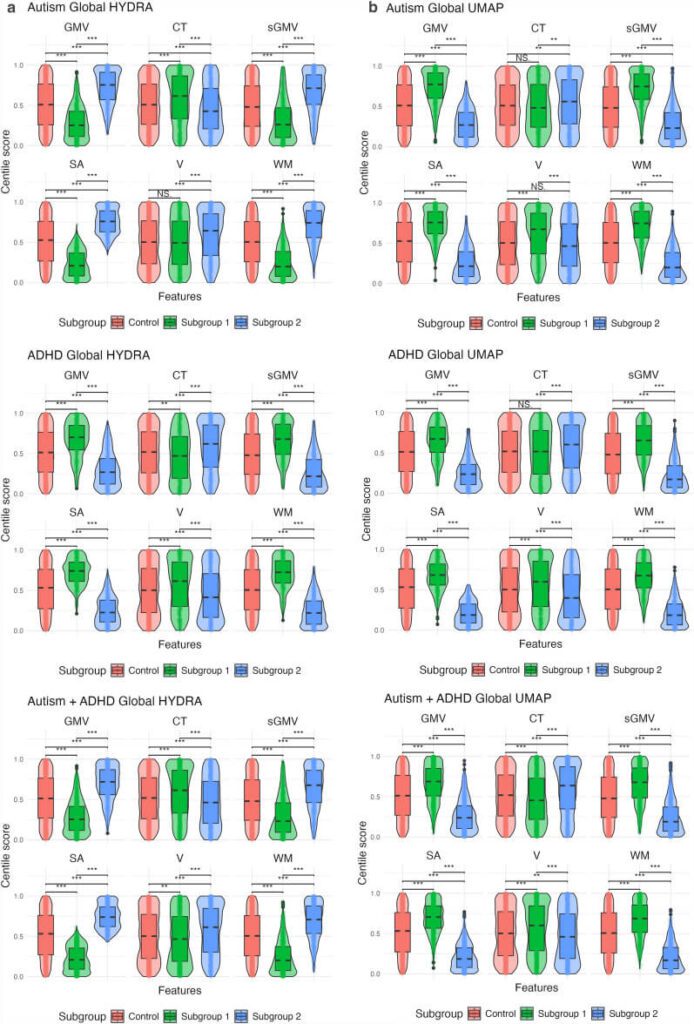
A June 2025 neuroimaging study examining brain structure patterns across individuals with autism, ADHD, and combined diagnoses, published in Molecular Autism by Pecci-Terroba and colleagues applies population modelling to cluster participants based on centile scores for cortical thickness, surface area, and grey matter volume, using HYDRA—a semi-supervised machine learning algorithm that identifies subgroups based on…
-

The material costs of educational harm
My son no longer attends school. He no longer wants anything the education system offers. He has taught himself programming, navigates Linux with expertise that exceeds my own knowledge, learns alone in his room because learning with others became too expensive to survive. The district asks affectionately how he is, suggests I login to their…
-

How collective punishment turns provincial funding failure into disabled children’s “behavioural failure”
Many years ago, my kindergarten child Robin went onto an ice field during recess. Robin was seeking sensory input—the visual shimmer, the cracking sound, the tactile feedback their nervous system required. The school had told students to avoid the ice for safety reasons. Robin’s support worker redirected them repeatedly; Robin kept returning. Eventually the principal…
-

VSB’s FESL report: the aesthetics of performative accessibility
An analysis of how VSB’s FESL report performs inclusion through language and process while avoiding measurement, accountability, and material change.
-

Lord Beaconsfield Elementary School (SD39 Vancouver): a neurodiversity-informed policy critique
Lord Beaconsfield Elementary School’s Code of Conduct, reviewed June 19, 2024, presents itself as a framework for creating a “safe, inclusive, equitable, welcoming, nurturing, and healthy school environment.” The document employs the language of care, respect, and community while constructing a disciplinary architecture that presumes neurotypical development, rewards compliance, and positions disability as exceptional deviation…
-
Surrey FESL report shows why FESL is designed to fail
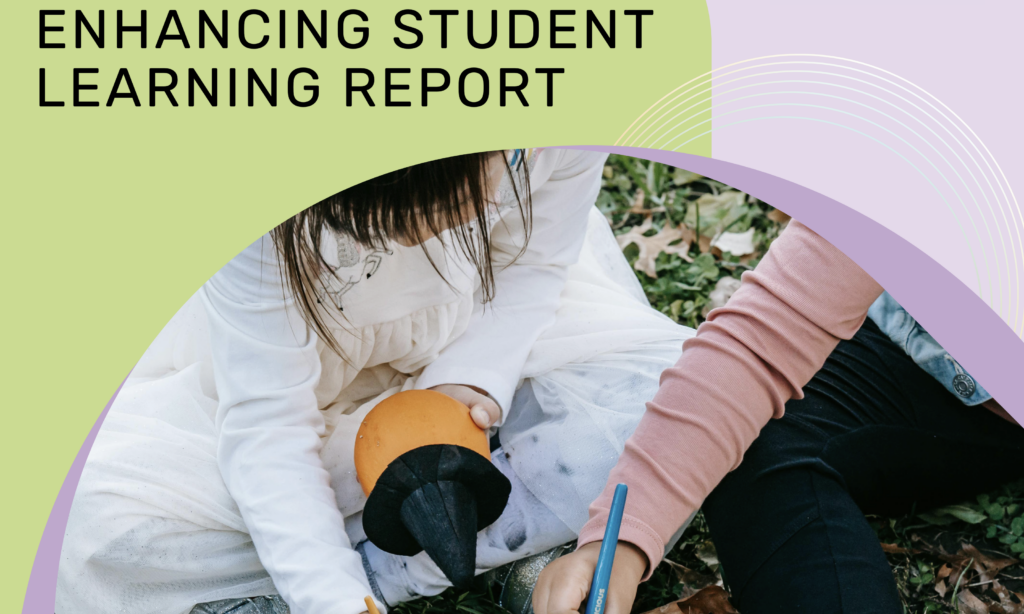
Surrey School District’s 2025-26 Enhancing Student Learning Report spans 42 pages across two documents, presenting what appears at first glance as a model of comprehensive educational accountability—extensive data visualisations tracking student outcomes across multiple measures, disaggregated by Indigenous identity, English language learner status, and disability designation, accompanied by detailed narrative analysis of gaps, strategic responses,…
-
What Arrow Lakes reveals about BC’s FESL
School District 10, Arrow Lakes, is often described, including by itself, as a best‑case scenario for public education in British Columbia. It is small, rural, relational, and values‑driven. It knows its learners. It emphasises inclusion, connection to land, and collaboration. If any district should be able to identify and respond to exclusion quickly, it is…
-
Kamloops mother speaks after district ignored daughter’s dyslexia for thirteen years
‘She was failed’: Mother speaks out after Kamloops student’s dyslexia ignored tell the story of Heather Morrison. She spent thirteen years asking teachers and principals to assess her daughter for learning disabilities, watching her child move through kindergarten to graduation while reading at an elementary level, her distress mounting with each deflection, each dismissal, each…
-

Alberta’s erasure of disability rights
In November 2025, the Alberta government released the final report of the Aggression and Complexity in Schools Action Team, offering seven recommendations to address what it calls “rising aggression and complexity in classrooms.” The package includes $300 million over three years to hire 1,500 educational assistants, the creation of a Class Size and Complexity Cabinet Committee,…
-

Surrey School District is self congratulatory while exclusions continues
Surrey Schools’ International Day of Persons with Disabilities announcement celebrates procedural progress at the very moment families continue pressing for basic transparency around exclusionary practices. On December 3, the district marked the day by releasing a progress report on its three-year accessibility plan. The report highlights achievements including animated videos defining accessibility terms, tools for…
-

The return of functioning labels: How austerity turns advocacy into competition
A parent recently posted about profound autism, describing the experience of having her son’s reality erased when people say that “profound autism” doesn’t exist. Her frustration is legitimate—parents of children with intensive, lifelong support needs face profound institutional abandonment, and “profound autism” names a reality that deserves recognition and resources. But her post also illustrates…
-

Why I won’t stop in 2026
The principal used collective punishment against my child almost two years ago, and yet I remain unreconciled to what she did. People suggest moving on, starting fresh, forgiving. Schools are obsessed with ‘fresh starts,’ framing each September as reset opportunity, as though institutional harm dissolves at arbitrary calendar boundaries. My daughter carries what happened in…
-

The principal’s casualness reveals authorisation to harm
When a principal cancelled my daughter’s volleyball game with bureaucratic ease, her comfort while causing harm revealed systematic institutional authorisation.