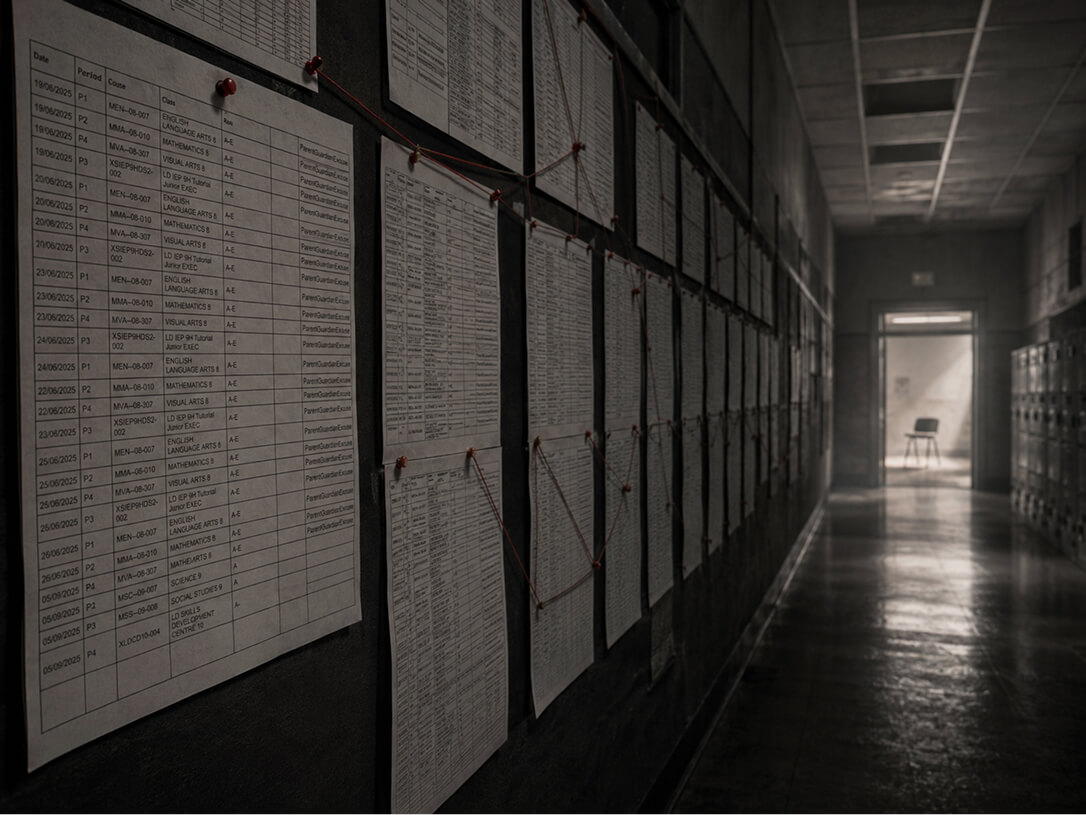
When your child experiences harm in a British Columbia public school—when they are excluded, punished unjustly, denied accommodations, or subjected to practices that violate their dignity—you enter a landscape designed to exhaust rather than resolve, to defer rather than repair, to protect institutional reputation rather than protect children. This guide maps that terrain, naming the mechanisms through which schools manufacture compliance while resisting accountability, and outlining the legal frameworks, tactical approaches, and collective strategies that families use to demand what children deserve: education without violence, support without coercion, and inclusion without conditional performance.
Advocacy in BC schools is not simply a matter of polite conversation or collaborative problem-solving, though these approaches sometimes yield movement when schools retain capacity for good faith engagement. Advocacy becomes necessary when institutions reveal themselves unwilling to provide what the law already guarantees, when they deploy procedural delay as deterrent, when they weaponise parental emotion as evidence of unreasonableness, and when they frame children’s disability-related needs as burdens rather than rights. The advocacy pathways available to BC families exist precisely because schools systematically fail children, particularly disabled children, children experiencing poverty, Indigenous children, and children whose neurological differences or trauma histories make compliance-based discipline regimes intolerable.
This guide synthesises legal frameworks with lived experience, connecting statutory obligations to the institutional practices that violate them. It assumes you are advocating because harm has occurred or continues to occur, because informal resolution has failed or seems unlikely to succeed, and because you recognise that protecting your child requires understanding both the rights they hold and the mechanisms through which schools evade accountability for violating those rights. The information here builds on years of parent testimony, tribunal decisions, policy analysis, and the accumulated knowledge of families who discovered that advocating effectively requires becoming expert in systems designed to remain opaque.
A note on legal context: This document is grounded in lived experience, public decisions, and the shared language of school-based advocacy in British Columbia. It is not legal advice. We are parents, not lawyers. Nothing in this resource should be taken as a substitute for formal legal consultation. If you believe your child’s human rights may have been violated, we strongly encourage you to connect with the BC Human Rights Clinic or a qualified legal advocate.
-

The 123s of advocacy strategy
These strategies are practical steps you can take to help your child access support—whether you’re just starting out or navigating a complex situation.
Understanding your rights under BC law
Before you can advocate effectively, you need clarity about what the law actually requires schools to provide. BC families hold rights derived from multiple sources: the School Act establishes basic entitlements around consultation and access to information; the Human Rights Code protects against discrimination and mandates accommodation to the point of undue hardship; ministerial orders and policies create obligations around IEP development and inclusive placement; and case law—particularly the Supreme Court’s Moore decision—defines what constitutes adequate special education and access to learning.
The School Act grants parents specific entitlements that schools cannot legally deny. Section 4 establishes that students are entitled to consult with teachers, principals, vice-principals, or directors of instruction regarding their educational programme. Section 7 specifies that parents are entitled to be informed of their child’s attendance, behaviour, and progress in school, and that parents may consult with school staff regarding their child’s education—and at the request of school personnel, parents must consult. These provisions create baseline expectations for communication and transparency that schools sometimes violate through silence, evasion, or outright refusal to respond to parent inquiries.
Section 11 of the School Act provides an appeal mechanism when school decisions “significantly affect the education, health or safety of a student.” Every public school district maintains a bylaw establishing procedures for Section 11 appeals to the board of education. Understanding that shattered pathways of parent advocacy in BC’s public schools often leads to board appeals helps families recognise both the potential and the limitations of this mechanism—boards rarely overturn administrative decisions, timelines extend advocacy labour across months, and the process itself functions primarily to exhaust families rather than deliver justice. Nevertheless, threatening or filing Section 11 appeals sometimes creates leverage that informal processes do not.
The Human Rights Code supersedes all district policy, ministerial orders, and even statutory provisions when discrimination occurs. Section 8 of the Code prohibits discrimination in services, accommodations, and facilities customarily available to the public based on protected grounds including physical disability, mental disability, and family status. Every child with a disability—diagnosed or perceived—holds human rights protections regardless of whether they possess an IEP, designation, or any formal recognition from the school. The Code requires accommodation to the point of undue hardship, which jurisprudence establishes as an extremely high threshold that resource scarcity does not meet.
The landmark Supreme Court decision in Moore v British Columbia (2012) established that adequate special education is not “a dispensable luxury” and that accommodation measures serve as “the ramp that provides access to the service” of public education. Moore confirmed that schools must provide disabled students with meaningful access to learning, that simply placing a child in a classroom without adequate support constitutes discrimination, and that districts cannot use resource limitations to justify failing to meet individual student needs. Every advocacy conversation in BC schools operates in the shadow of Moore, whether school personnel acknowledge it or not—this decision fundamentally altered the legal landscape around disability accommodation in education.
Recent tribunal decisions continue refining what these protections mean in practice. The discrimination test established in Moore and developed through subsequent BCHRT cases asks whether a child experienced adverse treatment in education services connected to a protected ground. Schools violate this test when they deny accommodations, when they implement exclusionary discipline that disproportionately harms disabled students, when they modify schedules to reduce instructional time without justification, and when they frame disability-related behaviours as misconduct requiring punishment rather than support. Understanding how collective punishment functions as accommodation denial helps parents recognise discrimination even when schools deploy facially neutral disciplinary practices.
Ministerial Order 638/95 and subsequent policy documents establish requirements for IEP development, inclusive placement, and consultation with parents of students with special needs. Schools must offer to consult with parents regarding educational programme placement, must provide education in integrated classrooms unless the child’s needs or the needs of other students indicate otherwise, and must develop IEPs that identify learning outcomes, instructional and assessment methods, and required supports. Recent tribunal decisions confirm that IEPs carry legal force—they are not suggestions or aspirational documents but enforceable commitments that districts violate when they fail to implement documented accommodations.
-

School discipline in British Columbia: what parents of disabled children need to know
In British Columbia, school discipline is usually described as a neutral, even benevolent process. Brochures reassure parents that discipline is not punishment, that it teaches self-control, and that consequences help children learn responsibility. The Vancouver School Board’s Discipline at Home and School guide…
Recognising when advocacy becomes necessary
Many families enter advocacy reluctantly, hoping that informal conversation will resolve concerns, trusting that educators genuinely want to support their children, believing that schools share their commitment to inclusion and dignity. This hope is not naive—some teachers and administrators do maintain ethical clarity about their obligations, do prioritise children over institutional convenience, and do respond to parent concerns with good faith problem-solving. But schools as institutions operate according to logics that frequently conflict with individual child welfare: budget constraints shape service delivery, liability concerns drive defensive documentation practices, and organisational culture often protects adult comfort over student safety.
You know advocacy has become necessary when schools:
- minimise documented harm,
- attribute your child’s distress to factors outside their control,
- suggest accommodations are unreasonable or excessive,
- frame your requests as demands rather than legal entitlements, or
- begin characterising you as difficult, unreasonable, or adversarial.
Institutional gaslighting manifests in these deflections—schools deploy it to preserve their narrative of competence while refusing accountability for the harm they cause.
Collective punishment signals that advocacy is necessary because it reveals schools treating fairness as dispensable, implementing discipline that violates basic justice principles, and teaching children that authority can harm them arbitrarily. When your child reports that their entire class lost recess, that privileges disappeared because of another student’s behaviour, that field trips were cancelled as group consequences, or that teachers punish everyone to avoid “singling out” individuals, you are witnessing practice that many districts officially prohibit but tacitly permit. Recognising the signs your child’s teacher uses collective punishment helps parents identify harm that children struggle to articulate and that schools work actively to obscure.
Modified schedules, partial day attendance, room clears, and informal exclusions indicate that schools are denying your child access to education while avoiding the procedural requirements that formal suspension would trigger. When administrators suggest your child would benefit from shortened school days, when they implement “safety plans” requiring parent retrieval, when they consistently remove your child from learning environments, or when they frame exclusion as support, they are violating the duty to accommodate while manufacturing documentation that protects them from accountability. These practices function as segregation disguised as individualised programming, and they demand immediate advocacy response.
IEP meetings that feel performative rather than collaborative signal institutional resistance to meaningful accommodation. When seven professionals arrive with predetermined conclusions, when parent input receives polite acknowledgment but produces no substantive change, when goals focus on compliance rather than learning access, when goals focus on overcoming ‘weaknesses’ instead of ever following curiosity or building on strength, when accommodations appear aspirational rather than implemented, or when schools treat IEPs as documents for compliance theatre rather than enforceable commitments, families recognise that advocacy must escalate beyond requesting what should already exist.
Understanding denial of accommodations and starting to document
Documentation creates the evidentiary foundation that advocacy requires, particularly when you need to demonstrate patterns of institutional failure, when informal resolution proves impossible, or when you pursue formal complaints through human rights processes or Section 11 appeals. Schools understand that what remains undocumented can be denied, minimised, or reframed to serve institutional narratives—this is why they carefully control meeting records, why they resist putting accommodation denials in writing, and why they prefer verbal conversations to email exchanges. Your documentation practice must counter this asymmetry by creating comprehensive records that survive institutional efforts to erase or distort what occurred.
Email all requests, concerns, and summaries of verbal conversations. If a teacher or administrator discusses something significant by phone or in person, follow up immediately with an email confirming what you understood them to say and what you requested or agreed to. Schools sometimes claim misunderstanding or deny that conversations occurred—contemporaneous written records make these deflections harder to sustain. Date every communication, save all correspondence in chronological folders, and maintain backups in multiple locations. The question is not whether you will eventually need this archive, but when.
Document incidents with specificity: dates, times, locations, who was involved, what occurred, what your child reported, visible impacts on your child’s wellbeing, and any school response or lack thereof. When your child experiences collective punishment, record the specific consequence imposed, the stated or implied reason, how many students were affected, whether your child was responsible for the triggering behaviour, and how your child describes the emotional impact. When schools implement room clears or modified schedules, document each instance, the justification offered, the duration of exclusion, the learning your child missed, and any pattern across incidents.
Photograph or preserve evidence when possible. If your child’s accommodations fail and the school returns their belongings in a garbage bag at year’s end, photograph it. If behaviour charts publicly shame students, document them. If written communications reveal discriminatory attitudes, preserve them. Physical and visual evidence carries weight that testimony alone sometimes cannot, particularly when schools deny practices that families describe. If you’re struggling to understand what denial of accommodations looks like, From trauma to topology helps explain accommodation denial mechanisms and the denial network visualization, shows the relationships between objects and accommodations.
-

From trauma to topology: the grotesque work of quantifying institutional denial
When institutional harm accumulates in childhood—in objects confiscated, spaces denied, bodies excluded—the evidence lives first in memory and affect. The saucer eyes of a humiliated or frightened child. The sting in the sobs of a child who just wants to be with her…
Tracking denial of accommodation
Track accommodation requests and district responses systematically. Create a spreadsheet logging each accommodation you requested, the date of request, to whom you directed it, the school’s response, whether they implemented it, and any follow-up required. This format reveals patterns—schools that consistently deny certain accommodation types, administrators who deflect rather than respond substantively, or districts that claim resource limitations for accommodations that require minimal expense. Pattern evidence strengthens human rights complaints and Section 11 appeals by demonstrating systemic failure rather than isolated incidents.
Maintain incident logs for behaviours schools attribute to your child, particularly when those behaviours connect to disability or when schools use them to justify exclusion or denial of support. Note what happened, what preceded it, environmental factors that might have contributed, whether accommodations were in place, how staff responded, and consequences imposed. Over time, these logs often reveal that incidents schools frame as random or unpredictable actually follow identifiable patterns related to unmet accommodation needs, sensory overwhelm, or adult responses that escalate rather than de-escalate distress.
Request and preserve all official school records: report cards, IEPs, behaviour support plans, incident reports, suspension notices, and any correspondence from administrators. Submit Freedom of Information requests if schools refuse to provide documents you are legally entitled to access. FOI processes reveal what schools document internally versus what they share with families, sometimes exposing discrepancies between institutional narratives and internal communications.
-

“Urgent: Third Request” — what to do when schools ignore your emails
You write the email. You name the problem. You describe, in detail, what your child is experiencing and what they need to be able to participate. You’re respectful, clear, and solution-focused. And then—you wait. For many families, especially those raising disabled or neurodivergent…
Writing effective advocacy emails
The emails you send to schools serve multiple functions simultaneously: they communicate your concerns and requests, they create written records that schools cannot easily deny, they establish timelines for response and action, they demonstrate that you understand your child’s rights and your own, and they signal that you will not accept deflection or delay indefinitely. Effective advocacy emails balance professional tone with emotional clarity, assert entitlements without apology, reference legal frameworks when relevant, and request specific actions with specific timelines.
Begin emails with direct statements of concern or request rather than lengthy preambles. “I am writing to request accommodations for [child’s name] related to their diagnosed ADHD” communicates purpose immediately. Avoid softening language that undermines your position: “I was wondering if maybe” becomes “I am requesting,” “I’m sorry to bother you” disappears entirely, and “would it be possible” transforms into “I need you to.” You are not asking permission for what the law already requires.
Describe concerns with specificity rather than generalisation. Instead of “my child is having trouble at school,” write “On [date], [child’s name] was removed from the classroom for [duration] and placed in [location] without accommodations documented in their IEP. This is the [number] time this has occurred in [timeframe].” Concrete details resist minimisation and require substantive response.
State what you are requesting clearly and completely. Vague appeals for “better support” allow schools to offer tokenistic responses while claiming they addressed your concerns. Specific requests—”I am requesting that the following accommodations be implemented immediately: [list]” or “I need a meeting within one week to develop a plan that includes [specific elements]”—create accountability and make non-compliance visible.
Reference legal obligations when relevant but without excessive legalese. “The Human Rights Code requires accommodation to the point of undue hardship” or “Under the School Act, I am entitled to consult regarding my child’s educational placement” signals that you understand the framework governing school obligations without positioning yourself as adversarial. Some families worry that mentioning rights damages relationships—but relationships premised on schools honouring obligations only when parents remain ignorant are not relationships worth preserving.
Set reasonable but firm timelines. “Please respond by [date]” or “I would like to meet within the next week” establishes expectations while avoiding indefinite delay. If schools miss deadlines, follow up immediately: “I requested a response by [date] and have not heard from you. Please respond by [new date].” Document every delay.
Summarise verbal conversations in writing immediately afterward. “Thank you for speaking with me today about [topic]. I understand that you [summary of their position] and I requested [summary of your request]. Please confirm my understanding and provide your response by [date].” This practice prevents schools from later claiming different understandings or denying conversations occurred.
Copy relevant parties when escalating concerns. If a teacher fails to respond or implement agreed accommodations, copy the principal. If the principal minimises concerns, copy the district administrator responsible for inclusive education. If district administration proves unresponsive, copy the superintendent. Each escalation creates institutional pressure while documenting that you followed appropriate channels before pursuing external accountability mechanisms.
Close emails with explicit next steps and timelines. “If I do not receive a response by [date], I will [escalate to next level/file formal complaint/request Section 11 appeal].” Schools often respond more urgently when they understand that inaction carries consequences.
Maintain professional tone even when schools behave unprofessionally. Institutional systems weaponise parental emotion—they characterise justified anger as “inappropriate behaviour,” frame advocacy as “unconstructive,” and use any deviation from composed reasonableness to dismiss concerns. This is profoundly unjust, but it is tactical reality. Save emotional truth for contexts where it cannot be weaponised against you or your child.
Navigating IEP processes and meetings
Individual Education Plans theoretically serve as collaborative documents identifying student strengths, needs, goals, and required supports—but in practice, IEPs often function as institutional protection documents designed to demonstrate compliance while committing schools to minimal actual accommodation. Understanding how IEP processes work, what they should contain, and how schools manipulate them to avoid meaningful obligation helps families advocate for plans that actually serve children rather than simply satisfying bureaucratic requirements.
Schools must offer to consult with parents of students with special needs regarding educational placement and programme. “Offer to consult” means schools must initiate conversation, must genuinely engage with parent input, and must demonstrate that consultation influenced decisions. Meetings where administrators announce predetermined conclusions, where parent concerns receive polite acknowledgment but produce no substantive change, or where schools frame parent participation as optional input on decisions already made violate the duty to meaningfully consult.
IEPs must identify specific learning outcomes, instructional strategies, assessment methods, and required supports. Goals should address educational access and achievement, not behaviour compliance or social conformity. When IEPs include objectives like “will sit quietly,” “will follow group expectations,” or “will demonstrate appropriate social skills,” families should recognise goals designed to make disabled children easier for adults to manage rather than ensuring those children access learning. Reframe compliance goals as accommodation needs: instead of “student will remain seated,” the accommodation becomes “student requires movement breaks every [duration] and access to alternative seating options.”
Accommodations documented in IEPs are legally binding—schools cannot selectively implement only those they find convenient or claim that resource limitations excuse non-implementation. Recent tribunal decisions confirm this: despite Ministry claims that IEPs do not require parent signature and thus carry no legal force, the actual legal framework establishes that IEPs do have legal effect precisely because they flow from statutory and policy requirements around duty to accommodate. When schools fail to implement IEP accommodations, they violate both the specific plan and the broader human rights obligations that plan was meant to satisfy.
IEP meetings often feel like performances where real decisions happen elsewhere. Walking into rooms where seven professionals already sit laughing, where the atmosphere suggests casual collegiality among staff while parents arrive as supplicants, where parents receive twenty minutes to summarise years of advocacy while administrators appear to multitask, signals institutional dynamics designed to marginalise family knowledge. Bring support people to meetings—another parent, an advocate, a therapist who knows your child, anyone who can witness what occurs and help you process institutional dynamics that isolate and overwhelm.
Request written records of all meetings. Schools sometimes resist providing detailed minutes, claiming verbal summaries suffice—this resistance reveals their preference for controlling narrative. Follow up every meeting with your own written summary: “Thank you for meeting on [date]. I understand that [summary of discussion] and that the following actions were agreed: [list with responsible parties and timelines]. Please confirm my understanding.” This creates contemporaneous documentation that schools cannot later contradict without revealing dishonesty.
Refuse IEP language that obscures accommodation denials. When schools suggest goals around “building tolerance” for unsupported classroom environments, “developing independence” from required supports, or “improving self-regulation” without environmental modifications, they are framing their failure to accommodate as student deficits requiring remediation. Insist on goals that centre school obligations: “School will provide [specific accommodation]” rather than “Student will learn to manage without support.”
Challenge deficit-framing systematically. IEPs should identify strengths, interests, and capacities alongside needs—but many plans read as catalogues of inadequacy designed to document why inclusion proves impossible. When language focuses exclusively on what students cannot do, what they struggle with, or how they differ from neurotypical peers, it constructs disability as the problem rather than inadequate support. Bring your own strength-based descriptions of your child and insist they be included.
Recognise when IEP processes serve institutional liability management rather than educational planning. Schools that draft IEPs defensively—documenting every service offered, every parent contact attempted, every incremental accommodation provided—are building records to protect against future complaints. This documentation may create useful evidence if you later file human rights complaints, but it signals schools anticipating conflict rather than preventing it through adequate initial support.
-

25 things you can ask for on your child’s IEP
Individualised Education Plans (IEPs) in BC carry significant weight even though they are not legally binding contracts. Schools have policy obligations to follow them, they serve as evidence in Human Rights Tribunal complaints, and they document what your child needs to access their…
Understanding human rights protections and tribunal processes
The BC Human Rights Code provides the most powerful legal framework available to families whose children experience discrimination in education, but accessing this power requires understanding both substantive rights and procedural requirements for filing complaints. Human rights processes operate independently of school district authority, create accountability mechanisms that schools cannot evade through administrative delay, and can result in orders requiring systemic change alongside individual remedies—but they also demand significant emotional and logistical labour from families already exhausted by ongoing institutional failure.
Every child with a disability or perceived disability holds human rights protections regardless of IEP, designation, or any formal school recognition of their needs. The Code protects against discrimination based on physical disability, mental disability, and increasingly, family status when parents experience adverse treatment connected to advocating for disabled children. Schools that tell families they must pursue designation before accommodations can be provided, that claim resource limitations excuse accommodation failures, or that suggest certain disabilities are “not severe enough” to warrant support, are violating human rights law.
The discrimination test asks whether a child experienced adverse treatment (denial of service, different treatment, or adverse effect) in education services, and whether that treatment connects to a protected ground like disability. Adverse treatment includes exclusion, modified schedules that reduce instructional time, denial of requested accommodations, implementation of behaviour interventions that punish disability rather than provide support, and collective punishment that disproportionately harms disabled students whose behaviour frequently triggers group consequences. Schools violate human rights when they frame accommodation requests as unreasonable without demonstrating undue hardship, when they implement exclusionary discipline for disability-related behaviours, or when they provide disabled students with different educational experiences than their non-disabled peers without legal justification.
Duty to accommodate requires schools to modify policies, practices, or environments to remove barriers disabled students face in accessing education, up to the point of undue hardship. Undue hardship is an extremely high threshold—Supreme Court jurisprudence establishes that financial cost alone rarely constitutes undue hardship, that inconvenience to staff does not meet this standard, and that schools must demonstrate serious disruption to operations or genuine inability to accommodate before this defence succeeds. Schools claiming they lack resources to provide one-to-one support, that hiring additional staff proves too expensive, or that accommodating one student would require unacceptable changes to programming for others, are deploying arguments that tribunal decisions consistently reject.
Filing a human rights complaint begins with contacting the BC Human Rights Tribunal and completing intake processes. Complaints must be filed within one year of the last discriminatory incident, though this limitation period has some flexibility when discrimination continues. The tribunal first determines whether the complaint has sufficient basis to proceed—whether it identifies protected grounds, adverse treatment, and connection between the two. If accepted, the process moves through investigation, potential settlement discussions, and ultimately hearing if parties cannot resolve the matter.
Parents can file complaints on behalf of their children and increasingly can name themselves as complainants based on family status discrimination when schools have directed adverse treatment at parents for advocating. Recent decisions establish that education is a service to parents as well as students, that schools violating duty to accommodate children also harm parents who must absorb the costs of institutional failure, and that retaliation against parent advocates constitutes discrimination connected to family status.
Tribunal processes exact significant emotional costs. Families must compile extensive documentation, participate in settlement conferences where schools may offer tokenistic accommodations while refusing accountability, potentially testify at hearings where defence lawyers cross-examine their credibility, and wait months or years for resolution while their children continue experiencing harm. Settlement offers frequently arrive designed to resolve individual complaints without requiring systemic change—schools may agree to provide specific accommodations for the complainant child while refusing to alter practices that harm others. Deciding whether to accept settlement versus proceeding to hearing requires weighing immediate relief against broader justice, individual remedy against collective impact.
Successful tribunal complaints can result in orders requiring schools to provide specific accommodations, compensate families for expenses incurred due to discrimination, provide training to staff, or implement policy changes. However, enforcement remains challenging—schools sometimes ignore or minimally comply with orders, leaving families to pursue further action. The process itself serves advocacy purposes even when formal outcomes disappoint: complaints create public records of institutional failure, force schools to invest resources in legal defence rather than simply denying concerns, and demonstrate to other families that accountability mechanisms exist.
Understanding that there is a silent calculus embedded in every human rights complaint—how much energy, time, composure, and life force families will lose pursuing symbolic victories that cannot restore what schools destroyed—helps parents make informed decisions about whether this path serves their specific circumstances. Some families have resources and support to sustain prolonged legal processes; others need to prioritise immediate relief over systemic accountability. Neither choice represents failure.
Section 11 appeals to boards of education
The School Act provides an internal dispute resolution mechanism allowing parents to appeal school decisions “significantly affecting the education, health or safety of a student” to district boards of education. Section 11 appeals create opportunities to elevate concerns beyond school and district administration, to create public records of institutional failure, and sometimes to leverage settlement before hearings occur—but they also operate within systems designed to protect administrative decisions, where board members function as extensions of the bureaucracy they theoretically oversee rather than as independent adjudicators of parent concerns.
Every BC school district maintains a bylaw establishing procedures for Section 11 appeals. These bylaws typically outline timelines for filing, requirements for written submissions, hearing formats, and decision-making processes. Familiarise yourself with your district’s specific bylaw before beginning this process—districts often use procedural technicalities to dismiss appeals without substantive consideration.
Decisions eligible for Section 11 appeal include placement changes, service reductions, suspension or expulsion, denial of requested assessments or supports, implementation of behaviour plans without parent consent, and essentially any administrative decision that materially affects your child’s educational experience. Schools sometimes claim particular decisions fall outside Section 11 scope—this framing typically reveals their resistance to accountability rather than genuine jurisdictional limitations.
Written submissions should clearly identify the decision being appealed, explain why it significantly affects your child’s education, health, or safety, provide relevant background including previous advocacy efforts, cite applicable legal or policy frameworks, and specify the remedy you seek. Include all supporting documentation: emails demonstrating advocacy attempts, IEPs showing unmet needs, medical or psychological reports establishing impacts, and any other evidence substantiating your concerns.
Boards rarely overturn administrative decisions. Structural dynamics ensure this: board members rely on administrators for information about district operations, trustees often lack expertise in special education or human rights law, and institutional culture protects administrative authority over parent claims. Research on Section 11 outcomes reveals that even when families present compelling evidence of harm, boards typically uphold original decisions with terse, legalistic verdicts that offer closure without justice.
Nevertheless, filing Section 11 appeals creates several strategic advantages. The act of filing signals serious intent and sometimes prompts settlements before hearings occur, particularly when schools recognise that defending decisions publicly might reveal practices they prefer to obscure. Formal appeal processes generate documentation that strengthens subsequent human rights complaints or legal actions. Public hearings, when they occur, create records accessible to other families and sometimes to media, making institutional failure visible beyond individual cases.
Hearings themselves often feel performative. Districts may allow twenty minutes for families to present cases built on years of advocacy, may interrupt or limit testimony under procedural rules, may refuse to address specific questions parents raise, and may signal through body language that decisions arrived predetermined. Trustees who have “reviewed documentation” may never have seen what parents actually submitted, receiving instead administrative summaries designed to support existing decisions. The process exhausts by design.
If boards deny appeals, decisions can sometimes be challenged through judicial review in BC Supreme Court, though this requires legal expertise and resources many families lack. More commonly, families use denied appeals as evidence supporting human rights complaints or as documentation when escalating to Ministry of Education, Ombudsperson, or other external oversight bodies.
Challenging exclusionary discipline and accommodation denial
BC schools exclude disabled students through multiple mechanisms that avoid the procedural requirements formal suspension would trigger: room clears, modified schedules, partial day attendance, “safety plans” requiring parent retrieval, and collective punishment that makes school environments intolerable for children whose disability-related behaviours frequently trigger group consequences. These practices constitute discrimination when they deny disabled students access to education provided to non-disabled peers, when they punish disability rather than accommodate it, and when they frame exclusion as support while refusing to implement evidence-based interventions that would allow children to remain in learning environments.
Room clears—removing all other children from the classroom while leaving the distressed child isolated—functions as exclusion regardless of terminology schools employ. This practice isolates the struggling disabled child rather than supporting them, teaches that their distress makes them too dangerous for peer proximity, and frames their disability as threat requiring quarantine. When schools implement room clears repeatedly for the same child, when the duration extends beyond brief de-escalation periods, when children experience the trauma of watching all their classmates evacuated because of their presence, or when schools characterise room clears as necessary safety measures rather than accommodation failures, they are violating duty to accommodate while documenting their actions as appropriate response to dangerous behaviour.
Modified schedules that reduce instructional time without justification grounded in medical necessity or therapeutic need constitute denial of educational service. Schools suggesting children would benefit from attending half days, from starting late or leaving early, from having “rest days” mid-week, are usually attempting to reduce institutional burden rather than meeting genuine student needs. Ask directly: what evidence supports this reduction? What goals does this schedule serve? How will my child access the curriculum they miss? When do we expect to return to full-time attendance? Schools resistant to answering these questions reveal schedules designed for adult convenience rather than child benefit.
“Safety plans” requiring parent retrieval when children experience dysregulation or distress effectively exclude students by making attendance contingent on behaviour control that disability makes difficult or impossible. These plans often emerge when schools lack capacity or willingness to provide in-the-moment support, when they have decided certain children are too challenging for general education environments, or when they are manufacturing documentation to justify more formal exclusion. Refuse safety plans that require you to be available for immediate pickup—your employment, your other responsibilities, and your child’s legal right to education do not disappear when schools fail to accommodate appropriately.
Collective punishment disproportionately harms disabled children whose executive function challenges, sensory differences, communication needs, or trauma responses make neurotypical compliance difficult. When teachers cancel recess, withhold privileges, or impose group consequences for individual behaviour, disabled students often bear responsibility for triggering those consequences—and they absorb both the direct harm of punishment and the social harm of peer blame. Understanding how collective punishment teaches disabled children that their neurodivergence harms other people helps parents recognise this practice as discrimination masquerading as classroom management.
Challenging exclusionary practices requires naming them explicitly as accommodation denial rather than accepting school framing of these measures as support. When schools suggest reduced schedules, ask “What accommodation would allow my child to attend full time?” When they implement room clears, ask “What environmental modifications or adult supports would prevent these removals?” When they characterise behaviour as unsafe, ask “What evidence demonstrates you have attempted evidence-based, trauma-informed interventions before resorting to exclusion?”
Document every instance of exclusion: dates, duration, stated reason, learning your child missed, impacts on your child’s wellbeing, and patterns across incidents. Exclusion that appears random when viewed as isolated incidents often reveals clear patterns when compiled systematically—particular staff members who exclude more frequently, specific times of day when inadequate support becomes visible, environmental triggers that accommodations could address.
Insist that schools implement positive, evidence-based interventions before exclusionary measures. Occupational therapy consultation for sensory needs, speech-language pathology for communication support, behavioural consultation focused on skill-building rather than compliance, environmental modifications that reduce overwhelm—these accommodations require investment but honour duty to accommodate. Schools claiming they tried “everything” often mean they tried everything except actually addressing underlying needs.
Connect exclusionary discipline to human rights frameworks explicitly. “Removing my child from the classroom for disability-related behaviour constitutes discrimination under the Human Rights Code. I am requesting that you immediately cease this practice and implement the following accommodations instead: [list].” This language signals legal literacy while demanding substantive response.
-

The problem with the appeals process
When something goes wrong at school—when a child is excluded, harmed, or unsupported—families are told to “work it out with the school first.” That sounds reasonable on paper. But in practice, it’s vague, unstructured, and often retraumatising. I’ve gone through the Vancouver School…
Building advocacy networks and finding support
Advocacy work isolates by design—schools excel at making families feel they alone struggle, they alone have children too difficult for institutional accommodation, they alone deserve the treatment they receive. This isolation serves institutional purposes: disconnected families cannot compare experiences, cannot recognise patterns of systemic failure, cannot build collective power that might actually force accountability. Deliberately constructing advocacy networks counters this fragmentation, creates spaces where families access knowledge schools prefer to hoard, and builds solidarity that sustains the long labour of demanding justice.
- BCEdAccess Society operates as BC’s primary parent-led organisation focused on disability rights in education. Their Facebook group (BCEdAccess Private Parent/Guardian Forum) includes thousands of members who share strategies, emotional support, legal information, and collective knowledge accumulated through years of advocacy. Joining this community connects you to families navigating similar challenges and to people who understand advocacy’s emotional costs in ways that professionals and friends outside this work rarely can.
- Inclusion BC works provincially on disability rights and inclusive education advocacy, providing resources and policy analysis grounded in human rights frameworks. Their materials on what constitutes inclusive education, how accommodation differs from integration, and why segregated placements violate disabled students’ rights to learn alongside non-disabled peers offer theoretical grounding that complements tactical advocacy approaches. Inclusion BC’s emphasis on presumption of inclusion—that all students belong in general education classrooms with adequate support rather than needing to earn inclusion through compliant behaviour—aligns with legal obligations schools often violate by treating segregation as default and integration as privilege.
- BCCPAC (BC Confederation of Parent Advisory Councils) and local DPACs (District Parent Advisory Councils) theoretically provide advocacy support, though effectiveness varies significantly by district and individual council composition. Some DPACs actively support families experiencing conflict with schools; others function primarily as district partners unwilling to challenge institutional practices. Assess your local DPAC’s orientation before investing significant energy—councils that emphasise collaboration over accountability may not serve families whose children experience active harm.
- Dyslexia BC provides advocacy support, educational resources, and navigation assistance specifically for families of children with dyslexia and other learning disabilities. The organisation offers guidance on assessment processes, evidence-based interventions, and strategies for requesting appropriate reading instruction and accommodations within BC schools. Their resources help families understand what constitutes adequate literacy support under the Moore decision, how to challenge schools that deny structured literacy approaches despite documented need, and how to advocate when districts characterise dyslexia as requiring specialised intervention they claim exceeds their capacity rather than recognising it as disability requiring accommodation like any other learning difference.
- Disability Alliance BC offers legal information and support around human rights issues, including education discrimination. Their services include help navigating tribunal complaint processes, though resources remain limited and families often wait extended periods for support.
- BC Human Rights Clinic provides legal services for human rights complaints when capacity and priorities align with your case. Clinic lawyers occasionally take education discrimination cases, particularly those with broader systemic implications or strong evidentiary foundations. Intake processes are competitive and securing representation is not guaranteed, but attempting to access clinic services costs nothing beyond time invested in explaining your situation.
- Private advocacy coaches and consultants work with families on fee-for-service basis, offering everything from email drafting assistance to meeting accompaniment to comprehensive strategic planning. Costs vary widely, and quality remains inconsistent—some advocates bring deep expertise and genuine commitment to family empowerment; others primarily sell reassurance without substantive skill. Request references, ask about specific experience with cases similar to yours, and clarify exactly what services you are purchasing before committing financially.
- Connecting with other parents navigating similar challenges—whether through formal organisations, informal networks, or social media communities—provides both practical knowledge and emotional sustenance. Other parents understand advocacy’s toll in ways that professionals cannot, know which administrators actually respond to pressure and which simply perform consultation while entrenching resistance, and have tested strategies that may or may not translate to your specific context. These relationships also create opportunities for collective action when institutional patterns suggest systemic rather than individual problems.
-

Advocacy groups
This directory highlights advocacy organizations working to advance equity, inclusion, and disability justice in education. From parent-led networks to legal clinics and Indigenous-led reform movements, these groups are fighting for systemic change across BC and beyond. Most operate province-wide, while others support specific…
Escalating beyond district administration
Some advocacy situations exhaust internal resolution options. When school and district personnel refuse to implement legal obligations, when formal appeals to boards fail, when patterns of harm continue despite documented concerns, families must decide whether to pursue external accountability mechanisms or whether to redirect energy toward other options including school transfers, homeschooling, or private placements. Escalation creates new costs while offering uncertain outcomes—but sometimes external pressure generates movement that internal advocacy cannot.
- The Ministry of Education and Child Care holds ultimate responsibility for BC’s public education system, though Ministry intervention in individual district matters remains rare. Nevertheless, formal complaints to the Minister, particularly when they identify violations of ministerial orders or systemic policy failures, sometimes prompt Ministry inquiries that districts take seriously. Document comprehensively before contacting Ministry—vague concerns about inadequate support generate form letter responses, while detailed evidence of legal violations with specific remedy requests occasionally yields substantive engagement.
- The Ombudsperson investigates complaints about provincial administrative fairness and can examine school district practices when families have exhausted internal processes. Ombudsperson investigations carry no enforcement power—they result in recommendations that districts can ignore—but they create public records and sometimes reputational pressure that motivates compliance. File Ombudsperson complaints when districts violate their own policies, when they fail to respond to legitimate concerns within reasonable timelines, when procedural unfairness denies you meaningful participation in decisions, or when administrative behaviour suggests deliberate obstruction rather than good faith disagreement.
- The Teacher Regulation Branch investigates complaints about individual teacher conduct, though processes move extremely slowly and outcomes rarely satisfy complainants. TRB has authority to discipline teachers for professional misconduct but uses that authority sparingly, often imposing consent resolutions that include minimal conditions while preserving teaching certificates. File TRB complaints when teachers engage in conduct that violates professional standards—discrimination, abuse, failure to implement IEP accommodations despite clear direction—but understand that this process unfolds across years and that “discipline” frequently amounts to symbolic gestures designed to make cases disappear.
- Media engagement carries risks alongside potential benefits. Local journalism sometimes amplifies parent concerns in ways that create accountability pressure, particularly when reporters frame stories around systemic patterns rather than individual conflicts. However, schools and districts often retaliate against families who speak publicly, and going public eliminates possibilities for quiet resolution that some situations still permit. Weigh carefully whether media exposure serves your specific situation before sharing your story—and protect your child’s privacy and dignity throughout any public advocacy.
- Legal counsel provides expertise that self-representation cannot match but remains financially inaccessible for many families. Education lawyers can pursue judicial review of board decisions, can represent clients in human rights hearings, can negotiate settlements from positions of formal legal authority, and can deploy procedural knowledge that intimidates districts into compliance. Costs typically start at several thousand dollars and increase substantially if matters proceed to hearing. Some lawyers work on contingency, flat rate, or reduced rates for strong human rights cases, but most education advocacy requires upfront payment that families experiencing institutional discrimination often lack resources to afford.
When to consider alternatives to continued advocacy
Advocacy literature emphasises persistence, frames leaving as defeat, and suggests that families who abandon internal processes have failed children who deserve inclusion. This narrative serves institutions by keeping families trapped in cycles of advocacy labour that exhaust without resolving, by positioning departure as weakness rather than strategic choice, and by obscuring that sometimes the most loving response to ongoing institutional harm is removing children from environments actively damaging them.
You do not owe schools your continued presence when they demonstrate unwillingness to provide adequate support, when advocacy escalation produces retaliation rather than resolution, when your child’s mental health deteriorates under conditions schools refuse to modify, or when the emotional costs of ongoing conflict outweigh uncertain benefits of eventual victory. Leaving does not mean “they win”—it means you prioritised your child’s immediate wellbeing over institutional accountability, and that remains a defensible choice regardless of advocacy mythology suggesting otherwise.
School transfers within district sometimes provide relief when problems concentrate at specific schools with particular staff, though transferring also means starting advocacy processes again at new locations. Transfers work best when district maintains other schools with demonstrated inclusive practice, when your child’s needs do not require specialised programming unavailable elsewhere, and when you possess energy to rebuild relationships with new administrators and teachers. Transfers within the same district usually preserve access to existing IEPs and documentation, though new schools may resist implementing plans they did not develop.
Transfers to different districts require family relocation or enrolment in schools outside your designated catchment area, both of which create logistical and financial barriers. Some families move specifically to access districts with better reputations for inclusive practice, though reputation does not always match reality. Cross-district transfer applications face approval processes that districts control, and schools can refuse transfer requests without detailed justification.
Distributed learning and homeschooling provide alternatives to daily institutional exposure when schools prove unwilling to accommodate adequately. BC’s distributed learning programmes vary widely in quality, flexibility, and support for disabled learners—research programmes thoroughly before committing. Homeschooling offers complete curricular control but requires parent capacity to provide educational instruction, eliminates workplace income possibilities for primary teaching parent, and may not serve children whose disabilities require professional supports parents cannot replicate at home.
Private school placements sometimes offer smaller class sizes, more individualised attention, and willingness to accommodate that public schools refuse—but private schools are not subject to Human Rights Code requirements applicable to public services, can legally discriminate in admissions, and typically cost thousands to tens of thousands annually. Some families whose children experienced profound public school failure report that private environments provided safety and support worth the financial sacrifice; others find that private schools replicate exclusionary dynamics while charging for the privilege.
The decision to pursue alternatives rather than continued advocacy requires weighing multiple factors: your child’s current wellbeing and trajectory, your family’s financial and emotional resources, the likelihood that advocacy will eventually yield adequate support, the impacts of ongoing conflict on your child’s relationship with education, and what your child themselves wants. Some children beg to leave schools where they experience daily harm; others desperately want to remain with friends and familiar environments despite inadequate support. Their voice matters, though parents ultimately hold responsibility for decisions that children lack developmental capacity to make independently.
Recognising advocacy’s emotional and relational costs
Advocacy transforms relationships, bodies, and moral frameworks in ways that families rarely anticipate when they begin pushing for children’s rights. The work required to challenge institutional harm—the email composition at midnight, the document compilation across years, the meeting preparation that consumes weekends, the hypervigilance monitoring for next violation—reshapes family life around institutional failure. This transformation carries costs that disability rights narratives often minimise, costs that families absorb while institutions distribute harm across expendable individuals rather than addressing systemic problems that generate ongoing crises.
Burnout manifests not as simple exhaustion but as fundamental erosion of capacity to continue. Parents describe feeling simultaneously compelled to advocate and destroyed by advocating, caught in double binds where protecting children requires sustaining processes that are actively harming them, where stopping feels like abandonment but continuing feels unsustainable. Understanding that burnout is structural rather than individual failure helps resist narratives suggesting you simply need better self-care or stronger boundaries.
Relationships with partners, other children, friends, and extended family suffer under advocacy’s demands. The focus required to document institutional failure, the emotional intensity of ongoing conflict, the time consumed by meetings and email and research—all of this drains resources that relationships need to thrive. Partners sometimes disagree about advocacy approaches, creating additional conflict when families need unity. Other children may resent attention directed toward disabled siblings’ school struggles. Friends outside this experience struggle to understand why you cannot simply “let it go” or “focus on the positive.”
Your relationship with your child changes when advocacy becomes necessary. Nobody tells you that you can pour every last scrap of yourself into advocacy and still feel your bond with your child begin to strain—that the labour of fighting for them can paradoxically reduce the time and energy available to simply be with them, that they may blame you for conflicts with schools that you did not create but cannot resolve, that adolescent children may beg you to stop advocating because the visibility it creates feels more intolerable than inadequate support.
Physical health impacts accumulate. Chronic stress manifests as inflammation, sleep disruption, immune dysfunction, cardiovascular strain. Parents in prolonged advocacy battles report mysterious physical symptoms, autoimmune flare-ups, weight gain or loss unrelated to changed eating patterns, and general bodily breakdown that physicians often attribute to stress as though naming the cause offers remedy. The body keeps score even when we refuse to count the costs.
Moral injury occurs when you witness institutions systematically harming children while deploying language of care and expertise, when you recognise that the same professionals who claim to prioritise student wellbeing actively participate in exclusionary practices, when you understand that collaboration often means capitulation and that good faith engagement with bad faith systems generates only further harm. This recognition changes how you perceive authority, how you trust institutional claims, and how you navigate every future interaction with systems presenting themselves as supportive while acting oppressively.
Financial costs extend beyond obvious expenses like advocacy coaches or legal fees. Families often lose income when one parent must be available for school retrieval, for emergency meetings, for phone calls that cannot wait. Some parents quit employment entirely because advocacy demands and child care needs prove incompatible with workplace expectations. Private assessments, therapeutic services schools refuse to provide publicly, tutoring to address learning losses from exclusion—these costs accumulate into tens of thousands of dollars that families experiencing discrimination can least afford.
Maintaining hope without denial
The reality is this: most families advocating in BC schools will exhaust themselves pursuing justice that institutions refuse to provide. Board appeals will fail. Human rights complaints will settle for token accommodations without systemic change. Years of advocacy will yield minimal improvements while your child’s childhood passes under conditions that fail to honour their dignity or potential. Telling the truth about these outcomes does not constitute defeatism—it constitutes honesty that allows families to make informed decisions about how much of themselves they can afford to sacrifice pursuing accountability from institutions designed to resist it.
And yet. Families persist in this work not because they believe institutions will reform but because refusing complicity with harm matters regardless of outcome, because their children deserve to know their parents fought for them, because creating public records of institutional failure serves children beyond their own. Some parents file human rights complaints they know will fail because tribunal decisions become case law that future families can cite. Some document patterns across years because that documentation might eventually support collective action even when individual advocacy proves futile. Some speak truth about institutional violence because silence feels like betrayal of every other child experiencing what theirs endured.
Hope in advocacy contexts cannot rest on faith that systems will suddenly honour obligations they have always violated. Hope must instead anchor in commitment to act ethly regardless of institutional response, in solidarity with other families navigating similar struggles, in small victories that improve specific children’s immediate circumstances even when broader systems remain unchanged, and in long-term vision recognising that systemic transformation emerges from accumulated pressure over decades rather than from individual cases resolved within months.
Your advocacy—whether it lasts weeks or years, whether it achieves everything you sought or only fragments of it, whether it ends in victory or exhaustion or strategic retreat—matters. You are teaching your child that injustice deserves challenge, that they are worthy of dignity and support, that adults who claim authority over children’s lives hold obligations they cannot ethically evade. You are also teaching yourself about power, about how institutions protect themselves at the cost of the vulnerable, about what you are willing to sacrifice and what you must preserve. This knowledge carries weight, but it also carries power that outlasts any individual advocacy outcome.
The work continues. Schools will continue harming children. Parents will continue advocating. Some will achieve adequate support through persistence. Others will leave systems that prove irreformable. Many will do both at different moments, for different children, under different circumstances. All of these choices can honour children’s needs when made with clear understanding of what advocacy can and cannot accomplish, what it will cost, and what alternatives exist when institutions demonstrate they will not change.
You are not alone in this. Thousands of BC families navigate these same systems, experience these same barriers, and persist despite institutional resistance. The networks you build, the knowledge you share, the documentation you create, and the refusal to accept harm as inevitable all contribute to conditions where advocacy might someday face fewer obstacles than it does today. Until then, we do what we can, with what we have, for as long as we can sustain it—and we refuse to blame ourselves when institutions designed to exhaust us succeed in that design.