When the school handed me a garbage bag filled with jackets at the end of the year, it was evidence of a failed executive function accommodation. When I was handed a box containing hundreds of dollars of fidgets, it was evidence of a regulation accommodation that had been denied.
There’s a lot of reasons an accommodation can be denied. As I explored in Why teachers cannot be trusted to explain accommodation denial with so many reasons that appear to stem from personal bias or the individual experiences of a teacher, it can be overwhelming to disentangle which decisions reflect systemic forces rather than isolated incidents. In the school environment, there is enormous emphasis on professional autonomy and expertise, often paired with a persistent skepticism toward children’s own accounts. Disabled children, and autistic children in particular, are frequently treated as unreliable narrators: their reports of discomfort, need, or difficulty are dismissed as exaggeration, fabrication, or poor memory.
-

Why teachers cannot be trusted to explain accommodation denial
When my daughter reported that boys were harassing her through the bathroom door and the principal responded by telling her to return to class, the institutional response positioned her as the unreliable narrator—the one whose testimony required verification, whose distress could be minimised,…

This essay argues that beneath these individual behaviours are organising principles within the educational system that shape how accommodations are granted or denied. These principles create patterns that make some decisions seem paradoxical, arbitrary, or even punitive. For children who highly value truth, pattern recognition, and consistent expectations—traits common among autistic students—this inconsistency can make the school environment deeply confusing, stressful, and even intolerable. Over time, many children stop requesting accommodations entirely, worn down by the repeated experience of being disbelieved, humiliated, or denied.
This analysis will examine how reasons for denying accommodations are manufactured and rationalised, how institutional comfort and the comfort of professionals almost always outweigh the needs of the child, and how these dynamics collectively regulate behaviour, maintain hierarchies, and perpetuate ableism in everyday school life. By unpacking these patterns, we can better understand the mechanisms that make the educational landscape so challenging for disabled children—and why systemic reform is essential to create environments where accommodations are consistently recognised and respected.
Material witness
In my previous piece, Material Witness, I catalogued objects as physical testimony to the exclusion of my neurodivergent children. But the objects alone do not explain why the exclusion happens. To understand how schools build disability, we must interrogate the architecture of the refusal itself.
Why does a school individualise a pair of glasses without question but lock away a box of fidgets? Why is a yoga ball removed when non-disabled children play with it, when it is an essential support for a neurodivergent student in the class? Why is a bathroom closed to a girl seeking refuge because other girls are using it to chat?
To answer these questions, I have developed a taxonomy of refusal—a multi-lens analysis that maps the specific mechanisms schools use to deny access. This analysis is born from the “stereo testimony” of raising precociously hyperverbal and truth-telling and neurodivergent twins in the same system, from years of documented correspondence, and from the accumulated material evidence of many traumatic events in our life of advocating for human rights for my children.
This data table dissects eight specific objects through twelve distinct analytical lenses. It reveals that denial is rarely about a single factor; it is a compound fracture of logic where scarcity, control, and performative fairness intersect to disable the child.
-
Material witness: objects and architecture in the exclusion of disabled children
When schools perform inclusion while enacting exclusion, the evidence accumulates in objects and spaces, in the material culture of neurodivergent childhood, in the things that were meant to help but became instruments of control, in the architecture that promised safety but delivered abandonment.…

The methodology of lived experience
This analysis relies on a specific epistemological stance: that the parent and the disabled child possess the only reliable data on how accommodations function in reality. When my daughter reports that boys are catcalling her through the bathroom door and the principal tells her to just “go back to class,” that is a data point regarding the hierarchy of safety. When my son climbs a tree to escape an inaccessible playground and is taunted by children and yelled at by staff, that is a data point, illustrating the culmination of many accommodations denied.
My background in data architecture and feminist theory allows me to see these incidents not as isolated anecdotes, but as a systemic pattern. Some themes emerge:
- The universal accommodation trap (weaponised fairness)
Schools often attempt to “universalise” an accommodation to avoid the stigma of individual difference. But this creates a trap: when an accommodation becomes popular or “fun” (like a fidget or a yoga ball), schools claim they cannot manage it for everyone, and therefore must remove it for the disabled child. “Fairness” becomes the weapon used to sever access. Also, accommodations are often diluted to universalise them and without consulting the child or family are rendered unhelpful. - The scarcity alibi
Universal Design for Learning (UDL) exposes the engineered famine within public education. In a well-resourced school, twenty-six children with fidgets would be entirely manageable. Yet in a context of scarcity, individual needs are treated as disruptions, and popularity or visibility of certain children becomes equated with chaos. Schools often remove accommodations rather than allocate resources to meet the need, framing lack of staffing or time as a natural constraint and conveniently ignoring human rights obligations.
Another dimension of this scarcity is the push to universalise supports. When individual accommodations are too time-consuming or labor-intensive to administer, schools often opt for “one-size-fits-all” solutions that can be implemented in bulk. This approach reduces staff workload, but it prioritises institutional convenience over the nuanced needs of individual students, effectively turning scarcity into an excuse for denying personalised support. - Control anxiety and the threat of joy
The data reveals a stark hierarchy: accommodations that produce stillness and silence (headphones or glasses) are tolerated; accommodations that produce movement, noise, or joy (yoga balls, fidgets) are criminalised. If a regulation strategy looks like “playing,” the institution recodes it as a privilege to be revoked rather than a medical necessity to be protected.
-
Coercive proceduralism, bandwidth theft, and the colonisation of neurodivergent childhood
Families of neurodivergent children are often coerced into endless therapy to access school support—yet the harm lies in the institution, not the child. This essay explores how coercive proceduralism and bandwidth theft turn care into compliance, and why rest, not more intervention, may…

When the system works unconditionally
To truly understand the taxonomy of refusal, we must establish a baseline: what happens when a school cannot refuse? This requires introducing objects that were accommodated immediately and without question. These objects, from my own childhood, reveal the system’s inherent capability and expose the political nature of the refusal mechanism.
👓 The Glasses
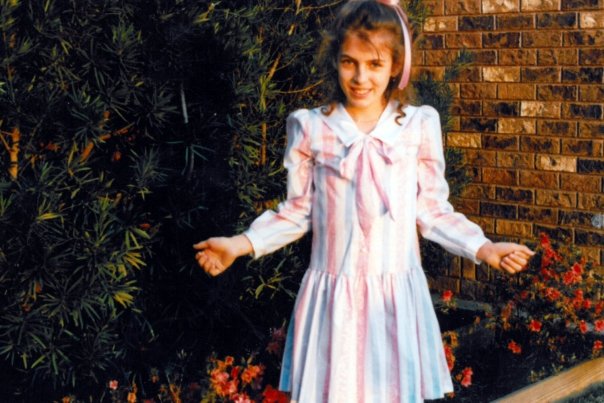
In Grade 6, my teacher, Miss Richards, noticed something I had internalised as normal: I was squinting and furrowing my brow, constantly covering one eye to try and force the world into focus. Unlike the fidgets—which look like play—my vision struggle was an accepted marker of physical disability. Miss Richards simply mentioned to my parents that I needed my vision tested. The resulting -3 prescription changed my life.
The accommodation was offered unconditionally. No one suggested I try “seeing harder” first. No one argued that giving me glasses would be “unfair” to my classmates with 20/20 vision. No one said, “We can’t afford to give glasses to every student, and it would not be fair if only one student got them, so we must remove them from you.” The problem was recognised, the external authority (the optometrist) validated it, and the fix was integrated seamlessly. The Glasses prove that the system is capable of immediate, individualised, life-changing support when the need is legible to it.
| Lens | Analysis of The Glasses |
| Hierarchy of legitimacy | The need was accepted as an objective, medical fact requiring immediate intervention. |
| The anti-fairness trap | The accommodation was individualised without question, proving that universalism is only weaponised when the accommodation looks like joy or play. |
| Control anxiety | Glasses produce no noise, require no movement, and do not look like a toy. They pose no threat to the aesthetic of control. |
🏥 The Splint
The second data point comes from a game of kickball in the gym. Due to hypermobility, my index finger caught the ball and bent backward at a grotesque angle. By the time I reached the school office, the finger was visibly crooked, swollen, and already turning blue. This was not an invisible, chronic struggle; it was acute, visible trauma.
The response was immediate and resourceful. A Splint was applied, ice was offered, and my parents were called—all without hesitation. The “scarcity alibi” vanished. The staff had the time to fetch ice and make calls, the resources to provide first aid, and the clear mandate to act. The Splint demonstrates that when the harm is physical, acute, and visible, the school prioritises care. The fact that the same school system could not spare two minutes a day to help my son remember his coat, or provide a single, quiet lunch spot for my daughter away from poop and fart jokes so she could eat without paralysing revulsion, reveals that their refusal to act on invisible or “behavioural” needs is a choice of ideology, not a lack of capability.
| Lens | Analysis of The Splint |
| Visibility of need | The injury was visually undeniable (bent, blue finger). This legibility granted immediate, full access to resources. |
| The scarcity alibi | Resources appeared instantly (ice, splint, staff time). The scarcity that prevents minor supports for executive function evaporates when the injury is physical. |
| Hierarchy of harm | The physical injury was treated as a harm to be fixed, whereas the psychological harm from the sticker chart or the sensory harm from the cafeteria noise was often dismissed as a preference or a behaviour. |
The data table
The following table applies these lenses to the material evidence found in my children’s school lives. It serves as a living archive of refusal, documenting exactly how the system converts a request for support into a justification for abandonment.
| LENS | Fairness Logic | Fairness Logic | Fairness Logic | Fairness Logic | Scarcity Logic | Scarcity Logic | Scarcity Logic | Control Threat | Control Threat | Control Threat | Legitimacy Determination | Legitimacy Determination | Legitimacy Determination | Knowledge Hierarchy | Knowledge Hierarchy | Knowledge Hierarchy | Knowledge Hierarchy | Hierarchy of Needs | Hierarchy of Needs | Hierarchy of Needs | Joy Index | Joy Index | Visibility of Disability | Visibility of Disability | Documentation Trap | Documentation Trap | Independence Dogma | Independence Dogma | Safety | Safety |
| OBJECT | Useful for disabled? | Useful for non-disabled? | School’s fairness response | Outcome via fairness logic | What adequate resources would allow | What scarcity produced | Actual cost to fix | What it produces | Threat to control | How denied/removed | Perceived legitimacy | Visibility of need | School treatment | Parent/child knowledge | Professional override | Evidence provided | School response to evidence | Child’s need | Adult/system priority | Whose comfort won | Looks enjoyable? | How coded | Makes disability visible? | School preference | Documentation required | School’s Response | “Building resilience” rhetoric? | Specific framing | Safety concern raised? | Actual safety issue? |
| Glasses | Yes – essential to see | No | Not applicable | Not a fairness issue | All children would receive if needed | Some kids not tested | Requires screening | Not applicable | None | Not applicable | Extremely high | Highly visible (squinting) | Individualised without question | Child: squinting and unable to see board | Teacher: told parent child needs glasses | Teacher pattern observation | Individualised without question | Tool to see and access instruction | Child should watch my instruction | Child | No | Necessary Accommodation | Yes – widely accepted, broadly adopted accommodation | Visibible | Prescription from Optometrist | Endorsed | No – being able to see is seen as necessary/conducive to compliance | Endorsed without undue suffering | No | No – would be unsafe if could not see |
| Splint (sprained finger) | Yes – essential to heal | No | Not applicable | Not a fairness issue | All children would receive if needed | Not applicable – deemed medically necessary | Requires medical care | Not applicable | None | Not applicable | Extremely high | Highly visible (swollen/blue) | Individualised without question | Child: cried and requested ice/treatment | School nurse: applied splint | Child testimony | Individualised without question | Tool to straighten and compress broken finger | Feels charitable to dress the wound of poor hurt child | Child | No | Necessary Accommodation | Yes – medically necessary | Visibible | Application by school nurse | Endorsed | No – splint makes visible school’s care | Endorsed without undue suffering | No | No – finger would heal crooked if not splinted |
| Fidgets | Yes – essential for regulation | Maybe – enjoyable to fidget | “Everyone would want access” → universalized then controlled | Universal accommodation transformed to locked contraband. All children denied when system couldn’t manage popularity | Teaching appropriate fidget use to all students, maintaining individual access | “Too many kids accessing boxes without permission” → unmanageable → locked away | Minimal – teaching time only | Movement (hands), noise (clicking), visible stimming | Children accessing regulation tools without permission = autonomy over authority | Universalized then locked in resource room – accommodation exists but inaccessible | Low – coded as preference/toy | Invisible when working, visible when stimming | Universalized then controlled (never individualized as medical) | Parent: child needs fidgets to regulate | Teacher: “too distracting,” locked away despite need | Parent observation + continued provision | Acknowledged need (universalized) then controlled access | Sensory regulation to stay present in body | Orderly classroom appearance, teacher control | Teacher | Yes – satisfying to use | Toy/preference, not medical | Yes – stimming visible when using | Invisible (hence the lock – accommodation exists but can’t be seen being used) | Started as universal, then controlled | Nothing would maintain access – locked away despite provision | No – but “asking permission” framing similar | Must ask permission to access regulation = teaching control | Possibly – choking hazards | No – age-appropriate fidgets |
| Bathroom stall | Yes – essential sensory refuge | Yes – social space for girls | No fairness rhetoric used | Not applicable to this mechanism | Supervising hallways, addressing harassment, maintaining refuge access | “Can’t supervise everywhere” → bathroom closed entirely | Requires supervision/intervention | Movement out of classroom, time away from surveillance | Teacher can’t monitor what happens outside classroom | Boys harassed her there, then bathroom locked entirely | Medium – sensory needs often dismissed | Invisible need (refuge), visible movement (leaving room) | Denied – refuge removed, harassment unaddressed | Child: reported harassment, asked for help | Principal: told her to return to class instead of addressing boys | Child testimony | Ignored – told child to return to class | Sensory refuge, escape from overwhelm | Adult surveillance, boys’ freedom from consequences | Boys + administrator | No – refuge, not fun | Avoidance behavior | Somewhat – leaving room visible | Invisible (child should regulate in classroom without leaving) | None requested, child testimony ignored | Child report insufficient | Implicit – should handle classroom | Return to classroom = cope without escape | No | Yes – harassment ongoing |
| Lunchroom | Yes – needs quiet to eat | Maybe – others might prefer quiet | “Can’t give alternate space to just a few students” | Denied alternate lunch location because “everyone would want it” | Supervising alternate quiet lunch location for sensory-sensitive students | “No staff available for alternate location” → denied entirely | Requires one adult in alternate space | Visible difference (eating separately), potential joy in quieter space | Separating from group threatens uniformity norm | Denied alternate location despite medical need | Medium/Low – ARFID not understood as medical | Invisible (looks like picky eating) | Denied despite medical documentation | Parent: observed she can’t eat there, pediatrician documented weight 1st percentile | School: ignored alternate space request, denied desk snacks | Medical letter + parent observation | Ignored – denied accommodation despite documentation | Safe space to eat without sensory assault | Maintaining uniform lunch location, no extra supervision | System convenience | Maybe – quieter might be pleasant | Preference/pickiness, not medical | Yes – eating separately announces difference | Invisible (eat with everyone or appear “normal”) | Medical letter provided | Medical letter insufficient – still denied | Implicit – should eat with everyone | “Tough” framing – she doesn’t need food | No | Yes – starvation, 1st percentile weight |
| Tree | Yes – regulation through height/distance | No | Not applicable | Not a fairness issue | Maintaining adequate support over time, preventing withdrawal when child seems stable | Support withdrawn prematurely → dysregulation accumulates → crisis | Requires consistent staffing/support | Unauthorized movement, extreme height, visible crisis | Child literally beyond reach of adult control – spectacle of “zero to sixty” | Support withdrawn → crisis accumulates → climbing framed as the problem | Low – dysregulation coded as behavioral | Highly visible (spectacle of crisis) | Abandoned – support withdrawn, climbing framed as choice | Parent: identified pattern of support withdrawal → dysregulation | School: “zero to sixty” framing blamed child | Parent pattern observation | Dismissed – blamed child’s regulation | Escape when dysregulated beyond capacity | Appearance that child can manage without ongoing support | System (staff resource allocation) | No – desperate escape | Behavioral/defiant | Extremely – crisis is spectacle | Invisible (child should regulate without dramatic display) | None requested | Not applicable – framed as behavioral not medical | Yes – support withdrawn when “doing better” | Building independence by withdrawing support | Yes – climbing danger | Yes – potential fall |
| Bag of jackets | Yes – executive function support needed | No | Not applicable | Not a fairness issue | Staff helping children gather belongings at day’s end (executive function support) | “Can’t help every child” → jackets accumulate, child judged as having inadequate mother | Minimal – 2 minutes per day | Would require adult time/attention at dismissal | Children should manage own belongings (bootstraps logic) | Accommodation denied, jackets accumulate, parent blamed | Low – executive function not recognized | Invisible (looks like disorganization/bad parenting) | Denied – framed as parent/child failure | Parent: requested help gathering belongings (executive function) | Teacher: “need proper equipment,” blamed parent for inadequate provision | Parent request | Denied – blamed parent for inadequate provision | Executive function support at dismissal | Child should manage own belongings | System (no staff time) | No | Organizational failure | No – disorganization not coded as disability | Doesn’t matter (not seen as disability) | None, accommodation request ignored | Request itself insufficient | Yes – should manage own belongings | Learning responsibility, preparing for “real world” | No | Mild – child cold without jacket |
| Pizza day | Yes – needs communication accommodation | No | Not applicable | Not a fairness issue | Emailing forms to parents whose children have executive function challenges | Paper-only system → forms don’t come home → child excluded | Zero cost (email) | Would require system adjustment (email instead of paper) | Existing communication system shouldn’t need to change | Accommodation denied, child excluded, framed as parent failure | Low – executive function not recognized | Invisible (looks like parent didn’t care) | Denied – communication system rigid | Parent: requested email forms (executive function gap) | School: “we send forms home with everyone” | Parent observation of system failure | Dismissed – “our system works for everyone” | Accessible communication to participate | Existing paper system unchanged | System convenience | Yes – pizza is treat | Parent negligence | No – exclusion blamed on parent | Doesn’t matter (not seen as disability) | None, accommodation request ignored | Request itself insufficient | Yes – child should manage forms | Learning to bring things home | No | No |
| Sticker chart | No – harmful due to competitive intensity | No – but everyone subjected to it | “He loves it, removing him wouldn’t be fair” | Inclusion in harmful system framed as fairness; opting out denied | Individual goals rather than team-based competition | Team-based chart → child’s intense competitiveness weaponized against peers | Zero cost (different chart design) | Visible ranking, public shame/celebration, emotional intensity | Child’s strong response to competition threatened intended control mechanism | Removal denied because “he loves it” | Not applicable (harm, not accommodation) | Visible (public ranking) | Forced participation despite harm | Parent: observed intense competitiveness + negativity toward peers | School: “he loves it,” refused opt-out | Parent observation of harm | Dismissed – “he loves it” | Protection from harmful competition | System’s behavioral management tool | System (chart stays) | Initially yes (“he loves it”) | Game/behavioral management | Yes – competitive response visible | Forced visibility (must participate like everyone) | Observation of harm documented | No amount of evidence would allow opt-out | Implicit – character building through competition | Competition builds resilience | No | Psychological harm – yes |
| Volleyball | Yes – team connection/belonging | Yes – whole team wanted to play | “Not fair to let her play when she won’t apologize” | Collective punishment: everyone denied because of her refusal | Individual accountability and repair rather than collective punishment | Swift visible authority performance → collective punishment | Zero cost (different disciplinary approach) | Joy, unauthorized gym access, physical exuberance | Children playing without permission = autonomy challenge | Collective punishment restores authority through denying joy | Not applicable (discipline situation) | Highly visible (collective punishment spectacle) | Scapegoated – made example | Child: reported physical altercation with staff week prior | Principal: demanded apology, cancelled game when refused | Child testimony | Used as justification for collective punishment | Individual Accountability, not scapegoating | Principal’s authority restored through swift visible action | Principal | Yes – playing with friends | Play/privilege that can be revoked | Extremely – made into public example | Forced visibility (scapegoating requires spectacle) | None – discipline situation | Not applicable | No – punishment framing | Learning consequences | Yes – physical altercation previous week | Yes – staff physically blocked child running quickly to cause collision and then blamed child for hurting her |
| Yoga ball | Yes – movement for ADHD focus | Maybe – fun to bounce | “Other kids want it” → removed when misused | Accommodation removed when non-disabled children misused it | Teaching appropriate use, addressing misuse by others | “Can’t manage” → removed entirely | Minimal – teaching/supervision | Movement (bouncing), visible difference, looks like joy | Bouncing looks like playing not working | Removed when others played with it | Low – movement needs coded as preference | Highly visible (bouncing = obvious difference) | Removed – misuse by others became justification | Parent: yoga ball supports ADHD focus | School: removed when others played with it | Parent observation | Acknowledged briefly then removed | Movement for ADHD regulation | Classroom appearing orderly, no “playing” | Teacher | Yes – bouncing is fun | Playing, not working | Yes – bouncing very visible | Invisible (sit still like everyone) | Request, then removed | Brief acknowledgment then removal | Implicit – should sit still | Learning to focus without movement | Possibly – kids playing rough | Minor – could address behavior |
Or view in Google Sheets here.
Analysis of Objects
There’s so much to unpack here and I plan to create a data visualisation tool that can help make the connection between all objects and lenses visible. In the meantime, here’s some initial observations:
👓 The glasses
My childhood teacher, Miss Richards, noticed my constant squinting. She suggested a vision test, which resulted in a -3 prescription. The accommodation was unconditionally provided, immediately improving my life without question.
Analysis
- Hierarchy of legitimacy: The prescription of -3 was accepted as an objective fact requiring immediate intervention. The teacher had observed the need and felt she was doing the right thing to inform the hippy parents that their daughter needed her eyes tested. There was no trial period, no demand to “try seeing harder” first, and no suggestion that the child should build resilience to blurriness.
- The anti-fairness trap: Unlike the fidgets or the yoga ball, the glasses were individualised without question. No one argued that it was “unfair” to the students with 20/20 vision that one student got clear sight. The school did not attempt to universalise the accommodation (give glasses to everyone) nor deny it because they couldn’t afford glasses for the whole class.
- Control Anxiety: Glasses produce no noise, require no movement, and do not look like a toy. Because they do not threaten the classroom’s aesthetic of control, an in fact build compliance, they are permitted unconditionally.
Analysis
- Visibility of need: The injury was visually undeniably—the finger was swollen with blue already developing. This visibility granted immediate access to care. Unlike the invisible “pain” of sensory overwhelm or executive dysfunction, the blue finger was legible to the institution as trauma.
- The anti-scarcity alibi: Resources appeared instantly: a splint was applied, ice was offered, and parents were called immediately. The school did not claim they lacked the staff to fetch ice or the time to make a phone call. The “scarcity” that supposedly prevents helping a child gather a jacket or find a quiet lunch spot evaporated when the injury was physical and acute.
- Hierarchy of harm: The school recognised the physical injury as a harm to be treated, whereas the psychological harm of the sticker chart or the sensory harm of the lunchroom was dismissed.
🏥 The splint
My finger bent backward playing kickball; it was visibly crooked and turning blue. Care was immediate and unconditional: a Splint was applied, ice was offered, and parents were called immediately.

-
The right amount of agony in BC schools
After watching my children endure eight years of institutional failure, eight years of exclusion disguised as discipline and support withheld under the language of inclusion, I have come to several conclusions. Certain forms of suffering—like being agonised inside—do not draw support because they…

📦 The box of fidgets
The fidgets were universalised, then locked in the resource room when students accessed them without permission. The mother sent over $300 worth of fidgets, which were all returned at year-end, physical evidence of a systemic refusal to allow a simple regulation tool. Read more

Analysis
- The universal accommodation trap: The school attempted to “universalise” the boxes (“everyone gets one”) to avoid unfairness. When they realised they could not manage universal access, they did not restrict it to those with medical needs; they removed it for everyone.
- Control anxiety: Students accessing regulation tools without asking permission was interpreted as a challenge to teacher authority rather than an act of self-regulation.
- The scarcity alibi: The “unmanageable” popularity of the fidgets was used to justify locking them away, concealing the fact that the school refused to allocate the minimal staffing time required to teach appropriate use.
- Outcome: The boxes were locked in the resource room. The accommodation existed physically (performance of inclusion) but was inaccessible in practice (reality of exclusion).
Analysis
- Safety theater: The bathroom was closed entirely because staff “couldn’t supervise everywhere.” The school prioritised the liability of unmonitored spaces over the immediate safety of a girl facing harassment.
- Control anxiety: The bathroom represents a space where students are outside the “panopticon” of the classroom. The lock on the door was an attempt to restore surveillance, even at the cost of eliminating a necessary sensory refuge.
- Hierarchy of needs: The administrative convenience of closing a “problematic” space outweighed the disabled child’s fundamental need for a safe location to regulate.
🚪 The bathroom stall
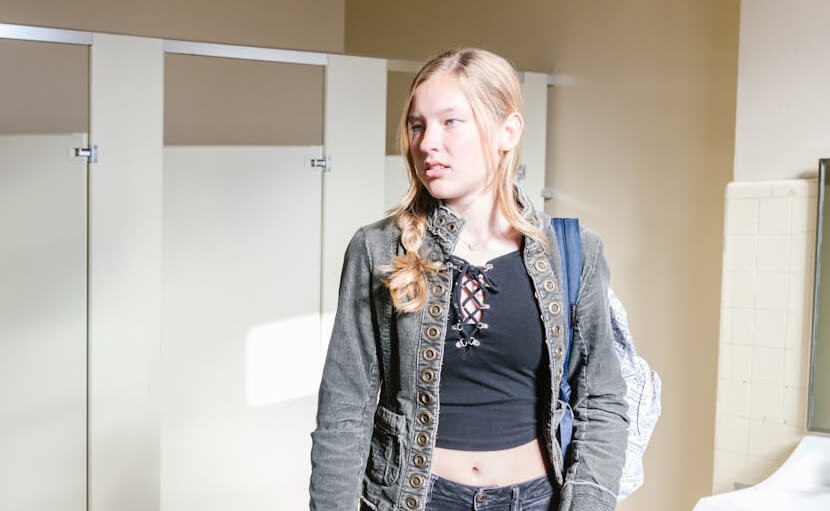
Daughter used the stall as a sensory refuge. Boys harassed her by shouting taunts through the door. Principal told her to return to class instead of addressing the boys. In high school, the bathroom was locked entirely when other girls used it for social refuge. Read more
🍽️ The lunchroom
Daughter’s weight dropped to the 1st percentile due to ARFID and sensory violence (boys shouting poop jokes) in the lunchroom. Requests for a quiet alternate space were denied (Scarcity). The final approved alternative was to eat alone in the highly stigmatised ‘time out area.’ Read more

Analysis
- The scarcity alibi: The initial request for a quiet, alternate eating space was denied because the school claimed they had no staff available to supervise another location. The child’s malnutrition (falling to the 1st percentile weight) was effectively accepted as collateral damage for the school’s staffing choices and logistical convenience.
- Medical gatekeeping: Even with a paediatrician’s letter documenting the medical necessity of a quiet eating environment, the school initially refused. The professional hierarchy meant the school’s logistical convenience trumped medical expertise, framing a life-saving need as a request for preference.
- Weaponised fairness & forced exclusion: When the simple accommodation of eating at her desk was requested, it was denied on the grounds of “unfairness” to others. To snack in an alternate location, the child was told she must first ask for permission and then move to the ‘time out area.’ This action forced her to perform her difference, making her disability hyper-visible, and imposing a self-punishment (the stigma of the “time out area”) to access the life-sustaining accommodation. The system converts necessary support into a ritual of shame.
The analysis of the Lunchroom reveals two distinct scenarios of denial, which together expose the system’s mercilessly illogical and punitive priorities. The requests were medically necessary for the child’s severe failure to thrive (falling to the 1st percentile weight), yet were met with diametrically opposed refusals that prioritised institutional comfort over the child’s survival.
Even with a paediatrician’s letter documenting the medical necessity of a quiet eating environment, the school initially refused. The professional hierarchy meant the school’s logistical convenience trumped medical expertise, framing a life-saving need as a request for preference.
| Scenario | Accommodation Requested | School’s Rationale for Denial | Impact |
| Alternate Space | Eating in a quiet alternate room with 1-2 friends, away from constant harassment and sensory triggers (e.g., discussions of poop that staff refused to stop from happening in the lunch room). | Denied, presumably due to no staff available to supervise another room, thereby effectively revoking her right to eat lunch at all. | The school chose to not sufficiently supervise and remove a child’s right to eat due to staffing scarcity. Helped staff feel that she was being ‘included’ (i.e. not segregated). |
| Desk Snacking | To snack at her desk, so she could get more calories in, knowing she would be unable to eat at lunch. | Approved with modification that made impossible to access: to prevent the child from appearing “unfairly” accommodated at her desk, she was forced raise her hand and verbally request to move to the ‘time out area’ if she wanted the accommodation. As a socially anxious child, prone to ‘freeze’ mode when dysregulated, this made the accommodation essentially impossible to access. | The system chooses to inflict public humiliation and a self-punishing ritual (the “fishbowl” of the time-out area) to maintain the aesthetic of fairness. The child is put in a position of high anxiety: “freeze at your desk and starve, or self-advocate for public shame” to ensure only one staff member can enforce compliance (no eating at your desk rule) and supervise 26 children alone. |
The resulting paradox is an institutional choice:
- The system is unable to staff a quiet space for 1-3 children.
- The system is willing to force a child into a highly visible, stigmatising public isolation.
This demonstrates that the denial is not only rooted in scarcity logic but in a punitive, illogical policy of control. The institution’s comfort—maintaining its single-supervision structure and its illusion of universal fairness—wins over the disabled child’s fundamental right to eat and exist without shame. The sheer illogic of requiring a child to elect public humiliation to access a life-sustaining need exposes the merciless nature of these institutional denials.
Analysis
- Developmental coercion: Support was withdrawn prematurely under the guise of “building resilience” or “independence.” This withdrawal manufactured the dysregulation that led to the crisis.
- Control anxiety: Climbing the tree placed the child literally out of reach of adult authority. The “zero to sixty” narrative framed the child’s behaviour as explosive and unpredictable, erasing the slow accumulation of unmet needs that preceded the climb.
- Spectacle of crisis: The visibility of the crisis (30 feet in the air) allowed the school to frame the child as “behavioural” and “dangerous,” shifting focus away from the architectural abandonment that occurred on the ground.
🌳 The tree
The son would climb the 30-40ft tree when dysregulated, usually after weeks of support withdrawal. Staff and peers would gather below, yelling (some concerned, some taunting), turning his crisis into a spectacle. The school framed this as “zero to sixty” behaviour. Read more

🧥 The bag of jackets
The teacher criticised the son for arriving without a jacket (framing it as parenting failure). The school refused the simple accommodation of helping the neurodivergent child gather belongings (executive function support). A garbage bag full of unused jackets was returned at year-end, physical evidence of the refused support. Read more

Analysis
- Professional hierarchy: The teacher’s judgment that a child “needs proper equipment” was used to override the parent’s request for executive function support. The accumulation of jackets was framed as a moral failure of the mother, rather than a functional failure of the support system.
- The scarcity alibi: Helping a child gather belongings takes two minutes. The refusal was not about time; it was about the ideological refusal to scaffold a skill the school believed the child “should” already have (“bootstraps” logic).
Analysis
- System rigidity (control): The school refused to email forms—a zero-cost accommodation—because their paper system “works for everyone else.” The preservation of the administrative system was prioritised over the child’s participation.
- Parent blame: The exclusion was framed as “negligent parenting” (failing to sign forms) rather than a systemic barrier to access for a neurodivergent family.
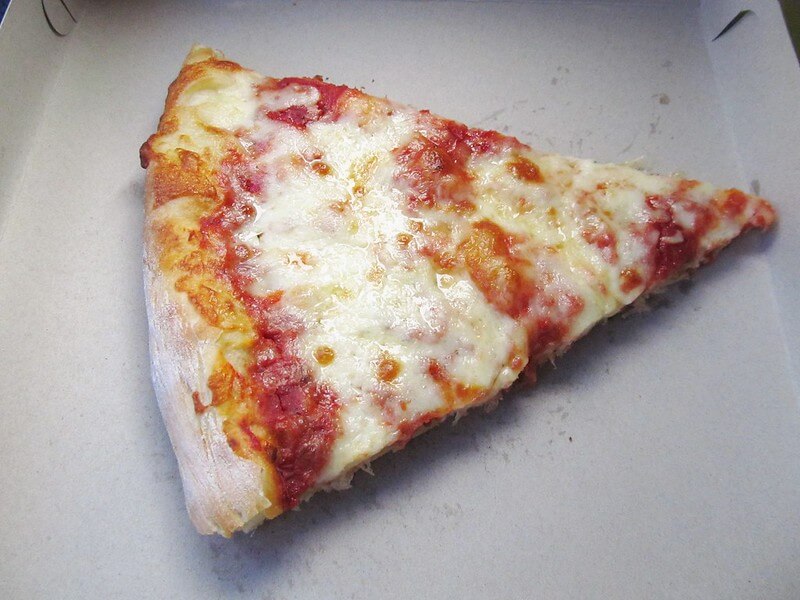
🍕 Pizza day
The son loves pizza, but never brought home the paper forms (executive function gap). Request for email forms was inconsistently accommodated. When he missed sign-up, he was excluded from the pizza, feeling the crushing injustice while staff blamed the “negligent mother”. Read more
⭐ The sticker chart
The team-based chart used competition and public ranking, which intensified the son’s anxiety and competitive nature. He began wishing harm on his teammates whose “failures” cost him points. The request to opt out was denied because the school insisted he “loved the game.”

Analysis
- Fairness weaponised: When the parent requested the child be opted out to prevent psychological harm, the school refused because “he loves it” and “it wouldn’t be fair” to exclude him. Here, “inclusion” was weaponised to force participation in a system that was actively damaging the child.
- Competition as control: The chart relied on peer pressure and social ranking to manage the classroom. The child’s intense negative reaction was a threat to this control mechanism, yet the mechanism was protected while the child was labeled “negative.”
-
Why sticker charts fail
Sticker charts and other incentive-based systems promise to motivate children through tangible rewards, yet they too often undermine genuine engagement by teaching students to focus on external validation rather than on the inherent value of learning or participation. When a child’s behaviour is…
Analysis
- Joy as threat: Access to play was treated as a revocable privilege rather than a developmental need. The collective punishment targeted the “joy” of the game to enforce compliance.
- Interpersonal hierarchy: The principal cancelled the game because the child refused to apologise to someone who had recently caused her harm and acted like my daughter had perpetrated the conflict. The restoration of adult authority was prioritised over the collective good of the team.
- Scapegoating: The visible punishment enlisted the peer group to police the disabled child, marking her as the “cost” of their missed opportunity.
🏐 The volleyball
My daughter and her team broke into the gym to play. The principal threatened to cancel the game, then made the cancellation contingent on my daughter apologising to a staff member whom she had beef with from a prior incident. She became the public scapegoat for the entire team’s loss. Read more
🔵 The yoga ball
The ball was used for ADHD regulation. It was removed when non-disabled children started playing with it inappropriately. The child needing the medical accommodation was punished for the behaviour of others. Read more

Analysis
- The universal accommodation trap: The accommodation was removed not because it failed the disabled child, but because non-disabled children misused it. The disabled child was punished for the behaviour of others.
- Joy as threat: Because the regulation tool (bouncing) looked like “playing,” it was coded as a toy rather than medical equipment. Schools do not remove wheelchairs when other children play with them; they protect the equipment. The removal of the ball reveals that the school never viewed it as a legitimate need.
-
Joy is rationed for disabled kids in school
When disabled children are excluded from field trips, they are being punished for their needs. These joyful, formative experiences become conditional—offered only to those who mask well, follow rules, and cause no disruption. In British Columbia, this widespread practice violates both law and…

Conclusion
The pattern revealed through this multi-lens analysis is unambiguous: accommodation denial in BC schools operates through compound mechanisms that layer fairness rhetoric, scarcity alibis, and control anxiety to systematically disable children while performing inclusion. The glasses and the splint demonstrate that schools possess both the capability and the mandate to provide immediate, individualised, life-changing support when the need is legible to them as medical and urgent. Every fidget locked away, every jacket left to accumulate, every child excluded from pizza day, every bathroom closed, every tree climbed in desperation reveals that the refusal to accommodate invisible, periodic, or regulation-focused disabilities is ideological, not logistical.
This analysis is only possible through the methodology of lived experience combined with analytical training. The “stereo testimony” of neurodivergent twins navigating identical systems, the accumulated material evidence returned in garbage bags and boxes, the documented correspondence where schools frame starvation as pickiness and dysregulation as defiance, the years of proximity to institutional language and practice – these constitute the data that no researcher interviewing administrators, no policy analysis examining frameworks, and no single parent’s isolated testimony could provide. Parent knowledge is not supplementary to professional expertise; it is the only reliable source for mapping how exclusion actually operates on the ground.
Understanding the taxonomy of refusal equips advocates with precision. When a school says “everyone would want that accommodation,” they are deploying the universal accommodation trap, using fairness rhetoric to justify removal. When they claim insufficient resources for a two-minute task, they are performing the scarcity alibi while concealing ideological refusal. When they remove a regulation tool because it looks like joy, they are revealing that control anxiety trumps medical necessity. Naming these mechanisms transforms the encounter from “difficult parent versus reasonable school” into “documented pattern of systemic refusal versus evidence-based accommodation request backed by legal mandate.”
The data table presented here is the foundation for a living, interactive tool that will allow parents, advocates, and researchers to explore the intersections between objects and lenses, to identify which refusal mechanisms they are facing, and to access strategy guidance tailored to the specific architecture of denial they encounter. This work will continue to expand as more objects, more lenses, and more documentation accumulates, building toward a comprehensive archive of how schools construct disability through the refusal to accommodate.
The system is capable. The glasses prove it. The splint proves it. What remains is the political question: which children does the system choose to see as deserving immediate, unconditional support, and which children does it choose to abandon, blame, and disable through the slow accumulation of institutional refusals dressed up as resource constraints, fairness concerns, and pedagogical wisdom? The objects answer that question. The evidence is material. The refusal is documented. What happens next depends on whether those with the power to change the system choose to see what the garbage bags and the locked boxes and the closed bathrooms and the empty lunch tables have been trying to tell them all along.
-
From trauma to topology: the grotesque work of quantifying institutional denial
When institutional harm accumulates in childhood—in objects confiscated, spaces denied, bodies excluded—the evidence lives first in memory and affect. The saucer eyes of a humiliated or frightened child. The sting in the sobs of a child who just wants to be with her…