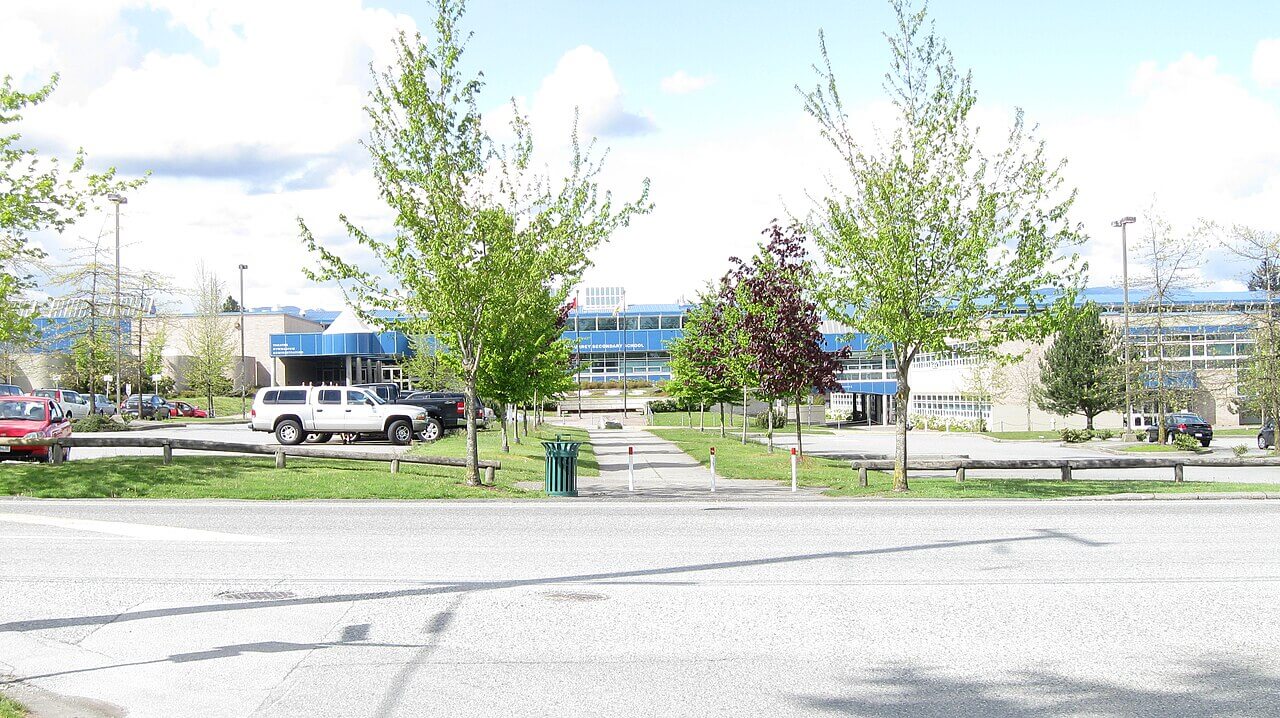
North Surrey Secondary’s 2024–25 Parent/Student Handbook presents itself as a practical guide to daily school operations, but its conduct code reveals a disciplinary framework anchored in behavioural control, punctuality, and compliance. Its language reflects a pre-neuroscience understanding of student behaviour, one that frames regulation as obedience, distress as misconduct, and support as conditional upon conformity. The document contains no references to neurodivergence, disability-specific safeguards, or trauma-informed practice, and this absence shapes every interpretive contour of the code.
This critique assesses the school’s Code of Conduct and related behavioural expectations using a neurodiversity-affirming, disability-justice lens, grounded in the text of the handbook itself.
North Surrey Secondary – conduct decision flow
The handbook does not present a formal decision tree, but the structure of expectations and consequences on pages 11–12 makes the implicit process clear:
Behaviour observed
→ Determine whether the behaviour breaches the three pillars of “Respect Yourself and Others, Respect the Environment, Respect Learning”
• If behaviour aligns with expectations: proceed with normal routine
• If behaviour violates expectations: staff select from a menu of “progressive discipline” responses, including classroom consequences, parent contact, mediation, community service, detentions, removal of privileges, and suspension
→ Determine severity (implicit)
• Minor concerns addressed by the teacher
• Escalating concerns involve counsellors or vice-principals
• Severe or safety-related concerns may involve suspension or external authorities
→ Apply listed consequences
• No requirement to assess unmet needs
• No criteria for disability-related behaviours
• No procedural protections
• No obligation to document whether behaviour arises from distress, dysregulation, or accessibility barriers
This flow situates discipline as a behavioural management system rather than a relational or developmental framework.
The absence of a disability lens
Across the entire 20-page handbook, disability is nearly invisible. The only allusion appears in the digital devices section, where assistive use is briefly acknowledged (page 13) . There is no section defining disability-related behaviour, no recognition that neurodivergent distress has communicative or sensory roots, and no instruction for staff to differentiate unmet needs from misconduct.
This absence is profound. It signals a disciplinary architecture built around assumptions of sameness, where every student is expected to:
• arrive on time
• comply immediately with adult direction
• remain engaged
• complete all assigned work in a timely manner
• regulate behaviour through sheer effort
These are cognitive, sensory, and emotional demands—not neutral expectations—and without acknowledging that, the school’s code places disabled students at disproportionate risk of discipline.
Neurocognitive considerations: misinterpretation built into the system
Several expectations listed in the handbook represent classic sites of misinterpretation for autistic, ADHD, PDA, and otherwise neurodivergent students.
Attendance and punctuality
The attendance policy frames lateness as both a moral issue (“sign of respect”) and a predictor of poor character formation (“keystone habits”) (page 5) .
A neurodiversity lens recognises:
• executive functioning variability
• interoceptive miscuing
• anxiety mornings
• sleep dysregulation
• sensory fatigue
• trauma-linked anticipatory stress
The policy recognises unavoidable absences but always through a behavioural frame—never a disability one.
“Immediately follow staff direction”
This expectation (page 12) relies on a compliance-based understanding of safety. PDA profiles, trauma-affected students, and students with processing delays will be disproportionately harmed by this rule, which expects instantaneous obedience.
Engagement and work completion
“Be actively and positively engaged in all classes” and “complete all assigned work in a timely manner” (page 12) reflect an achievement-oriented model that does not recognise cognitive variability, sensory load, masking exhaustion, or burnout.
Dress and expression
Students are expected to dress in a manner that does not “promote” certain themes (page 12), a vague standard that invites inequitable enforcement and may disproportionately target autistic literalism, cultural expression, or disability-related comfort needs.
Restoration without supports
Although the handbook gestures toward “restorative” approaches in its reference to mediation and restorative justice (page 11) , it provides no instructions for making these processes accessible.
Missing elements include:
• visual communication tools
• sensory-friendly environments
• scaffolding for language, memory, or processing
• guidance for involving case managers or support workers
• protocols for identifying disability-influenced behaviour
Thus, while the language appears progressive, the structure offers no guarantee of equitable participation, turning restoration into a performative mechanism that may reproduce harm.
Collective language, collective risk
The Code does not explicitly ban collective punishment, nor does it acknowledge the risk of group-level consequences. Several areas—remove privileges, classroom consequences, and universal expectations—create implicit avenues for collective discipline.
Because expectations are framed collectively (“Respect Learning,” “Respect the Environment”), breaches by one student may lead to reputational harm, peer resentment, or group pressure. Without safeguards, this produces a social discipline environment where disabled students bear disproportionate blame for deviations from neurotypical norms.
North Surrey Secondary Code of Conduct (2024–25)
| Category | Assessment |
|---|---|
| Clarity and scope | Expectations are broad, behavioural, and universalised |
| Individualisation and procedural safeguards | No defined disability process; no requirement to assess needs before discipline |
| Protections against collective punishment | Absent; collective expectations risk group-level pressure or consequences |
| Equity and neurodiversity lens | No references to cognitive, sensory, emotional, or developmental difference |
| Trauma-informed or restorative practice | Uses restorative vocabulary without accessibility scaffolding |
Overall rating: ★☆☆☆☆
North Surrey Secondary’s Code of Conduct presents a surface commitment to safety, care, and order, but the deeper grammar of the document reveals a disciplinary structure that privileges obedience over understanding, uniformity over responsiveness, and compliance over inclusion. Without explicit protections, disabled students face an environment where their distress is easily misread as misconduct.
Interpretive note and invitation for feedback
This analysis reflects the perspective of one parent, grounded in lived experience, trauma-informed principles, and a neurodiversity-affirming framework. It is not legal advice. If the school district leadership believes this reading misrepresents the intent or implementation of its Code of Conduct, I welcome clarification—and the opportunity to revise my understanding.
- To educators: These critiques are not intended to shame or condemn. They are written to illuminate the structural patterns that shape how school policies are experienced by disabled students and their families. If you feel your school’s Code of Conduct has been mischaracterised, or if important context or corrections are missing, your insight is welcome. Thoughtful disagreement and collaborative improvement are always invited.
- To families: If you recognise your child—or yourself—in these patterns, or if your experience has been different, I want to hear from you. Whether a policy has caused harm, offered support, or raised questions, your perspective matters. Stories, corrections, and clarifications all help us understand how these codes function in real schools, for real people. Honest dialogue is how we build something better.