I started this campaign because I could no longer accept the gap between what public education promises children and what too many actually experience.
For families of children with disabilities, navigating the education system can become an exhausting exercise in identifying barriers, requesting support, documenting harm, and trying to secure meaningful change.
What becomes increasingly difficult to ignore is that many of these barriers are not isolated failures. They are features of a system that continues to prioritise compliance, conformity, and administrative convenience over children’s dignity and inclusion.
The system isn’t simply broken. In many respects, it is functioning as designed.
The endless advocacy treadmill
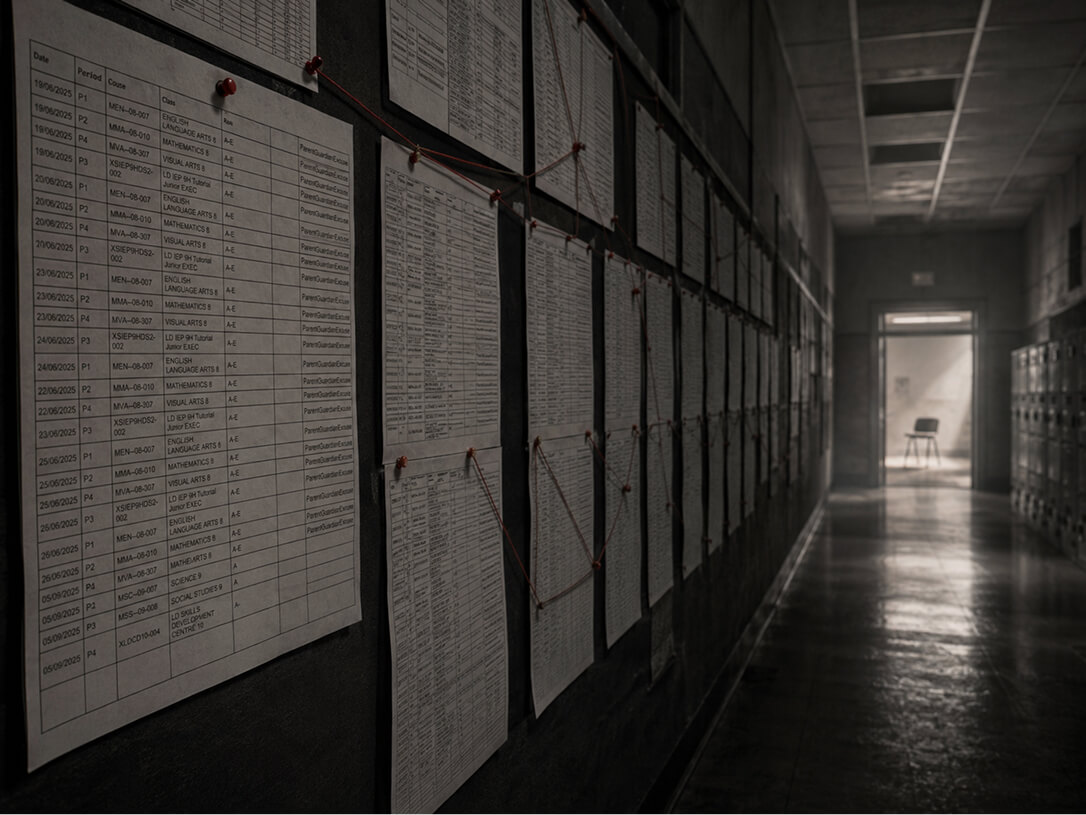
Parents of children with disabilities know this story all too well. Schools present endless hurdles. Get a referral. Arrange an assessment. Attend another meeting. Complete another form. Wait for another decision.
Clear one obstacle, and another appears.
Meanwhile, children lose access to education, relationships, and opportunities they cannot recover. Families are left trying to navigate processes that seem better equipped to manage requests for support than to deliver that support.
The toll on families
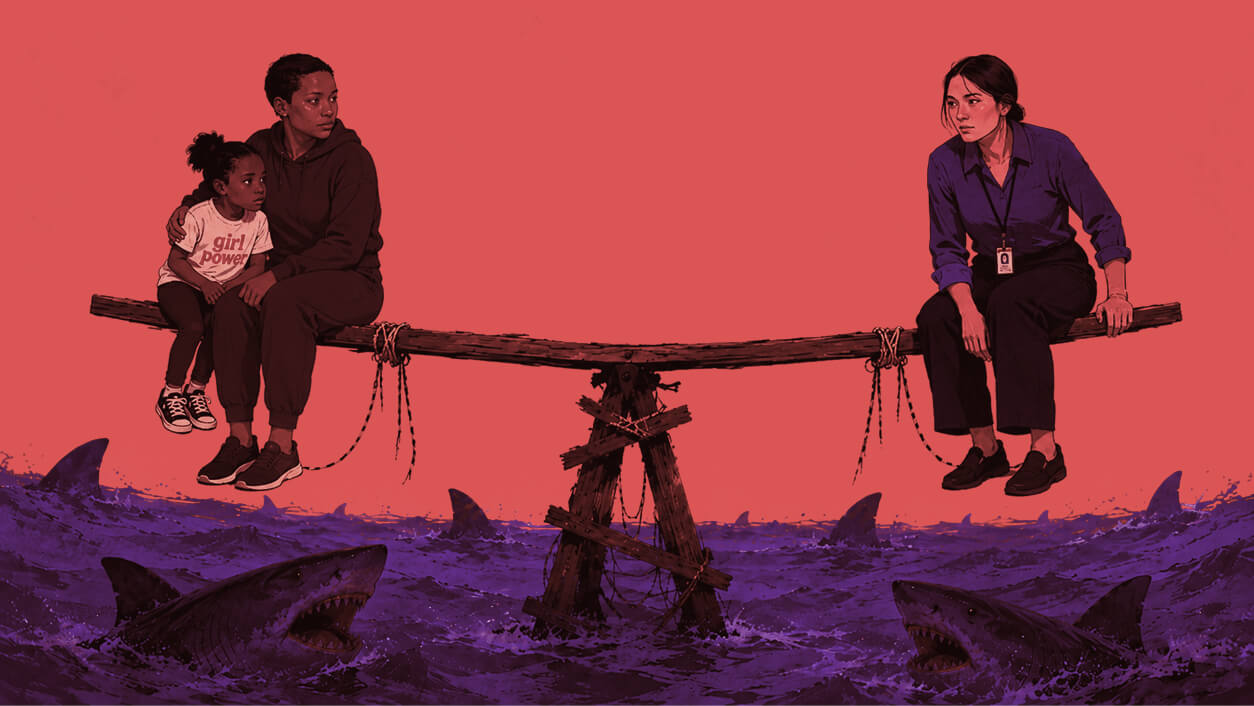
This unrelenting treadmill takes a devastating toll. Parents sacrifice careers, relationships, financial security, and health just to secure accommodations their children should already be receiving.
Friendships and self-care become distant memories. Families become isolated, exhausted, and increasingly desperate.
The burden of making education accessible shifts from the institutions responsible for providing it to the families already living with the consequences of its failure.
Built for control, not inclusion
This isn’t simply inefficiency. The education system has historical roots in colonial ideologies of control, assimilation, and exclusion.
These ideologies also shaped residential schools, institutions designed to assimilate Indigenous children through the systematic destruction of language, culture, family connections, and identity.
Let me be clear: today’s public education system is not equivalent to residential schools. Residential schools were instruments of cultural genocide, and their particular history and continuing consequences must not be diminished.
But examining the historical foundations of education means asking difficult questions about which ideas have persisted. Who defines acceptable behaviour? Whose ways of learning and communicating are valued? What happens to children who cannot, or will not, conform?
A system that treats conformity as a condition of belonging cannot deliver meaningful inclusion.
Marginalisation through exclusion
For students with disabilities, exclusion takes many forms: restricted attendance, removal from activities, denial of support, and disciplinary practices such as collective punishment.
Children whose communication, sensory, emotional, or behavioural needs make compliance difficult may be disproportionately affected.
Rather than examining the conditions that create barriers, schools may respond by demanding that children change their behaviour to fit the environment.
The result is a system in which children who most need accommodation can become those most likely to experience exclusion.
The consequences of scarcity
Reporting on the Vancouver School Board has raised serious concerns about declining spending on students with disabilities, differences in staffing between neighbouring districts, and deteriorating educational outcomes.
These concerns raise fundamental questions about funding transparency, resource allocation, and the consequences for children when essential supports are reduced.
Imagine if a substantial proportion of the wheelchairs used by people with mobility disabilities were suddenly taken away.
For many disabled students, educational supports serve a similarly essential purpose. They are not extras or rewards for good behaviour. They are accommodations that make participation possible.
Remove those supports, and the barriers do not disappear. Children are simply expected to overcome them without assistance.
A system under pressure
When schools lack resources, staff may be placed in situations where maintaining order takes precedence over meeting individual needs.
But resource scarcity does not make harmful practices acceptable.
Without clear expectations, meaningful oversight, and accountability, practices such as exclusion and collective punishment can become normalised. Decisions that humiliate, isolate, or stigmatise children may be treated as ordinary classroom management.
Collective punishment is particularly revealing because it is so widely accepted.
A whole class loses recess because one child struggles to follow instructions. A group loses a privilege because a few students misbehave. Children are encouraged to blame one another for consequences imposed by adults.
These practices undermine individual responsibility and create conditions for resentment, shame, and social exclusion.
Collective punishment is prohibited in armed conflict under international humanitarian law. That prohibition does not make classroom discipline a war crime, but it reflects a fundamental principle worth defending in schools: people should not be punished for actions they did not commit.
I chose to focus this campaign on collective punishment because it is both commonplace and difficult to justify.
It provides a way to examine a much broader problem: an educational culture that too often prioritises obedience over dignity.
Collective guilt
The philosopher Michel Foucault examined how institutions exercise power not only through direct punishment, but through surveillance, normalisation, and the internalisation of expectations.
These ideas offer a useful lens for understanding educational systems.
Parents are repeatedly told that if they attend enough meetings, complete enough paperwork, and follow the correct procedures, their children will eventually receive the support they need.
When that support does not materialise, families may be encouraged to question whether they have advocated effectively enough.
The institution’s failure becomes the family’s responsibility.
This is how administrative processes can turn into mechanisms of exclusion. The appearance of a pathway to resolution can conceal the absence of any meaningful obligation to resolve the problem.
Breaking the silence
There is a particular kind of grief that comes from realising that a place entrusted with children’s learning and wellbeing can also become a source of harm.
Families are often left wondering whether they should have recognised the warning signs earlier, pushed harder, or made different choices.
But children should not have to depend on their parents’ ability to navigate bureaucracy, challenge authority, or sustain years of advocacy to receive an accessible education.
And parents should not have to expose their children’s private experiences to public scrutiny to demonstrate that something is wrong.
This campaign exists to challenge harmful practices without requiring children and families to surrender their privacy.
It is possible to recognise that many educators genuinely care about children while also acknowledging that caring individuals can work within systems that produce harmful outcomes.
Staff may experience moral distress when they cannot provide the support children need. Families experience the consequences of those failures. Children bear the greatest cost.
Good intentions cannot substitute for meaningful inclusion, and compassion cannot replace accountability.
-

What is collective punishment?
Collective punishment occurs when a group is penalised for the actions of one or a few individuals. In schools, this might look like a class losing recess because one student was disruptive, or a sports team’s game being cancelled because a few…
Demanding better
No child should endure humiliation, exclusion, or collective punishment as a routine part of their education.
No parent should have to sacrifice their health and livelihood to secure basic accommodations.
Recognising the historical ideologies that underpin our institutions is not about dwelling on the past. It is about understanding how harmful practices persist, adapt, and become normalised.
We must reject systems that prioritise compliance over care.
Our public education system does not exist to produce obedient workers or reward children who conform most easily to institutional expectations.
It belongs to the public. It should reflect our commitments to human rights, dignity, equity, and meaningful participation.
The time to act is now.
Let’s demand transparency, accountability, and genuine inclusion. Let’s build an education system where children do not have to earn their right to belong.
If you would like to contribute to this campaign, get in touch.
-

What is an example of collective punishment?
Collective punishment is when a group is penalised for the actions of a few, regardless of individual responsibility. This practice is often framed as a form of discipline, yet it fails both ethically and pedagogically. It is rooted…