
Education Policy
Laws, regulations, and governance decisions that shape the daily realities of students, families, and educators. This tag includes critical analysis of ministry directives, district implementation practices, funding structures, and systemic accountability mechanisms. It also traces the dissonance between policy ideals—such as inclusion, safety, and equity—and the actual experiences of those navigating the system, particularly disabled and neurodivergent students and their caregivers.
Inclusion BC is an excellent reference—particularly for a neurodiversity-affirming, disability justice–aligned perspective on education policy in British Columbia. Their work foregrounds the rights of disabled students and families, and they consistently critique systemic ableism, segregation, and policy failures in public education. They also engage directly with provincial ministries, making them both a watchdog and a thought leader.
-
Partial-day schooling as systemic violation: new research confirms what parents already know
The Journal of Inclusion and Disability published research this month documenting what families living through exclusion have been saying for years: partial-day schooling operates as institutional marginalisation, transforming policy failure into individual deficit while schools claim to serve students they are systematically denying education. Gordon Porter and Andrea Cameron’s article examines partial-day schooling across Canadian…
-
Collective punishment at Vancouver School Board: when one disabled child’s behaviour closes the playground
On December 20, 2017, my kindergarten child Robin went onto an ice field during recess at his school in Vancouver. Robin loved ice—the sensory experience, the visual shimmer, the way it cracked and moved under small feet. The school had asked all students to stay away from the ice for safety reasons throughout the morning,…
-

The optimal funding model for inclusive education
Inclusive education does not fail because children are too complex. It fails because funding systems reward denial, privatise enforcement, and treat disability as an exceptional cost rather than a predictable feature of human populations. A functional model already exists. It is not radical. It is aligned with what inclusive education actually requires, rather than with…
-
When schools ask disabled children to accept being hurt
I used to have a pretty good dialogue with my kids, before they experienced a lot of institutional harm. The conversations flow less freely now and less seldom, but back then, we chatted a lot and I often recorded the conversations, for proof, having experienced enough gaslighting from the district to know I wouldn’t be…
-

Solving school concerns in BC: what districts tell you and what you need to know
The Vancouver School Board presents its conflict resolution process as a fair, accessible pathway for parents and students to address concerns that significantly affect a student’s education, health, or safety. According to policy materials, the process: This framing positions the district as collaborative and responsive, suggests most issues resolve through goodwill and dialogue, and casts…
-
What districts hide when they count
Enrolment data is meant to be the most transparent artefact a public education system produces. It records how many students are present, where they are placed, and how populations change over time. These figures determine staffing, funding, capital planning, and programme viability. They are the numerical infrastructure that underwrites every district claim about equity, inclusion,…
-

The question they refused to ask: adequate funding and the architecture of denial in BC schools
Between 2017 and 2020, BC reviewed education funding. The question asked: designation or prevalence? The question refused: what would adequate funding cost?
-
How public schools tax disabled families twice
My son has been home for nine months. The school asks periodically about return timelines, performing care through language. They say they would like to see him back at school. Meanwhile, his nervous system tells a different story: sleep patterns regulating, appetite returning, capacity for joy expanding in direct proportion to distance from their supervision.…
-

When evidence changes nothing: what 2,842 families reveal about institutional refusal
The International Council of Multiple Birth Organisations published a study in 2020 examining school placement decisions for twins and higher-order multiples across eighteen countries, surveying 2,842 families whose children had attended school for at least one year. The findings confirm what families of multiples already know from lived experience: schools operate placement policies that prioritise…
-

A school advocacy vocabulary
What families experience in schools is often described as a series of unfortunate incidents: a meltdown here, a missed accommodation there, a relationship breakdown framed as “complex family dynamics.” But these events are not random, isolated, or accidental. They are patterned. They recur across schools, districts, and provinces. They follow recognisable logics, deploy familiar language,…
-

The good twin, the bad twin, and the system that needed both
Before school taught them roles, they played tea party—taking turns serving and being served. Seven years later, I can’t say with certainty whether one would fetch the fire extinguisher if the other caught flame.
-
The internet has spoken: collective punishment in schools is wrong
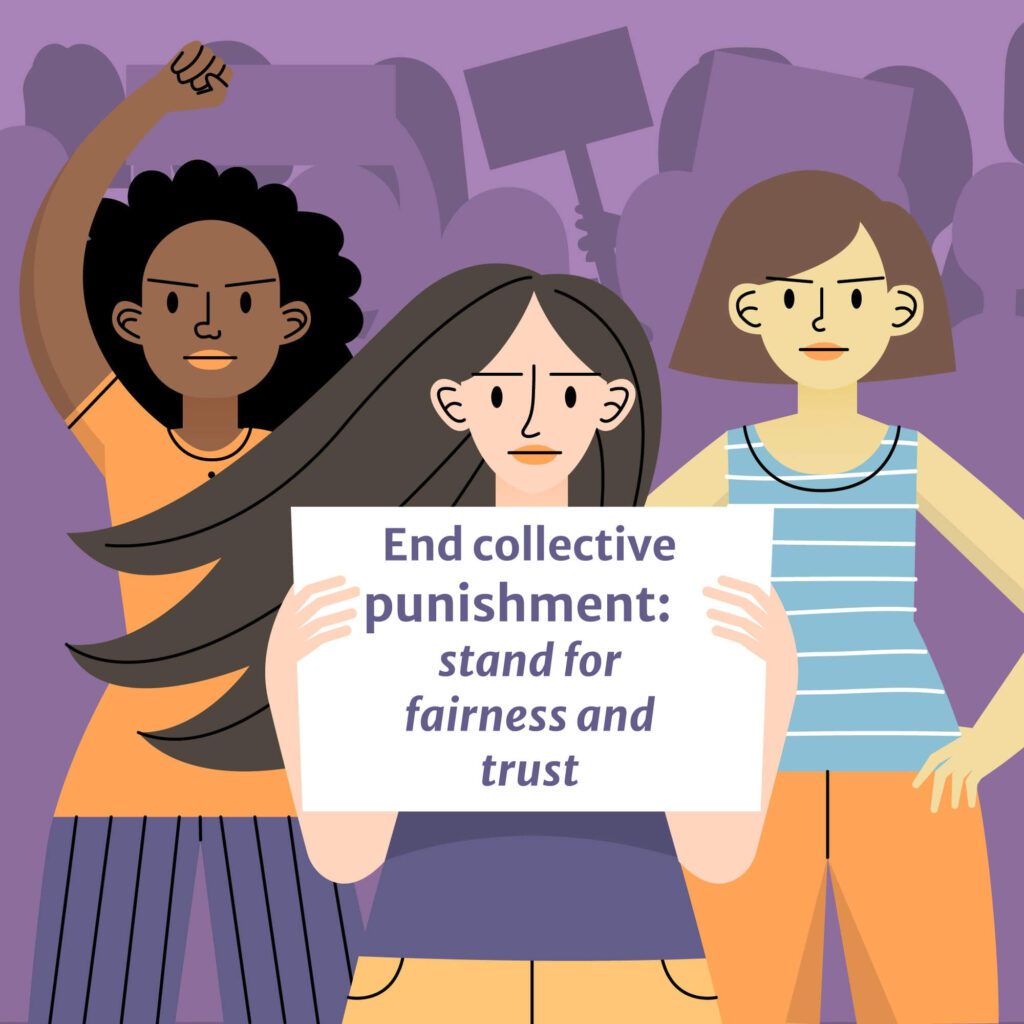
When teachers punish entire classrooms for the actions of one student—when recess disappears because someone talked, when rewards vanish because someone forgot homework, when privileges evaporate because one child disrupted the lesson—students recognise the injustice immediately, and they name it with precision that educators often lack. Across TikTok, Instagram, and Reddit, students, parents, and teachers…
-

When schools deny support staff, they destroy the foundation of learning
Research spanning 70 years and more than 2.6 million students confirms what parents of disabled children already know through bitter experience: children learn through relationships built on trust, consistency, and support. A comprehensive meta-analysis published in February 2025 demonstrates that positive teacher-student relationships directly improve academic achievement, behaviour, executive function, motivation, and emotional wellbeing across…
-

Loss of recess impact on chronic stress levels in elementary children
The Impact of Recess on Chronic Stress Levels in Elementary School Children illuminates the profound violence embedded in recess cancellation as punishment, revealing how schools manufacture chronic physiological harm under the guise of behaviour management. The findings demonstrate that children receiving forty-five minutes of daily recess exhibited hair cortisol concentrations significantly below both pre-pandemic normative…
-

How collective punishment turns provincial funding failure into disabled children’s “behavioural failure”
Many years ago, my kindergarten child Robin went onto an ice field during recess. Robin was seeking sensory input—the visual shimmer, the cracking sound, the tactile feedback their nervous system required. The school had told students to avoid the ice for safety reasons. Robin’s support worker redirected them repeatedly; Robin kept returning. Eventually the principal…
-

Lord Beaconsfield Elementary School (SD39 Vancouver): a neurodiversity-informed policy critique
Lord Beaconsfield Elementary School’s Code of Conduct, reviewed June 19, 2024, presents itself as a framework for creating a “safe, inclusive, equitable, welcoming, nurturing, and healthy school environment.” The document employs the language of care, respect, and community while constructing a disciplinary architecture that presumes neurotypical development, rewards compliance, and positions disability as exceptional deviation…
-

Partial-day schooling is quietly undermining inclusive education in Canada
A new study by Gordon L. Porter and Andrea Cameron, The Paradox of Partial Day Schooling: Exclusion in the Era of Inclusive Education (2025), exposes a practice that is increasingly common—and deeply harmful—across Canadian schools. Despite decades of legal and policy commitments to inclusive education, students with disabilities are still being excluded through shortened school days. The…
-

Surrey School District is self congratulatory while exclusions continues
Surrey Schools’ International Day of Persons with Disabilities announcement celebrates procedural progress at the very moment families continue pressing for basic transparency around exclusionary practices. On December 3, the district marked the day by releasing a progress report on its three-year accessibility plan. The report highlights achievements including animated videos defining accessibility terms, tools for…
-
The equilibrium of refusal: what a decade of legal spending reveals about BC schools
Between 2012 and 2022, British Columbia’s Schools Protection Program spent $4,420,252.58 responding to human rights claims filed against public schools, according to this FOI release. Of that total, $752,525.34 went to indemnity—settlements and compensation paid to claimants. The remaining $3,635,085.21 funded legal defence. The ratio is precise: for every dollar spent remedying harm, the system…
-

What BC spends to avoid accountability
The numbers arrived in a single-page response to a freedom of information request. Between January 2022 and February 2024, British Columbia’s Schools Protection Program—the provincial insurance mechanism that shields school districts from liability—spent $1,340,772.33 responding to discrimination claims filed against public schools. Of that sum, $252,000 went to settlements or indemnity payments across sixteen resolved…