

Educational harm
The emotional, cognitive, and academic consequences of exclusion, burnout, unsupported needs, and systemic discrimination in school settings.
-

The dishwasher, the hard drive, and what counts as progress when your child survives school
My son unloaded the dishwasher today without being asked. This is the first chore I can remember him doing of his own accord since he was a toddler—before school taught him that compliance means danger, before demand avoidance became the fortress protecting what remained of his autonomy, before each day required such total depletion that…
-
Ministry regulations on physical restraint and seclusion in BC schools
Physical restraint and seclusion are permitted in British Columbia schools under the Ministry of Education and Childcare guidelines—despite being widely described as last-resort safety measures. When schools restrain or isolate disabled children, districts often cite the Provincial Guidelines on Physical Restraint and Seclusion in School Settings (2015) to claim compliance. Parents are told the intervention…
-

On subjectivity, vicarious belonging, and institutional violence
Winter light, girls singing, a boy listening from the front seat. A mother tries to witness without interpreting what nine months of isolation cost.
-

Champlain Heights Annex School (VSB SD39): a neurodiversity-informed conduct critique
Champlain Heights Annex School’s Code of Conduct promises a safe, inclusive, equitable, welcoming, nurturing, and healthy school environment. The document aligns explicitly with Vancouver School Board’s District Student Code of Conduct (AP 350), affirms the BC Human Rights Code, and structures behavioural expectations through a three-level consequence framework extending from classroom redirection to formal suspension.…
-
Discipline outcomes and statistics in BC school districts: what the statistics reveal about institutional protection
Schools are quick to label children as dysregulated when they struggle to process harm, respond slowly under stress, or push back against systems that have failed them. These labels carry consequences. What is less often examined is how institutions respond when they behave in the same way. A note I support parents making complaints when…
-

PBIS and oh, the places you’ll go
Remember that Dr. Seuss book promising unlimited potential? Oh, the places you’ll go! Well, PBIS has places to take your kid too. And you’re not going to like where this journey ends. It started with good intentions (it always does) Schools adopted Positive Behavioural Interventions and Supports to reduce suspensions. To build better communities. To…
-
BCTF lobbies for changes to new literacy screening mandate
The BC Ministry of Education and Child Care announced a new mandate this week requiring literacy screening for all kindergarten students beginning in the 2025–26 school year, expanding to K–3 students the following year. The British Columbia Teachers’ Federation published their response, which deserves careful attention. No budget for implementing literacy screening Everyone can see…
-
Scapegoats for austerity: BC education funding excludes disabled children
BC education funding scapegoats disabled children, using collective punishment and performative inclusion to divide parents and maintain austerity.
-
Partial-day schooling as systemic violation: new research confirms what parents already know
The Journal of Inclusion and Disability published research this month documenting what families living through exclusion have been saying for years: partial-day schooling operates as institutional marginalisation, transforming policy failure into individual deficit while schools claim to serve students they are systematically denying education. Gordon Porter and Andrea Cameron’s article examines partial-day schooling across Canadian…
-

The cost of saying ‘change costs nothing’
Long before it became common sense, the spherical shape of the Earth was already known. Astronomers, mathematicians, and navigators across multiple ancient cultures—within the Hellenic world, in ancient India, in Islamic scholarship—had measured the Earth’s curvature, calculated its circumference with remarkable accuracy, and built navigational systems that depended on that knowledge. This was not speculative…
-
Collective punishment at Vancouver School Board: when one disabled child’s behaviour closes the playground
On December 20, 2017, my kindergarten child Robin went onto an ice field during recess at his school in Vancouver. Robin loved ice—the sensory experience, the visual shimmer, the way it cracked and moved under small feet. The school had asked all students to stay away from the ice for safety reasons throughout the morning,…
-
Saskatchewan names what others refuse to count
Inclusion Saskatchewan released a report in December 2025 that accomplished something most jurisdictions still consider impossible: they counted the excluded children, documented the scale of educational abandonment across an entire province, and published what school systems have long insisted remains uncountable. Their Freedom of Information requests revealed that approximately 1,250 to 1,350 disabled students were…
-
When schools ask disabled children to accept being hurt
I used to have a pretty good dialogue with my kids, before they experienced a lot of institutional harm. The conversations flow less freely now and less seldom, but back then, we chatted a lot and I often recorded the conversations, for proof, having experienced enough gaslighting from the district to know I wouldn’t be…
-
The question they refused to ask: adequate funding and the architecture of denial in BC schools
Between 2017 and 2020, BC reviewed education funding. The question asked: designation or prevalence? The question refused: what would adequate funding cost?
-
How public schools tax disabled families twice
My son has been home for nine months. The school asks periodically about return timelines, performing care through language. They say they would like to see him back at school. Meanwhile, his nervous system tells a different story: sleep patterns regulating, appetite returning, capacity for joy expanding in direct proportion to distance from their supervision.…
-

When evidence changes nothing: what 2,842 families reveal about institutional refusal
The International Council of Multiple Birth Organisations published a study in 2020 examining school placement decisions for twins and higher-order multiples across eighteen countries, surveying 2,842 families whose children had attended school for at least one year. The findings confirm what families of multiples already know from lived experience: schools operate placement policies that prioritise…
-
A school advocacy vocabulary
What families experience in schools is often described as a series of unfortunate incidents: a meltdown here, a missed accommodation there, a relationship breakdown framed as “complex family dynamics.” But these events are not random, isolated, or accidental. They are patterned. They recur across schools, districts, and provinces. They follow recognisable logics, deploy familiar language,…
-

The good twin, the bad twin, and the system that needed both
Before school taught them roles, they played tea party—taking turns serving and being served. Seven years later, I can’t say with certainty whether one would fetch the fire extinguisher if the other caught flame.
-
School discipline in British Columbia: what parents of disabled children need to know
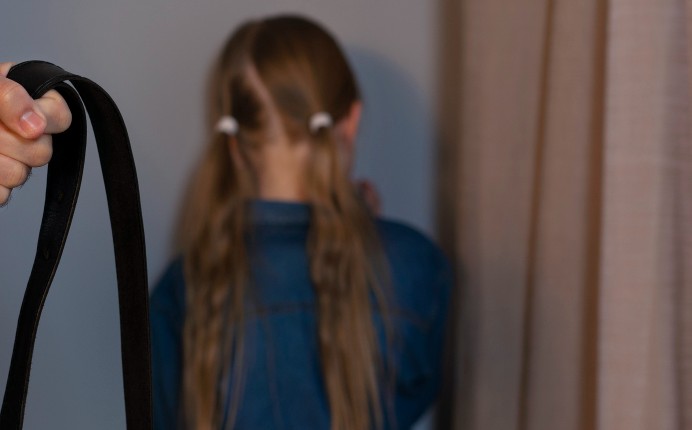
In British Columbia, school discipline is usually described as a neutral, even benevolent process. Brochures reassure parents that discipline is not punishment, that it teaches self-control, and that consequences help children learn responsibility. The Vancouver School Board’s Discipline at Home and School guide follows this script exactly. It explains that: On paper, this sounds reasonable.…
-

When schools deny support staff, they destroy the foundation of learning
Research spanning 70 years and more than 2.6 million students confirms what parents of disabled children already know through bitter experience: children learn through relationships built on trust, consistency, and support. A comprehensive meta-analysis published in February 2025 demonstrates that positive teacher-student relationships directly improve academic achievement, behaviour, executive function, motivation, and emotional wellbeing across…