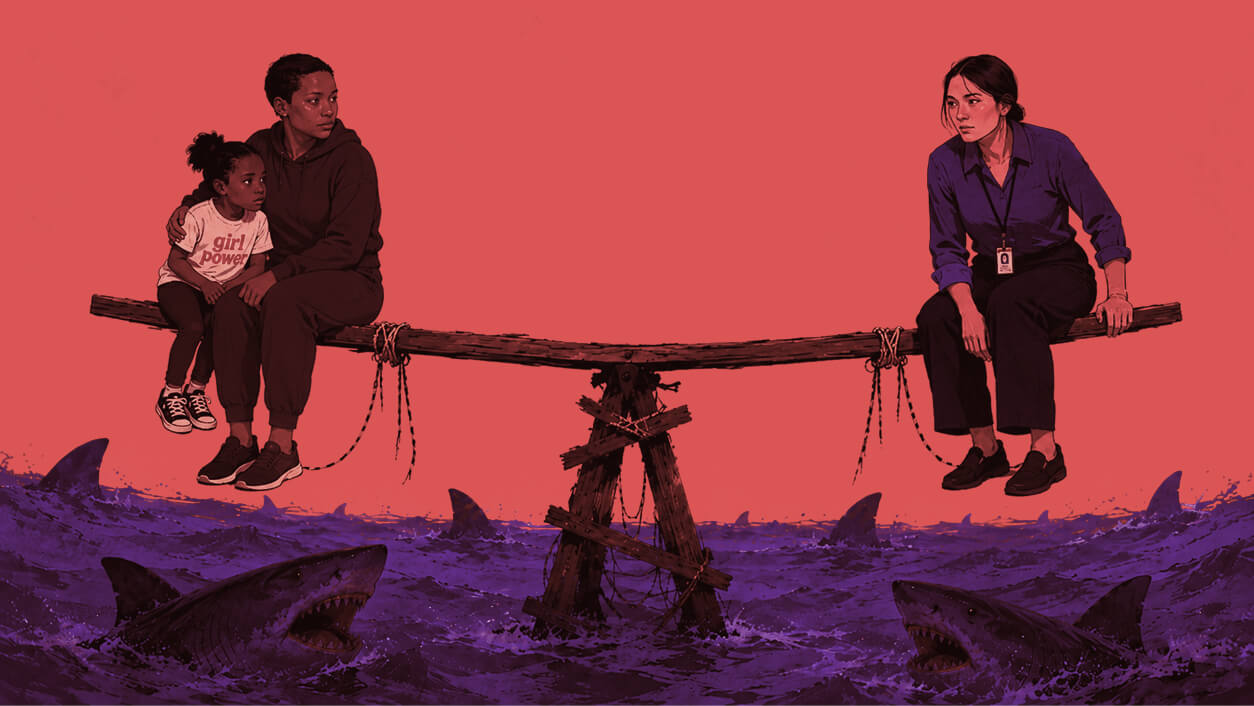
Long before it became common sense, the spherical shape of the Earth was already known. Astronomers, mathematicians, and navigators across multiple ancient cultures—within the Hellenic world, in ancient India, in Islamic scholarship—had measured the Earth’s curvature, calculated its circumference with remarkable accuracy, and built navigational systems that depended on that knowledge. This was not speculative belief or philosophical guesswork. It was technical understanding, supported by observation, mathematics, and practice.
And yet, that knowledge did not immediately reorganise how most people understood the world. It took centuries of sustained effort for a spherical Earth to move from specialised expertise into shared assumption, for institutions, education systems, religious authorities, and everyday reasoning to absorb what experts already knew. The barrier was never lack of evidence. It was the weight of existing frameworks that organised meaning, authority, and common sense around a different model.
This is how paradigm shifts actually happen. Not through sudden enlightenment, but through prolonged struggle to dislodge ways of seeing that feel natural, stable, and morally ordered, even when they no longer explain what we are observing. What follows should be read in that light—not as an argument about willingness or courage alone, but as an examination of what it takes to move institutional reality when knowledge runs ahead of systems designed to resist it.
When teachers say solutions cost nothing
I read the Canary Collective post entitled Zero Cost Solutions in Education, which makes these points:
- Education is not stagnant; it is regressing.
The system is quietly but decisively moving away from inclusion and equity, with changes happening incrementally rather than through sudden policy reversals. - Fiscal scarcity will be used as justification.
As budgets tighten, governments will claim there is no more money, creating conditions where austerity is framed as unavoidable rather than chosen. - System self-protection will take precedence.
Under pressure, institutions will prioritise adult workload management, liability, and order over children’s access to learning. - Exclusion will return under sanitised language.
Practices that segregate or remove children will be reframed as safety measures, necessary boundaries, or pragmatic responses rather than acknowledged as exclusion. - Marginalised children will be affected first and most severely.
The children who already sit at the edges of classrooms—disabled students, neurodivergent students, and those who struggle with compliance-based norms—will be the first to disappear from general education settings. - Progress will be lost through normalisation, not crisis.
Each individual decision will feel reasonable in isolation, but together they will narrow who is considered “teachable” or worth accommodating. - Many exclusionary expectations are cultural, not necessary.
Core expectations around sitting still, tolerating discomfort, behavioural compliance, and standardised timelines are treated as natural when they are historically constructed and exclusionary. - Dropping or reshaping expectations could reduce harm immediately.
The essay argues that meaningful shifts toward accessibility can occur without new funding by rethinking what is framed as non-negotiable. - Free solutions are structurally incompatible with current funding models.
Systems reward documentation, deficit, and crisis, not flexibility or prevention, so changes that cannot be counted or categorised are dismissed. - Resistance is framed as protecting standards and safety.
Redefining expectations is portrayed as dangerous or irresponsible, even when it improves dignity and access for children. - Children experience relief where adults experience risk.
What feels like loss of control to adults often feels like honesty, safety, and being seen to children. - Schools were never designed equally for all children.
The essay insists that layered policies and curriculum reform cannot fix exclusion without naming the structural context in which education operates. - Without collective action, exclusion will accelerate.
If educators, parents, administrators, and communities do not speak up, systems will claim there was “no alternative.” - History will judge this moment.
The central moral claim is that we already know better, have alternatives, and are being warned in advance. - The ultimate cost is borne by children, not systems.
When courage fails, institutions survive, but children pay the price through lost access, dignity, and opportunity.
Indeed, we are watching exclusion return under sanitised language, watching systems narrow their definition of who deserves accommodation when pressure mounts, watching the slow disappearance of children who were already sitting at the margins of what schools consider manageable. The Canary piece names this trajectory with clarity and moral force, recognising that the shift happens quietly, through incremental policy adjustments and funding decisions that feel reasonable in isolation but accumulate into abandonment.
The call to examine whose comfort we protect, whose norms we enforce, whose needs we dismiss when resources feel scarce, this lands precisely where analysis must land if we want to understand how exclusion operates through institutional self-protection rather than explicit malice. Systems default to control when they feel threatened. They narrow their aperture of tolerance when adults feel overwhelmed. Children pay the cost of that narrowing, particularly children for whom school was never designed but who are still expected to adapt without complaint or visible distress.
The recognition that many harmful expectations could be dropped, that individualising education means meeting children where they are rather than forcing conformity to developmental timelines and behavioural norms that reflect cultural preference rather than pedagogical necessity, this matters enormously. The factory model persists through inertia and adult investment in predictability, through funding mechanisms that reward categorisation and compliance documentation, through risk management frameworks that treat standardisation as safety. Naming that architecture, challenging the naturalisation of those norms, insisting that dignity and access require different organising principles, all of this feels essential to any adequate analysis of what inclusion demands.
The piece understands that we face a paradigm problem, that inclusion cannot be grafted onto a system designed for sorting without fundamentally rethinking what education is for and who it serves.
What years of engineered scarcity has taught
If free worked, we would be golden by now!
BC teachers have been surviving engineered scarcity since the provincial government stripped their bargaining rights in 2002, imposed contracts that gutted class size and composition language, forced educators to make inclusion function through unpaid labor and personal financial sacrifice. The Supreme Court eventually ruled that stripping unconstitutional, but the damage accumulated across decades, depleting the reservoir of goodwill and individual capacity that systems had been drawing from to avoid investing in transformation infrastructure.
Teachers absorbed what should have been systemic change into individual practice sustained by extraordinary effort. They funded materials from personal budgets, stayed late without compensation, developed expertise through self-directed learning because professional development remained sporadic and superficial, carried emotional labour that should have been distributed across teams with adequate staffing. They made inclusion happen in conditions designed to make it fail, then blamed themselves when the effort became unsustainable or when children’s needs exceeded what any single person could address without comprehensive support.
That approach has been tested to exhaustion. The evidence is visible in burnout rates, in teacher shortages, in the rising reports of classroom violence that emerge when systems operate beyond capacity, in the growing number of educators leaving the profession or moving to private schools where class sizes allow for the kind of individualised attention public education claims to value but refuses to fund. The goodwill runs dry, and what remains is people trying to survive rather than transform, people making impossible choices about whose needs to prioritise when there is never enough time or support to address everyone adequately.
When teachers say solutions cost nothing, they are speaking from that history of being told to make things work without resources, of having requests for support refused so consistently that asking feels pointless. That saying they’re free is the best option. They have learned to reframe systemic transformation as individual choice because choice feels within reach while adequately resourced change management feels impossible. This is survival logic, and it makes sense as a response to chronic scarcity. What it does not do is create the conditions for sustainable transformation.
The assertion that meaningful change costs nothing, while morally compelling in its insistence that children deserve better regardless of budget constraints, inadvertently reinforces the scarcity logic that created this crisis. It suggests the barrier is willingness rather than capacity, individual choice rather than organisational infrastructure. It lets systems off the hook for refusing to invest in what transformation actually costs, then positions exhausted educators as the locus of change and when their individual efforts prove insufficient to redirect institutional momentum, they are and the center of the failure.
Objects in motion remain in motion
Systems accumulate directional force. Decades of funding architecture, professional training regimes, risk management frameworks, union contract language, parental expectations shaped by their own schooling, assessment structures that reward compliance over learning—all of this generates momentum that operates independently of individual intention. This momentum does not pause to evaluate moral clarity. It continues because stopping or redirecting it would require coordinated energy greater than what individual actors can supply.
A teacher who wants to operate differently exists within that force. They can make choices, but those choices occur inside tightly constrained possibility spaces shaped by performance evaluations tied to compliance metrics, colleagues socialised into existing practice, administrators managing liability through standardisation, and parents expecting familiar markers of achievement because those markers still govern access to post-secondary education and employment. Individualisation, responsiveness, flexibility—these are not neutral deviations. They register as risk.
The teacher attempting to meet children where they are rather than enforcing developmental timelines is pushing against institutional mass they cannot name, measure, or redirect alone. Energy is expended, but most of it is absorbed by friction rather than converted into movement. Exhaustion follows. Self-blame follows. The system remains unchanged.
This is not a debate between individual agency and structural determinism. Individual choices matter, but they are insufficient when the system itself is designed to convert effort into heat rather than motion. Transformation requires leverage points powerful enough to redirect accumulated force—coordinated action, sustained pressure, and infrastructure capable of holding change in place once movement begins.
-

Scapegoats for austerity: BC education funding excludes disabled children
BC education funding scapegoats disabled children, using collective punishment and performative inclusion to divide parents and maintain austerity.
How paradigms actually shift
Thomas Kuhn’s work on scientific revolutions demonstrates that paradigm shifts do not happen through sudden collective enlightenment where people wake up one morning convinced by evidence they previously dismissed. Paradigms organise how we see, what counts as evidence, which questions feel worth asking, what explanations feel satisfying or troubling. They structure perception itself, which means people operating within different paradigms are not just disagreeing about answers but inhabiting different epistemic worlds where the same observations register differently.
The shift from geocentric to heliocentric cosmology took generations, required institutional transformation across universities and religious authorities, demanded new mathematical tools and observational technologies, involved political struggle and people dying still believing the old model because the conceptual reorganisation felt too threatening to everything else they understood about God’s design and humanity’s place in creation. Copernicus published in 1543. The paradigm did not fully shift until the late seventeenth century, and even then pockets of resistance persisted. What looks inevitable in retrospect, the obvious superiority of the heliocentric model given the evidence, felt anything but inevitable to people whose entire worldview was organised around earth’s centrality.
Education faces a paradigm problem of similar magnitude. We are asking for fundamental reconceptualisation of what learning means, what development looks like, what the purpose of schooling is, who education serves and how success should be measured. The current paradigm organises around standardisation, age-based grade progression, behavioural compliance as prerequisite for learning, deficit models that locate problems in individual children rather than examining how institutional design creates disability, assessment regimes that reward particular cognitive styles and punish others. This paradigm feels natural to most adults because we were educated within it, because it aligns with broader cultural narratives about meritocracy and individual responsibility, because it generates data that satisfies accountability pressures even when that data measures something other than what we claim to value.
Shifting that paradigm requires more than presenting evidence that the current model harms children or that alternatives exist. It requires rebuilding the entire apparatus of knowledge production, teacher training programs that prepare people to practice differently, assessment tools that measure what we actually care about rather than what is easy to quantify, funding models that reward flexibility rather than categorisation, administrative structures that support experimentation rather than punishing deviation from protocol. It requires changing what feels obvious, what seems like common sense, what administrators and teachers and parents consider reasonable expectations for children at different ages.
That transformation does not happen through spontaneous collective choice. It happens through sustained coordinated effort involving institutional restructuring, political struggle, generational turnover among people who have professional and emotional investment in the existing paradigm, patient accumulation of evidence that the old model cannot adequately explain what we are observing. It costs enormous energy and requires resources sufficient to support people through the disorientation of conceptual reorganisation while they still have to function in systems demanding adherence to the paradigm being challenged.
How organisations can change
The ADKAR change management framework is useful because it explains why transformation reliably fails when treated as exhortation rather than infrastructure. The model identifies five sequential conditions—awareness, desire, knowledge, ability, and reinforcement—and shows that failure at any stage collapses the entire effort, regardless of how well the others are addressed.
- Awareness fails when systems announce change without creating space for people to understand why existing practice produces harm, why that harm matters, and why different practice aligns with values educators already hold. Information is delivered, but meaning is not built. Discomfort is bypassed rather than processed.
- Desire fails when people are asked to take on additional risk without safety. Exhausted educators, operating under surveillance and accountability pressure, rarely develop intrinsic motivation for experimentation when failure carries professional consequences and success brings no material relief.
- Knowledge fails when training is reduced to workshops and modules disconnected from daily practice. Inclusion is treated as attitude rather than expertise, as if goodwill alone could substitute for deep understanding of development, regulation, learning, and disability.
- Ability fails when people are evaluated using old metrics while being asked to practice new values, when class sizes remain unchanged, when staffing ratios make individualised response aspirational rather than possible.
- Reinforcement fails most predictably of all. When pressure mounts, systems revert to familiar methods that feel efficient and defensible, abandoning new practice just as it begins to destabilise the old paradigm.
None of this is mysterious. Each failure point reflects refusal to invest in the architecture of sustained change. ADKAR does not describe moral weakness. It describes unmet conditions.
-

The question they refused to ask: adequate funding and the architecture of denial in BC schools
Between 2017 and 2020, BC reviewed education funding. The question asked: designation or prevalence? The question refused: what would adequate funding cost?
What transformation requires
Transformation requires massive investment in the infrastructure of change itself, in the human and organisational capacity to practice differently rather than just implementing new policy language that gets absorbed into existing practice.
The funding needs to flow toward transformation capacity, toward staffing schools with people who know how to practice inclusion skilfully and can model it daily, toward sustained training infrastructure that builds collective expertise rather than one-off workshops that people attend and then return to unchanged conditions, toward change management support that treats this as organisational transformation requiring years of coordinated effort rather than curriculum implementation requiring a transition plan and some professional development sessions. It means practitioners embedded in schools working alongside teachers in actual classroom contexts where questions arise and can be addressed in real time, where new approaches can be demonstrated and debriefed and refined through repeated practice rather than described in abstract terms and then expected to transfer seamlessly to contexts with entirely different constraints and pressures.
It means time, actual scheduled time during the work day, for teachers to learn collectively, to plan and debrief and share strategies, to visit each other’s classrooms and observe different practice, to bring challenges and puzzle through them together rather than everyone working in isolation and experiencing their struggles as personal failure. It means smaller class sizes so that individualised attention becomes possible rather than aspirational, so that teachers can notice what each child needs and respond flexibly rather than managing group behaviour through standardisation or regressive punishment because that is the only way to maintain order when one adult is responsible for 26 children with vastly different developmental trajectories and support needs.
It means funding specialist roles, people with expertise in literacy, numeracy, social-emotional learning, sensory regulation, whatever domain of knowledge teachers need to draw on when children are struggling, but funding those roles as collaborative resources rather than pull-out interventions, as people who help classroom teachers develop skills rather than taking children elsewhere for remediation that rarely transfers back to the general education context. It means educational assistants who are trained and compensated adequately, who are valued as part of teaching teams rather than treated as contingent labor assigned wherever immediate need is most acute, who have time to plan with teachers and receive training that helps them support children skilfully rather than just providing physical supervision.
It means administrative capacity to lead transformation, principals and vice-principals who understand what inclusion actually looks like when practiced with fidelity, who can provide instructional leadership and protect teachers from pressures to revert to exclusionary practice when things feel difficult, who have time to be present in schools rather than drowning in compliance documentation and crisis management. It means district-level leadership that understands change management, that can articulate clear vision and provide resources adequate to support implementation, that can shield schools from political pressure when transformation produces temporary discomfort before producing gains.
The investment is considerable, and it does not fit neatly into existing funding categories organised around individual student designations and crisis intervention. That is part of why systems resist it. The current model allows for counting, for demonstrating through spreadsheets and data dashboards that resources are being allocated to students with identified needs, for tracking outcomes in ways that satisfy accountability frameworks even when those outcomes measure compliance rather than learning or wellbeing. Transformation infrastructure is messier, harder to quantify, produces gains that become visible slowly and cannot be attributed cleanly to specific interventions because the entire system is shifting simultaneously.
This is the architecture of sustained organisational change. This is what makes different practice possible rather than asking exhausted individuals to perform miracles through determination alone.
-

The optimal funding model for inclusive education
Inclusive education does not fail because children are too complex. It fails because funding systems reward denial, privatise enforcement, and treat disability as an exceptional cost rather than a predictable feature of human populations. A functional model already exists. It is not radical.…
Why free is dangerous
The claim that transformation costs nothing reframes a capacity problem as a willingness problem. It suggests that if educators simply chose differently—if they had the courage to drop harmful expectations—systems would follow. This framing is emotionally compelling and politically disastrous.
It lets institutions off the hook. If change is free, then failure must reflect individual deficiency rather than systemic refusal to provide training, staffing, time, or leadership adequate to the task. Exhausted educators become the obstacle. Scarcity becomes invisible.
The framing also erases expertise. Inclusion practiced well is a set of skills. It requires sophisticated knowledge, ongoing coaching, collective learning, and conditions that allow skill to develop over time. Treating it as costless diminishes the labour involved and normalises the expectation that educators absorb systemic failure into unpaid work and personal sacrifice. I know there are teachers who would offer to share this knowledge for free, but they should be paid! Free labour is rarely valued appropriately.
Most dangerously, the “free” narrative reinforces the logic that produced this crisis. It makes future refusal easier. When transformation does not materialise after permission is granted but resources are withheld, systems conclude that inclusion itself is unrealistic rather than acknowledging that they never funded its possibility.
The courage that costs everything
Progress does not vanish for lack of money, nor does it arrive through choice alone. Real courage means demanding what transformation actually costs. It means naming the concrete conditions inclusion requires—adequate staffing, training infrastructure, time, leadership, and administrative capacity—rather than expecting heroic individual effort. It means refusing to absorb systemic failure into personal sacrifice, acknowledging that teachers have been carrying this burden for sixteen years and that goodwill is exhausted. And it means challenging the paradigm itself, insisting that education be fundamentally reconceptualized rather than endlessly patched.