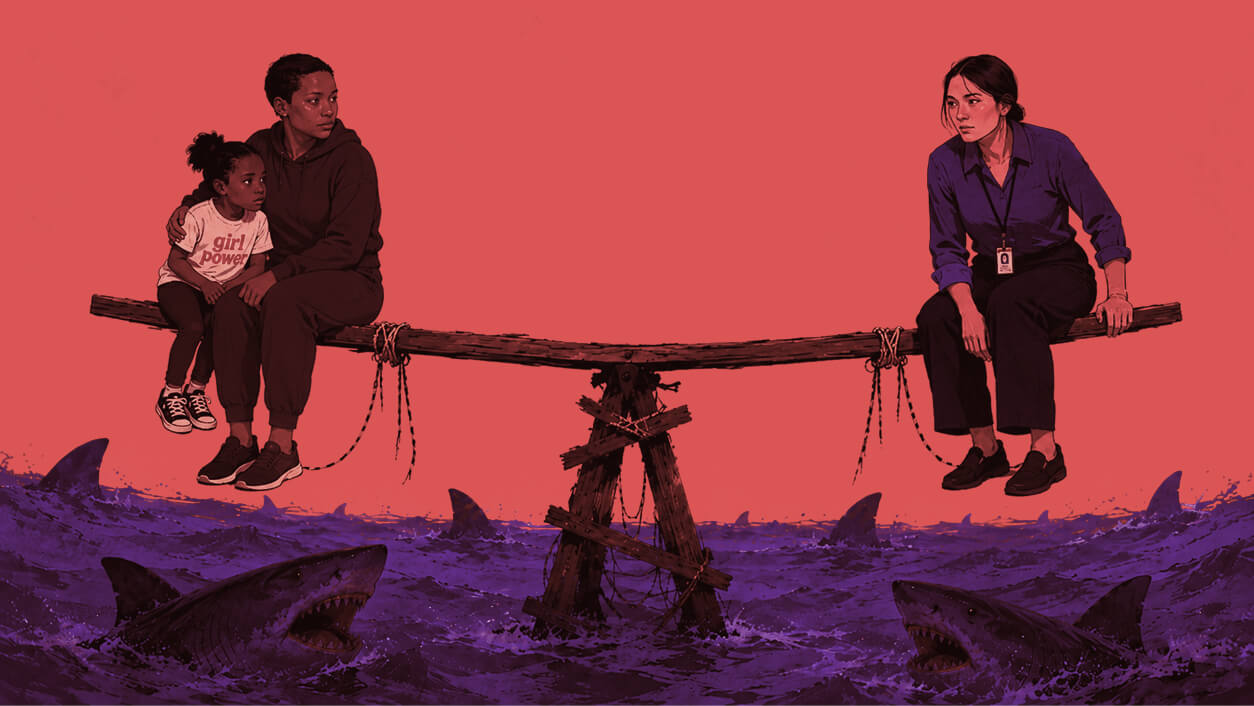
The Canary Collective went upstream this week, and the gloves came off. In “Delay, Distract, and Deny”, Wren takes the old public-health parable about pulling bodies from a river and turns it into an indictment: while families stand waist-deep in the current keeping disabled children afloat, almost no one walks up the bank to ask who keeps throwing them in. It is a generous, lucid piece, and reading it felt less like encountering a new argument than hearing many thoughts I’ve pondered also.
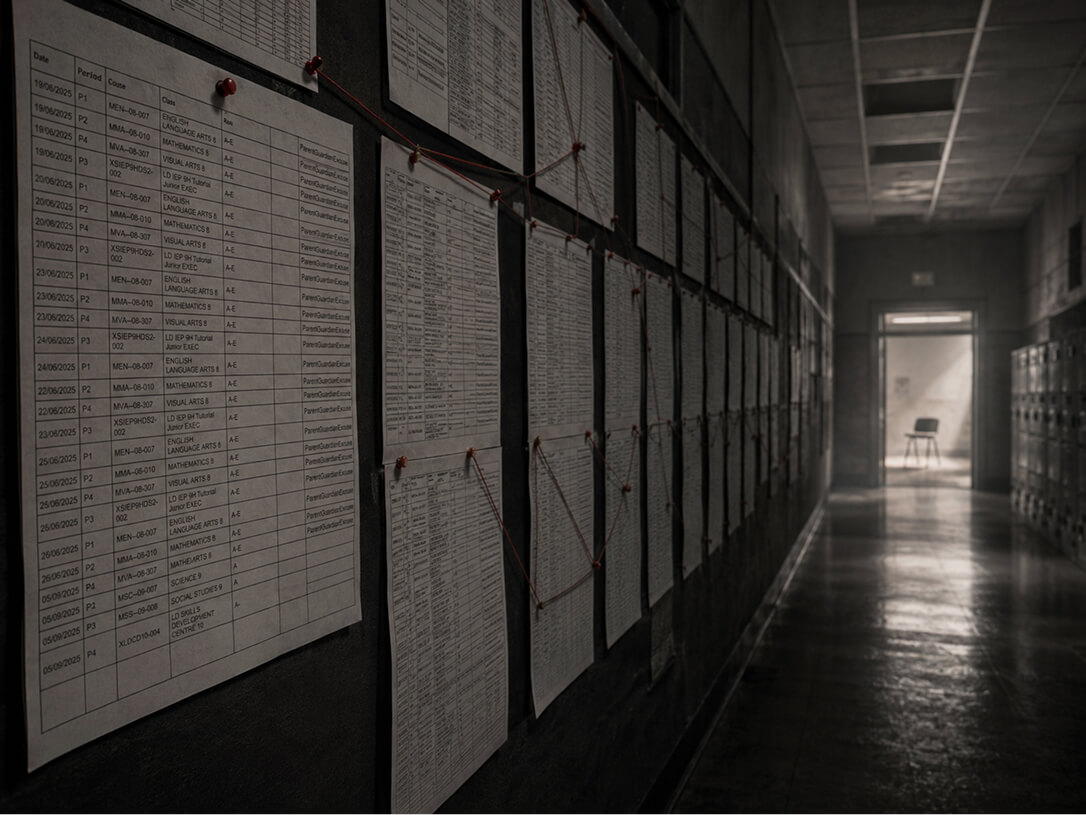
Wren asked who keeps standing at the top of the bank; this is the reading list for them. Education leader is a title the system awards itself with pride — roomy enough to seat a superintendent, a trustee, a principal, and any staff member who has ever claimed leadership in a bio or a strategic plan. Claim the title, and you have claimed the syllabus. You spent years asking for more data before you would act — here it is, dated and filed, with a whole summer before September to do the reading that leadership requires.
Keeping people occupied is the strategy, not a side effect
The sharpest turn in Wren’s piece is the claim that systems protect themselves less through open refusal than by keeping people busy — by metabolising a parent’s time, documentation, and composure until accountability becomes unaffordable.
- That is the whole thesis of “Iatrogenic harm and the parent advocate”, which argues that what the system manufactures in the parent who tries to hold it accountable is specific, dated, attributable injury — Puar’s debility.
- “The cost of defending scarcity“ names the same machinery an exhaustion economy: a system that spends extraordinary energy defending scarcity and calls that defence fiscal responsibility, while everyone it touches labours to keep impossible stories upright.
- “Human Rights Tribunal complaints are designed to exhaust” does the math on the one venue parents are told to trust: it measures accountability in the life force a family must spend to reach a largely symbolic finish line.
Wren says the system keeps you “occupied”. I have been documenting the meter that runs while it does.
“As one of my advocates once said, They keep us busy, while are children circle the drain”
— Just a Parent
Delay
Wren describes delay as the most familiar texture of the whole ordeal — the requests for more time, more observation, more data, more patience, until a child has aged out of the help.
- “When delay becomes policy” traces how British Columbia turned that texture into architecture, following the 2018 funding-model review that recommended a prevalence model and would have exposed what the present system carefully obscures: disability arrives at predictable rates, so a province that budgets for surprise is choosing to be surprised.
- “The question they refused to ask” is the sequel, where three years of consultation produced every question except the one about adequate funding — delay dressed as diligence.
- “The Ombudsperson and the war of attrition” shows the same clock running through the oversight bodies that are supposed to stop it.
Distraction means changing the child instead of the conditions
Wren’s second move is the pivot: a conversation that should sit with barriers and rights gets redirected onto the child’s behaviour, and the parent is handed a reward chart instead of an accommodation.
- “Compliance discourse vs. disability justice” reads the VSB’s own code of conduct and finds it fluent in consequences and silent on accommodation — a document that knows how to discipline a child and forgets how to include one.
- “The compliance trap” shows the redirection written directly into IEP goals, where the target quietly becomes obedience.
- “Bad medicine” names the clinical version of the same logic, and “Non-coercive, trauma-informed alternatives to PBS/ABA” supplies the answer to the question distraction is designed to suppress — that the environment, not the child, is the thing built to be changed.
The questions least likely to be asked
Wren lists the questions that get buried under behaviour plans: why support tracks diagnosis rather than need, why accommodation is treated as a favour rather than a legal duty.
- “Designed for denial” is my anatomy of exactly that asymmetry — systems engineered so that saying no costs an administrator nothing while saying yes forces the requester past a row of unaccountable gatekeepers.
- “Right to no discrimination” and “Fierce is fair” restate the answer the system keeps mislaying: accommodation is owed under the Code, and a parent who insists on it is enforcing law, not asking a favour with the wrong tone.
Denial has a vocabulary, and someone wrote it
Wren’s denial section is where the piece is at its most precise, cataloguing the euphemisms that turn harm into help — reduced schedules become “flexibility”, removal becomes intervention, lowered expectations become success.
- “The affective architecture of room clears” takes one of those euphemisms apart at the level of the body, showing how a practice marketed as safety isolates the one disabled child it was built around.
- “How FESL enables ongoing exclusion” shows the dictionary operating at provincial scale, where an accountability framework launders exclusion into a reporting metric.
- “How BC education policy discourse positions institutional refusal as neutral fact” catches the grammar mid-sentence: the passive voice that lets a refusal sound like weather.
Your experience is patterned, which is the opposite of unique
Wren ends the denial section on the system’s insidious persuasion: the story that each family’s catastrophe is singular, unfortunate, and inevitable — bad luck visited at random.
- “A school advocacy vocabulary” exists to break that spell — a taxonomy built on the premise that the meltdown, the missed accommodation, the breakdown filed under “complex family dynamics” recur across schools and provinces with recognisable logic.
- “Partial-day schooling as systemic violation” puts peer-reviewed research behind the same point.
- “When one child’s support becomes everyone else’s denial” traces the cruellest version, where scarcity is engineered to set families against one another so the budget is never the thing in the room.
“There is no funding” is a story
When delay and distraction run out, Wren writes, denial arrives as a budget: no staff, no money, nothing more to be done.
- “Where Surrey’s $6.3 million went” reads the province’s own budget tables and finds inclusive-education dollars allocated and then quietly unspent — abandonment with a line number.
- “Protecting the ledger over the learner” maps how scarcity gets operationalised into everyday rationing.
- “Exclusion is economically irrational” demonstrates that the refusal costs more than the accommodation it withholds. The funding exists. The decision to withhold it is the policy, and the policy is documented.
The upstream is not a mystery requiring more study
Wren’s closing reminds us that public schools were built before disabled children were thought worth designing for, and that the responsibility for fixing this was never meant to land on individual families.
- “The history of collective punishment” and “Data tracking in the residential school system” sit with that lineage — the long habit of treating some children as administrative problems rather than grievable people.
So here is where I will plant my feet beside Wren’s. She is right that we keep celebrating individual rescues while the river keeps filling. We must look upstream. The one thing I will add is that the upstream sits in plain view. It is not waiting on another review, another pilot, another year of observation. It has a name on every budget table, a file number in every FOI release, a policy citation behind every euphemism. The Canary Collective asked who keeps throwing children into the river. I have been writing down their addresses. Walk up with me.
See also
- Iatrogenic harm and the parent advocate — Schools do not merely fail families; they produce specific, dated, attributable injury in the parents who try to hold them accountable, and that exhaustion.
- When delay becomes policy — How BC converted “wait and see” into a funding architecture, tracing the 2018 prevalence-model review the province declined to adopt because predictability would have made the underfunding impossible to deny.
- The affective architecture of room clears — A forensic account of how a practice sold as safety empties a room around a single disabled child and calls the isolation an intervention.
- A school advocacy vocabulary — The taxonomy that refuses the word “isolated,” cataloguing the recurring institutional logics so families can recognise the pattern the system needs them to experience as a private, singular accident.